
by Kate Redmond
And Now for Something a Little Different XIX American White Pelican
Howdy, BugFans,
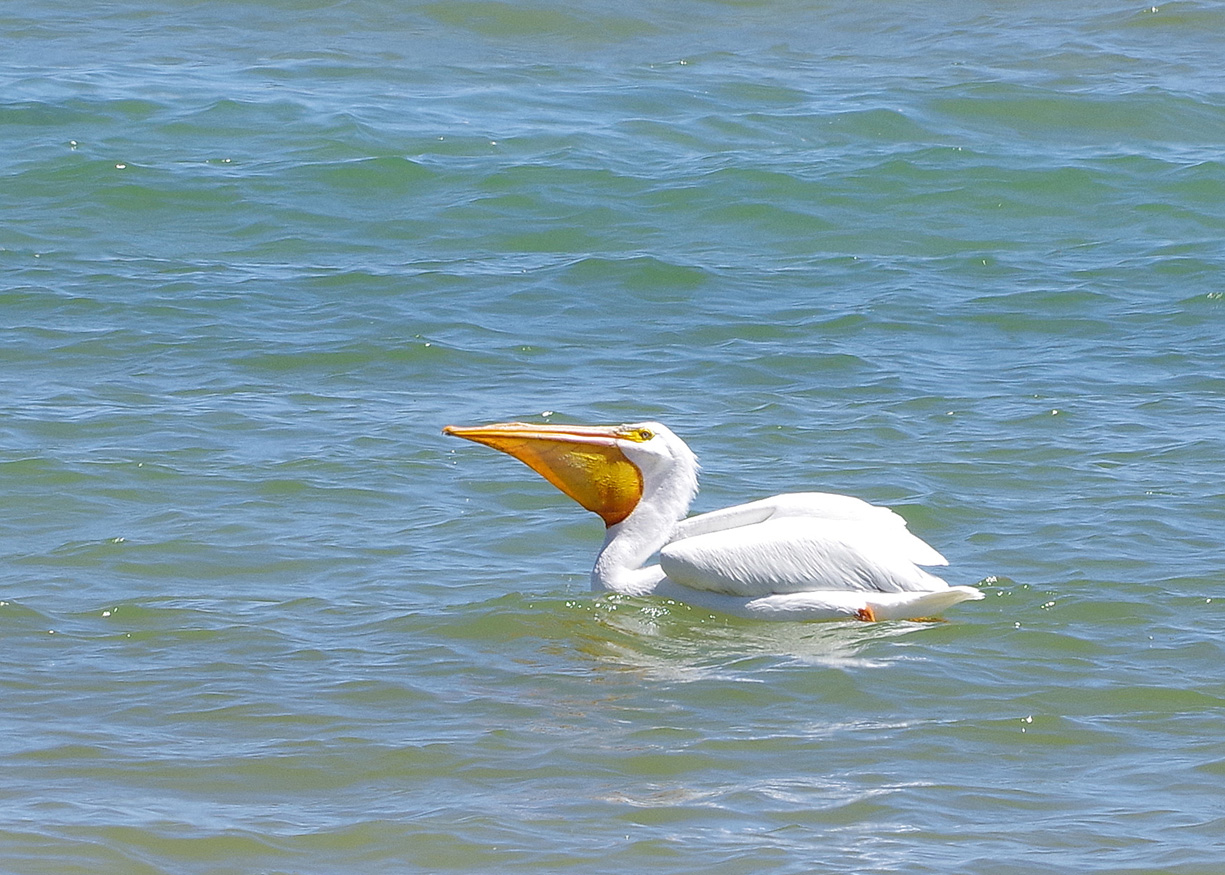
2026: The BugLady spent the morning watching pelicans; photographing pelicans on the water, on the beach, and, in small squadrons, in the air; and editing pictures of pelicans. They’re having a moment in her neighborhood at the edge of Lake Michigan. There are two floating about far offshore right now – brilliant in the sunlight.
Here’s an article she wrote about them two years ago for the newsletter of the Lake Michigan Bird Observatory.
2024: Just before 3:00 PM on October 6, the last new species of the Big Sit! was spotted from the tower – two White Pelicans that were working their way north along the shoreline. A single bird flew south over the tower the next day.
Wait! – pelicans live where the land touches the oceans, right? Well, yes. And – no. Brown Pelicans are certainly creatures of salt water, and when one shows up in Wisconsin, it’s a big deal, but American White Pelicans are native not only to the coasts but also to the Upper Midwest and to the prairie potholes of the northern Great Plains.
They’ve been present in Wisconsin for a long time, though it’s not known whether the birds reported by Indigenous tribes and early European settlers were breeding or migrating. They made a big target for the early settlers, despite the fact that, as one said “they have an oily flavor, whether alive or dead, which is so disagreeable that it is impossible to eat them.” Wisconsin’s first modern breeding records occurred in 1995 (Green Bay) and 1997 (Horicon Marsh), and the newcomers probably hailed from North Dakota. For an interesting history of White Pelicans in Wisconsin, see https://swibirds.org/fff/2020/6/19/american-white-pelican. Here’s a map of their present range https://www.allaboutbirds.org/guide/American_White_Pelican/maps-range.
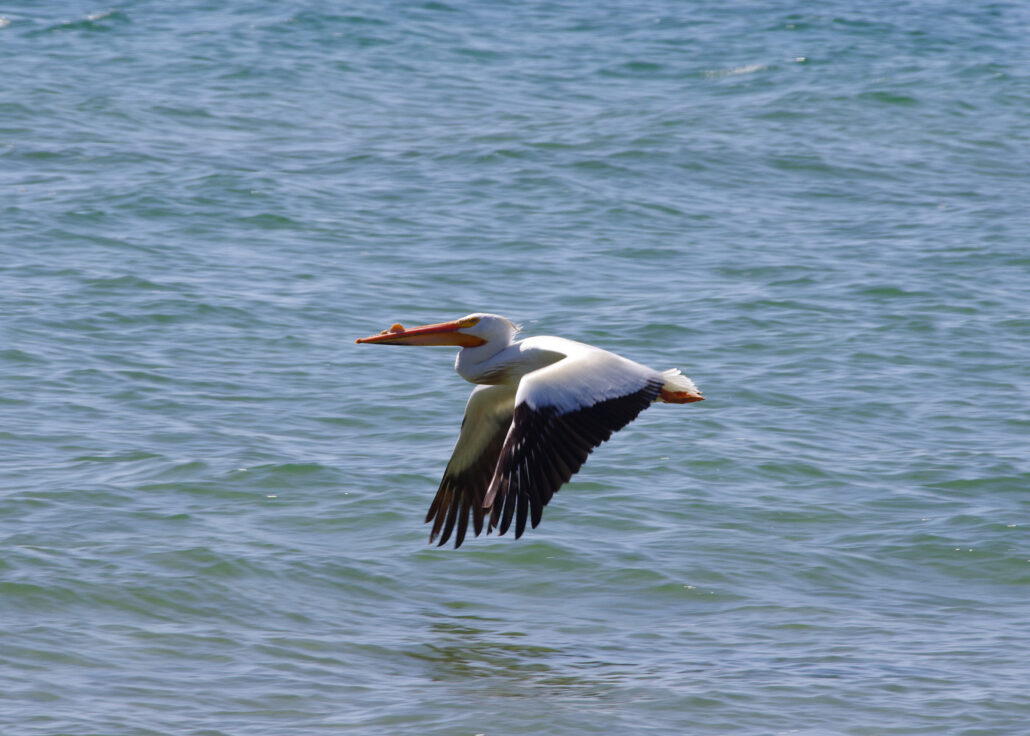
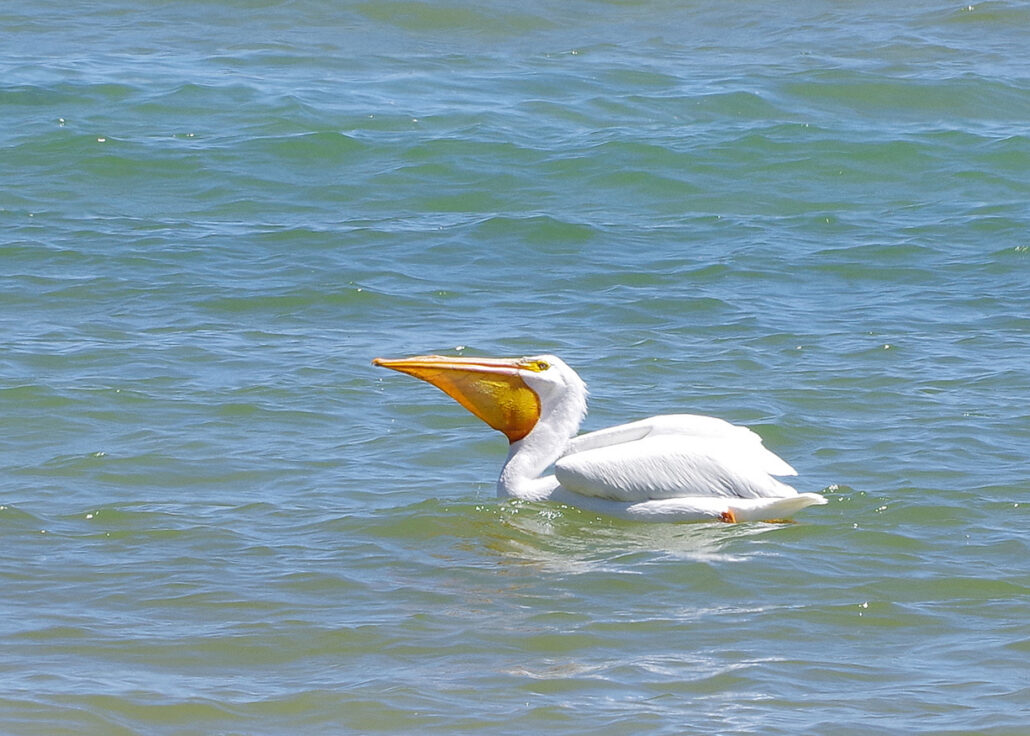
The American White Pelican’s scientific name, Pelecanus erythrorhynchos, means “red-billed pelican. The German naturalist who named it based his description on the writings of an English ornithologist who called it the Rough-billed Pelican. John James Audubon, waxing poetic, added “American” to its name, saying, “In consequence of this discovery, I have honored it with the name of my beloved country, over the mighty streams of which may this splendid bird wander free and unmolested to the most distant times, as it has already done in the misty ages of unknown antiquity.“
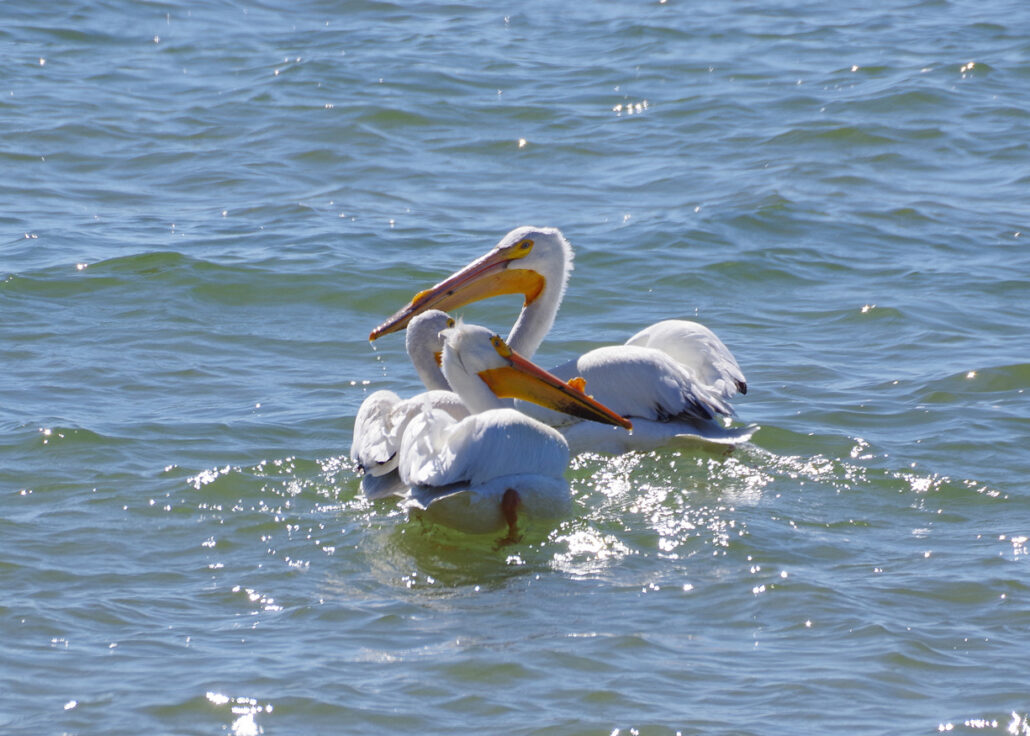
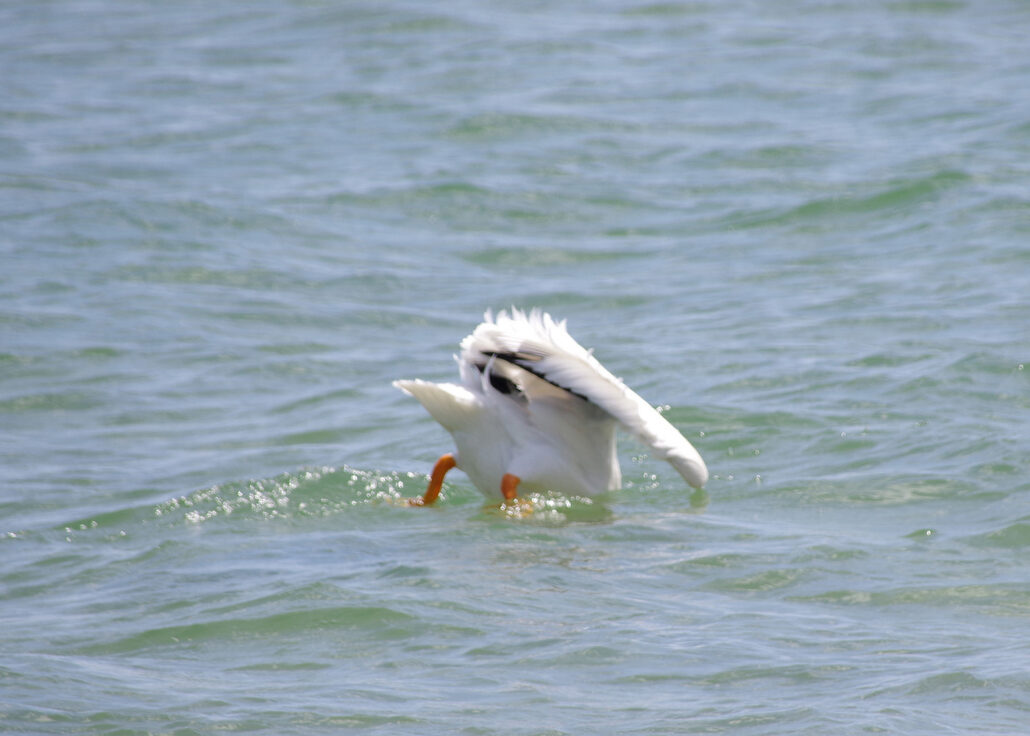
White Pelicans typically feed on minnows, shiners, carp, and suckers, but they’ll eat game fish, tadpoles, crayfish, and salamanders, and sometimes they adopt commercial catfish ponds. Unlike Brown Pelicans, they don’t plummet into the water from the sky; they hunt while swimming on the surface. White Pelicans often forage alone, but a group may cooperate to encircle a school of small fish, drive it toward shore, and then share the results. They sometimes steal food from other birds, even from the beaks of other pelicans that are feeding their young. During the breeding season, they often feed at night, locating fish by touch.
A bird this size has few predators, but foxes and coyotes do damage in breeding colonies, and ravens, gulls, Great Horned Owls, Red-tailed Hawks, and eagles prey on eggs and nestlings.
After a courtship that includes strutting, bowing, head swaying, circling in the air, and jabbing at potential nest spots, pelican pairs settle down in communal nest areas, often on islands for protection. They lay two or three eggs but usually fledge only one young. Competition is stiff – it takes about 150 pounds of food to launch a young bird – and the first chick to hatch may eventually eliminate its nest mates (siblicide). Chicks can crawl by two weeks, walk by the end of three weeks, and fly by 10 weeks. When they’re about three weeks of age, chicks leave their nests and gather with other chicks in a group called a “crèche,” but they return to the area of their old nest to be fed.
FUN FACTS ABOUT WHITE PELICANS
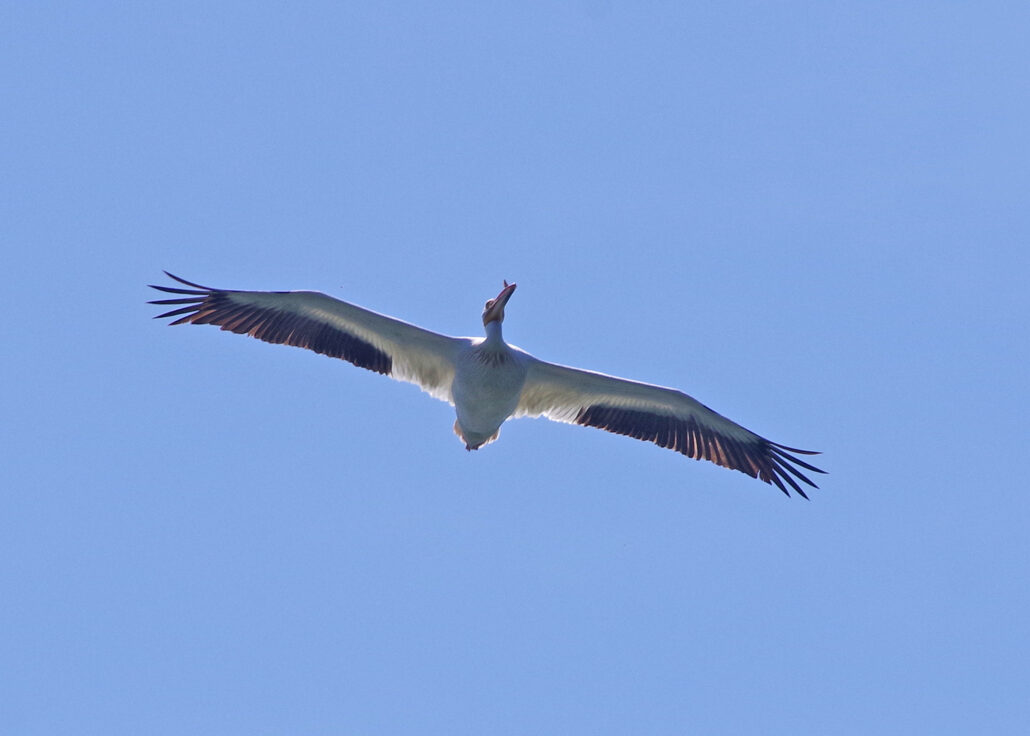
- The North American bird with the largest wingspread is the California Condor (9.5+ feet). With a nine-foot wingspan, the White Pelican is the second largest, and at almost 30 pounds, is one of the heaviest flying birds.
- White Pelicans are hardy enough to overwinter in Wisconsin if they can find open water. They can be seen on this bird cam on the Mississippi near LaCrosse very early in spring and into late fall https://explore.org/livecams/raptor-resource-project/mississippi-river-flyway-cam.
- Adult White Pelicans have a vocabulary of grunts, but nestlings are more vocal, making loud begging calls. Even pelican embryos get into the act, squawking from inside the egg when they are too hot or too cold. To hear Pelican sounds https://www.allaboutbirds.org/guide/American_White_Pelican/sounds.
- White Pelicans don’t have a brood patch – an area of bare skin where body heat is transmitted to their eggs. Instead, the parents incubate eggs by placing the webs of their feet over them.
DID YOU KNOW – that a pelican’s beak can, indeed, hold more than its belly can? A lunge fills the pelican’s stretchy pouch with a few gallons of water, and hopefully some fish, too. It tilts its head to let the water drain out of the bill, and the fish are swallowed right away. Pelicans need three or four pounds of fish each day.
On another note, June is Wisconsin’s Invasive Species Action Month. For more information see the Southeastern Wisconsin Invasive Species Consortium (SEWISC) https://sewisc.org/, and https://dnr.wisconsin.gov/topic/Invasives?utm_source=newsletter_101&utm_medium=email&utm_campaign=sewisc-quarterly-newsletter-summer-2026.
Go outside – whack an invasive.
Kate Redmond, The BugLady
Bug of the Week archives:
http://uwm.edu/field-station/category/bug-of-the-week/