
by Kate Redmond
Spring Summary
Howdy, BugFans,
Now that summer has arrived with a vengeance, it’s time to take a quick look back at some spring bug experiences.
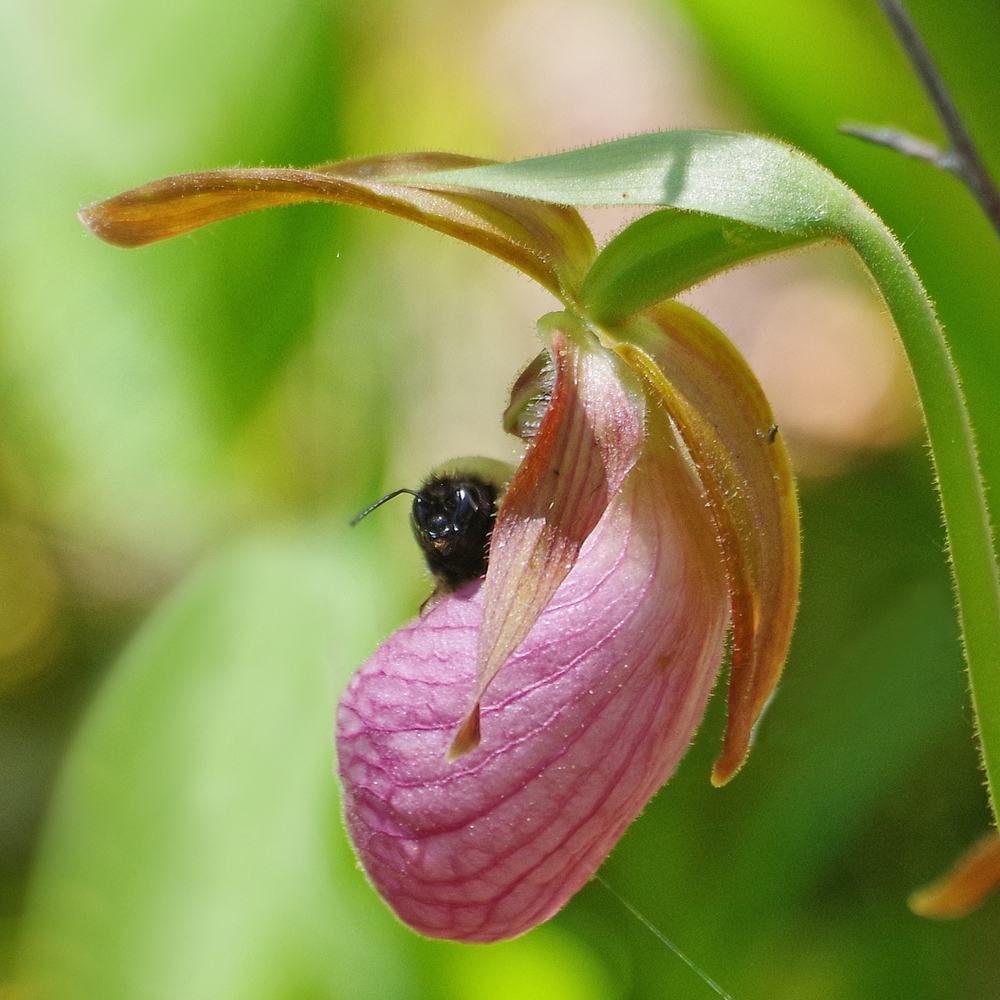
BUMBLE BEE ON PINK LADY’S SLIPPER – A website about Wisconsin’s native orchids lists “naïve bumble bees” as pollinators. Naive bumble bees. Lady’s slipper orchids do not offer a nectar reward to foraging insects, but it takes a few visits to the orchids before a bee figures that out and looks elsewhere.
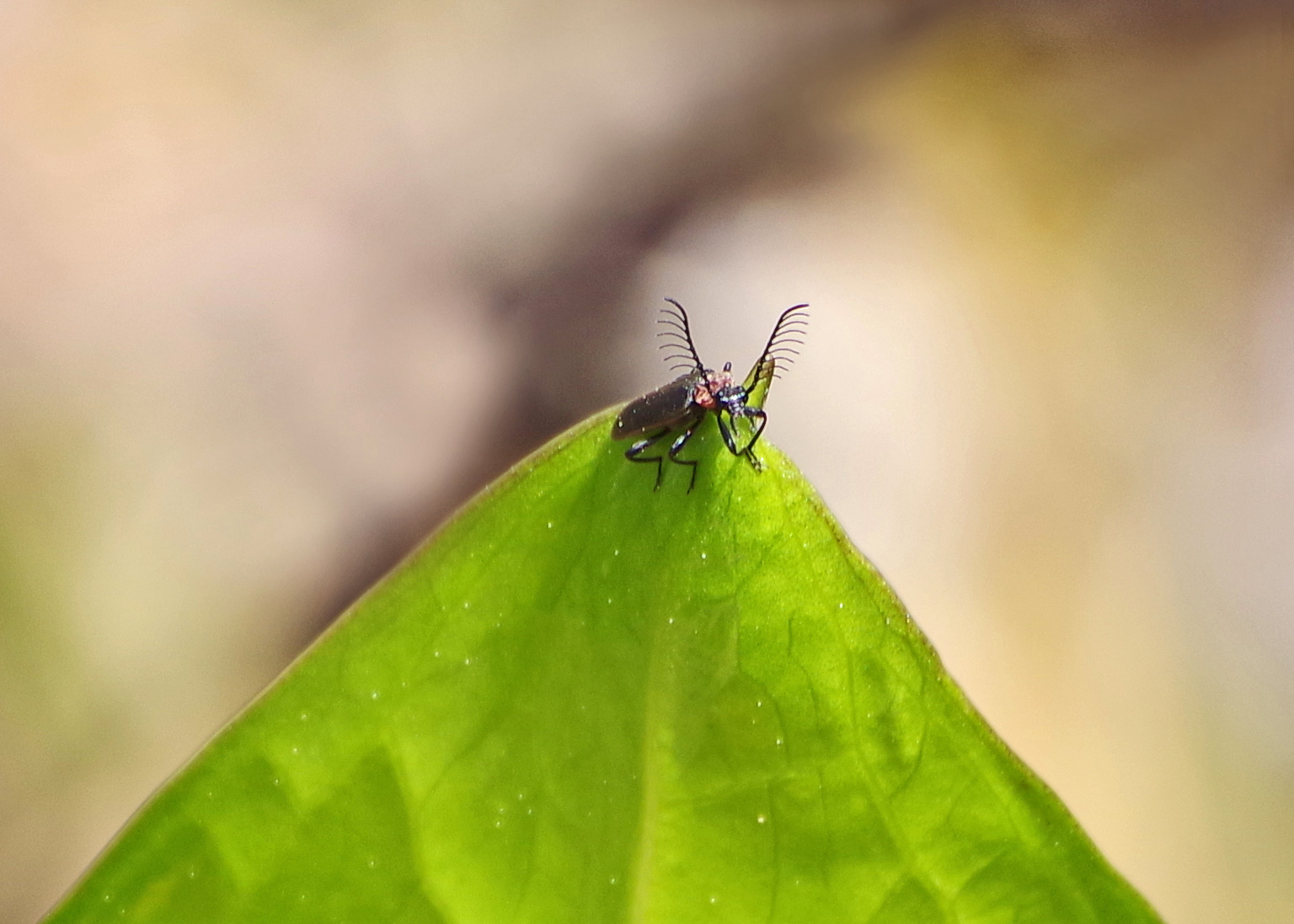
FIRE-COLORED BEETLE, in the family Pyrochroidae (which means “fire color”) seems like an odd name for a mostly-black beetle, but some members of the family are https://www.bugguide.net/node/view/1235995/bgpage, and many of the others have that nice, red thorax. The BugLady saw it from afar, sitting on the tip of a skunk cabbage leaf – she’s been accused of using her zoom lens as binoculars, and she pleads guilty. This contributor to bugguide.net got a far better picture https://www.bugguide.net/node/view/1796471.
She thinks this is Schizotus cervicalis, who goes by the awesome name of Flaming pillow beetle (because of the males’ puffy, red thorax). Fire-colored beetles have an interesting relationship with Blister beetles, which is explained in a BOTW about a related Fire-colored beetle in 2012 https://uwm.edu/field-station/bug-of-the-week/fire-colored-beetle/.
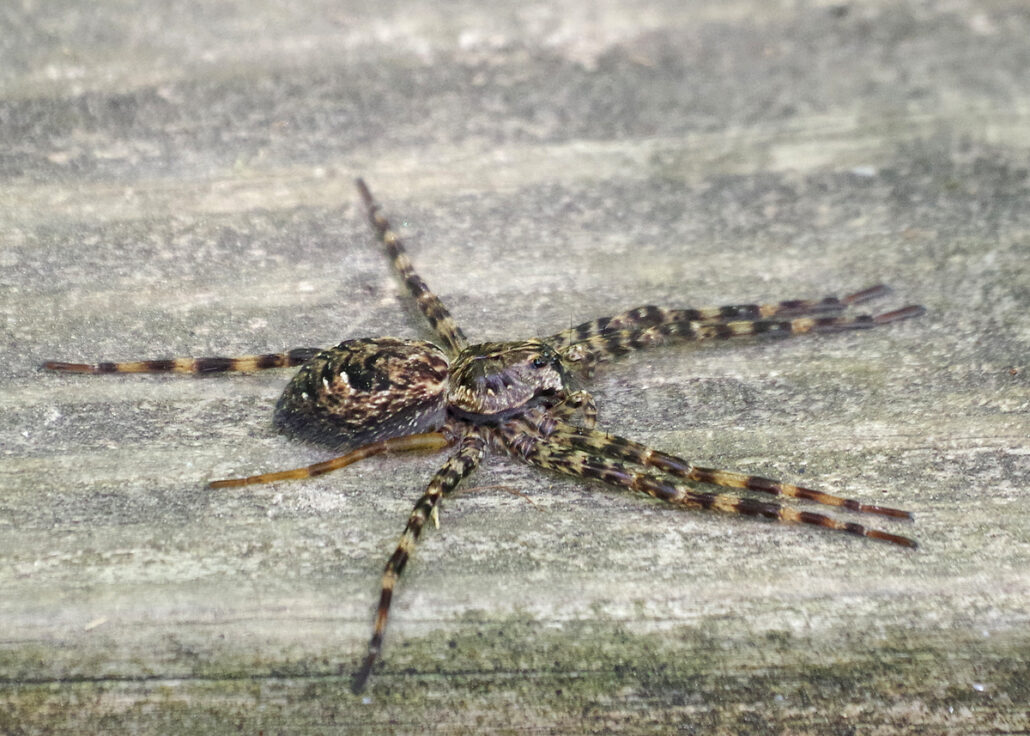
DARK FISHING SPIDERS are big (leg-spread up to 3”), long-legged spiders that really get people’s attention. This one, found in late May, was about half-grown and was in the process of regenerating a leg. Its ability to regrow legs depends on age and molting. The small, new leg emerges after a molt and grows after each subsequent molt, but most spiders don’t molt after they become adults, so the new leg might not fully develop. Spiders can generally get along just fine despite a missing leg.
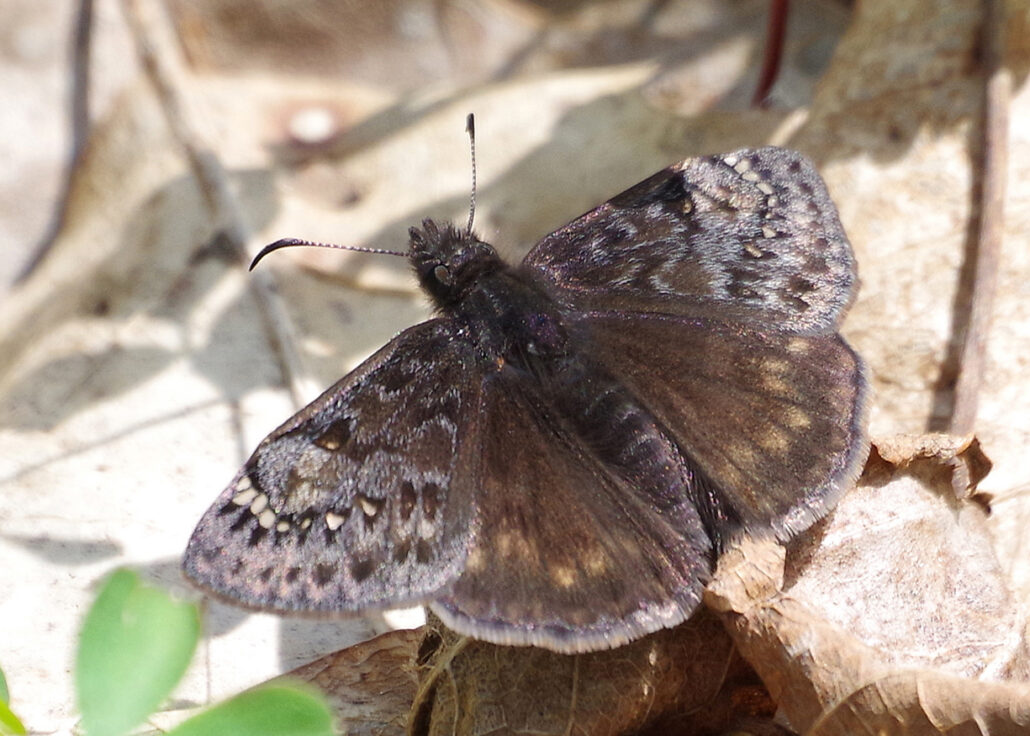
JUVENILE’S DUSKYWING – Duskywings are skippers (family Hesperiidae) and skippers are butterflies (though some sources still call them “butterfly-like”), although at one time they were considered a transition group between butterflies and moths. Skippers tend to have large, chunky, hairy bodies in proportion to their short wings, and they have a tiny, “crochet hook” at the tip of their antennae. They get their name from their quick, bouncy flight. The Juvenile’s Duskywing is an early season butterfly that likes to perch on the ground.
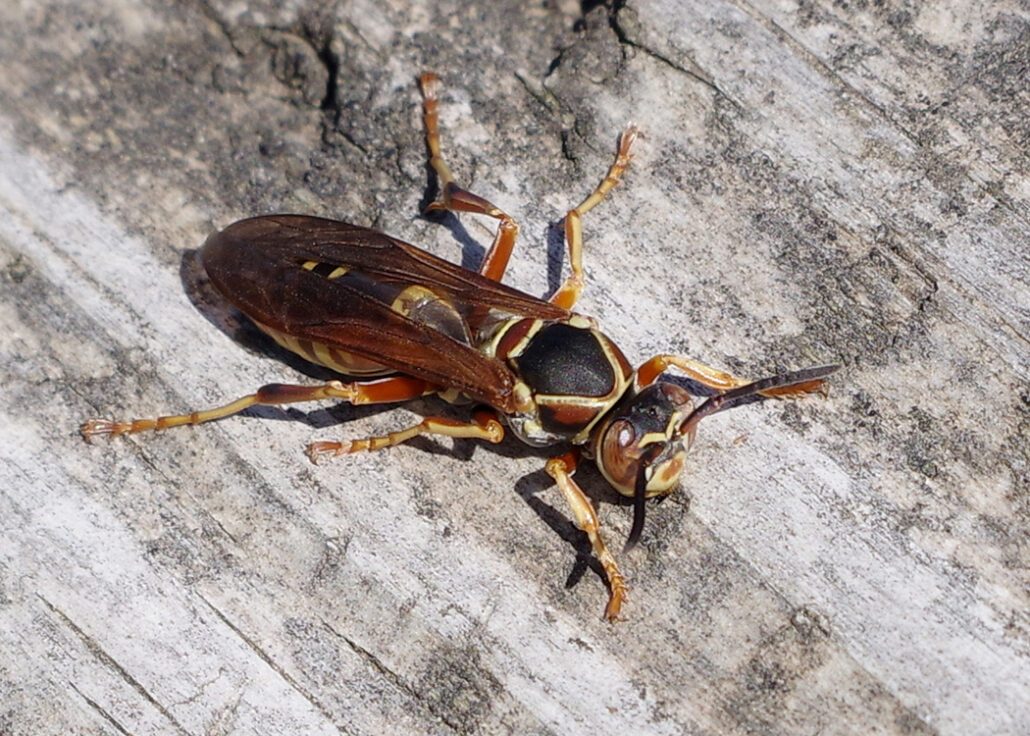
NORTHERN PAPER WASPS are the wasps that tuck disk-shaped, open-faced nests up under the eaves https://www.bugguide.net/node/view/2109317/bgimage. Most are yellow and black (Nature’s warning colors) but some are reddish https://www.bugguide.net/node/view/2316444/bgimage.
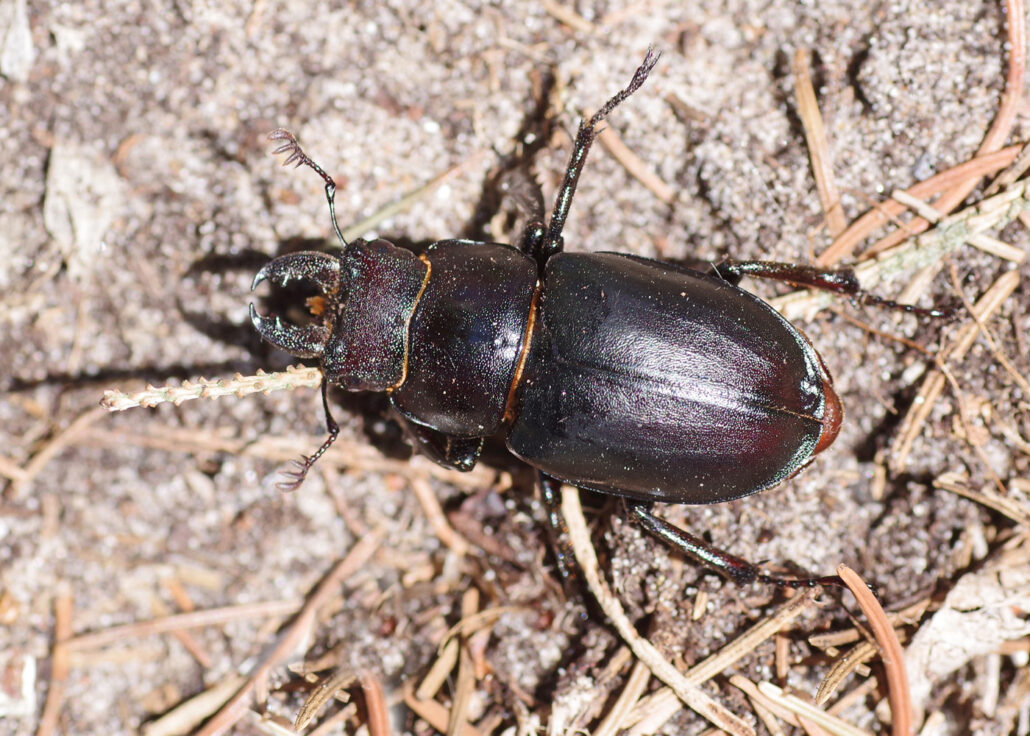
STAG BEETLES (Lucanus placidus) emerge from their underground pupal cases in late spring. Adults live only a few weeks and are said to feed on flower nectar (the BugLady would like to see that) and on tree sap, and the larvae feed on decaying trees and roots (they don’t kill the trees, but they help to dispose of them). Read about one man’s encounter with these lunker (1 ½”) beetles https://insectlab.russell.wisc.edu/2016/06/23/buckets-of-beetles/.
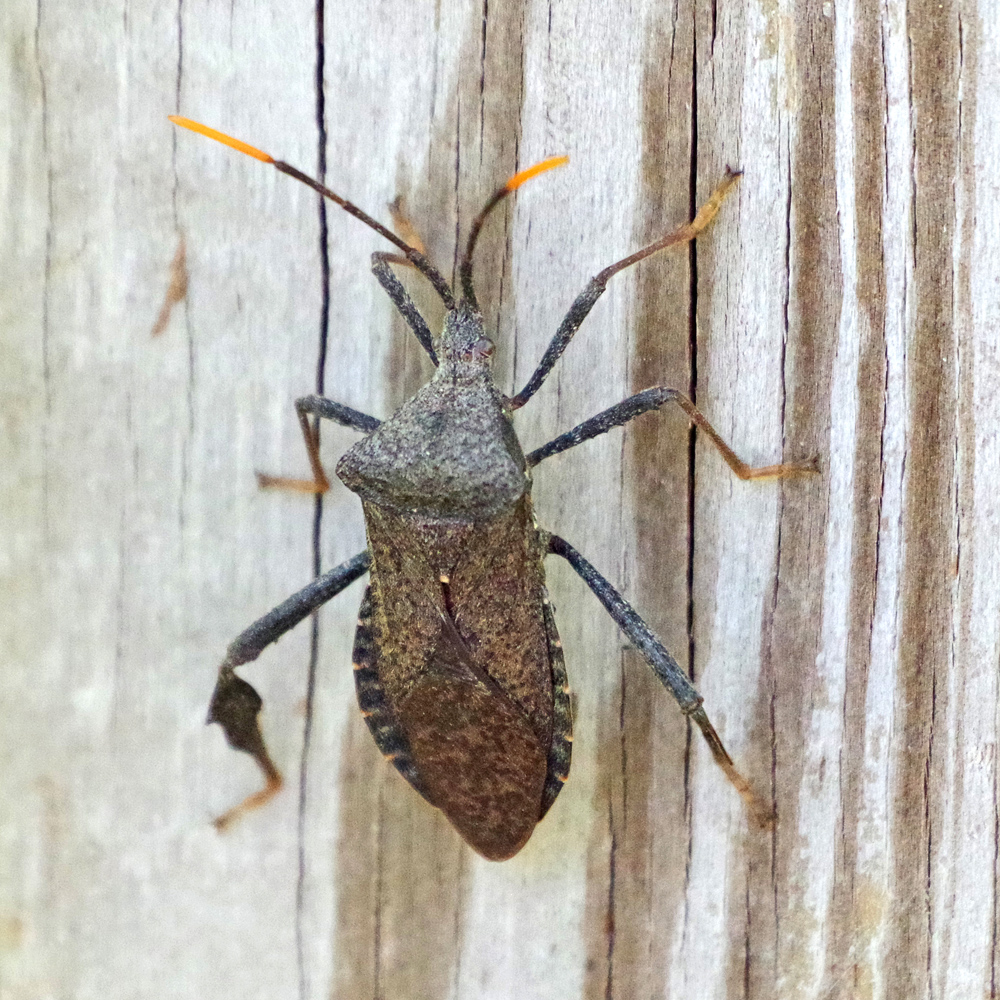
ACANTHOCEPHALA TERMINALIS (no common name) is a leaf-footed bug that can be seen over several generations from late spring through early fall, though the BugLady has never seen one this large in mid-May. The flanges on its hind legs explain the “leaf-footed” part of its name, and its species name – terminalis – refers to the golden tips of its antennae. It is in the True Bug order Hemiptera, and though it’s not officially a Stink bug, it can deploy a smelly chemical when threatened (though it would rather fly than fight). This is the only genus member here in God’s Country.
Their nymphs are pretty cute, too https://www.bugguide.net/node/view/1644287/bgimage.
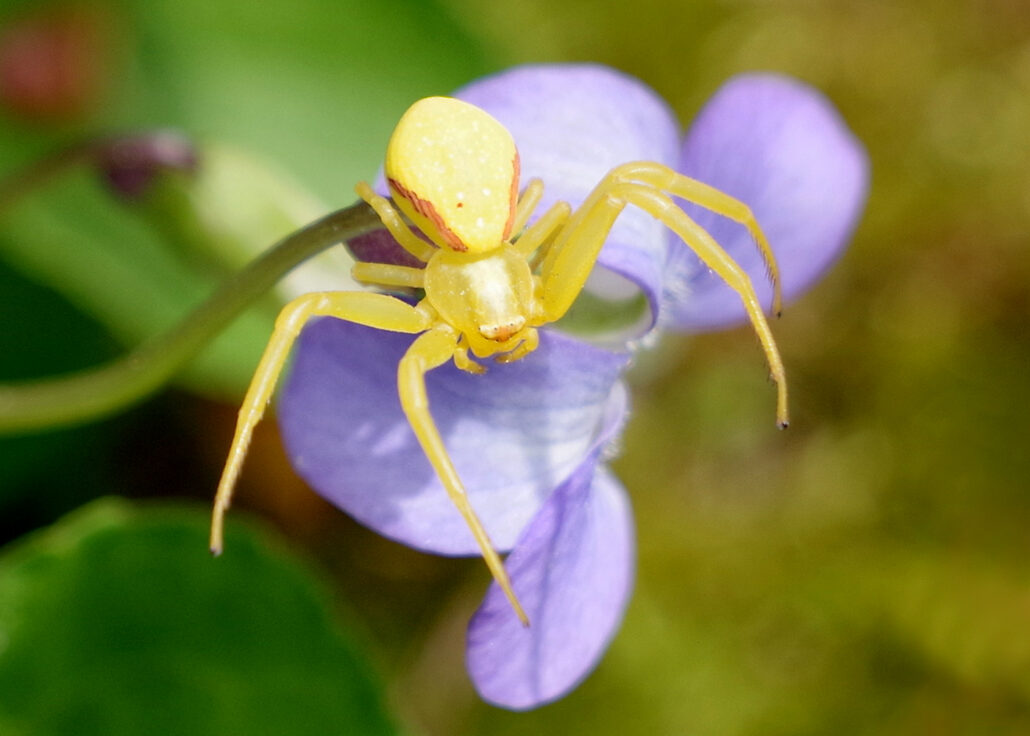
CRAB SPIDER ON VIOLET – The BugLady was surprised to see an adult Goldenrod crab spider decorating a violet in the first week of May.
Were there butterflies? Yes.
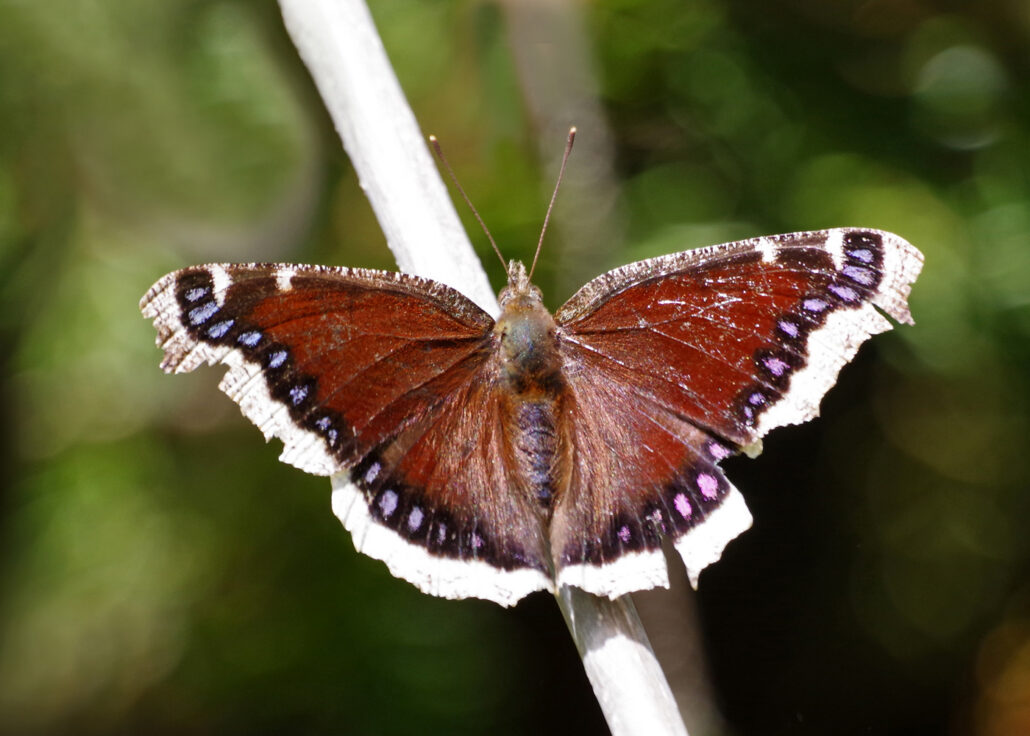
MOURNING CLOAKS are, for butterflies, very long-lived – when you see one in May, it’s about 10 months old and at the end of its trail. One of the few butterfly species that overwinter as adults, Mourning Cloaks are often seen during January thaws and maple sap season (they tuck themselves back into a sheltered spot when the cold returns), and they’re an early butterfly in the woods in spring. How do they do it? They’ve got a lot of insulating hairs; they use isometric exercises to warm the flight muscles in their thorax, and they count on tree sap and rotting fruit for food, rather than flowers. It will mate, lay eggs, and die, and its caterpillars will eat, metamorphose, and fly for a while, but then it will aestivate (become dormant) to avoid the wear and tear of summer before returning to the air to finish out the year.
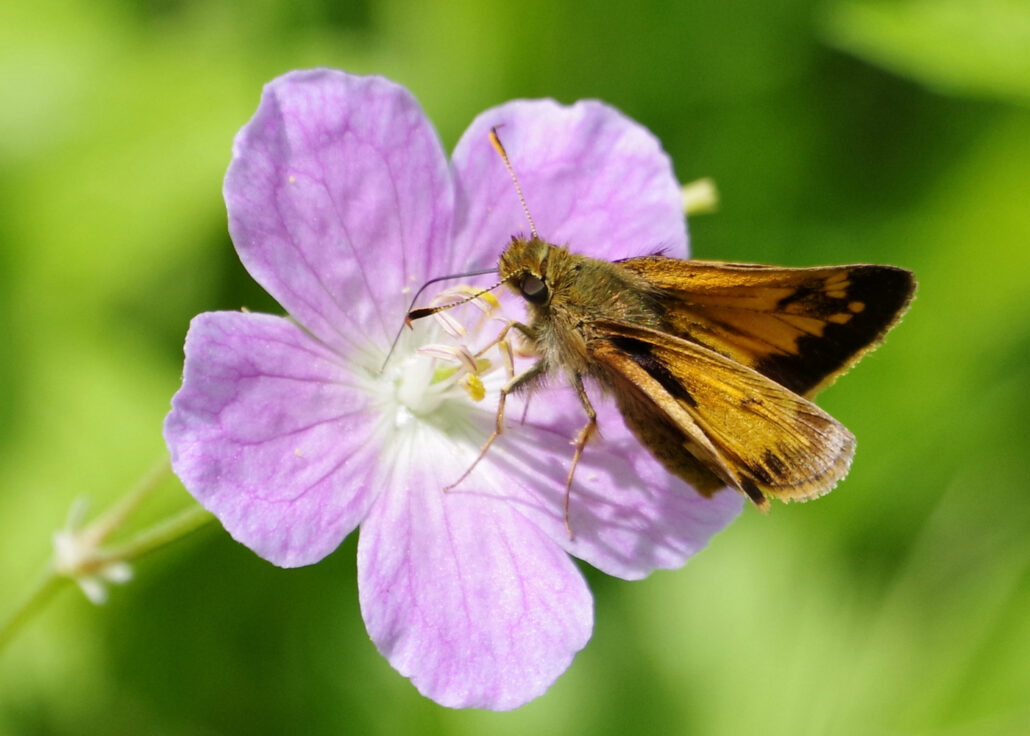
HOBOMOK SKIPPERS are the first of the skippers to hit the airways, appearing in sunny clearings and edges as the wild geranium starts to bloom. They’re on the wing before the BugLady develops her annual case of “Skipper Brain” – for a brief time, she is (almost) positive of her skipper IDs. Hobomok Skippers are part of a series of butterflies named by Thaddeus W. Harris and others after Native American chiefs. Hobomok was the “chief of the Wampanoag Indians, who helped the Pilgrims upon their landing in Plymouth in 1621.”
And were there dragons and damsels? Oh, you bet, though the dragonfly season has gotten off to a very slow start! The majority of invertebrates that the BugLady’s camera finds are dragons and damsels.
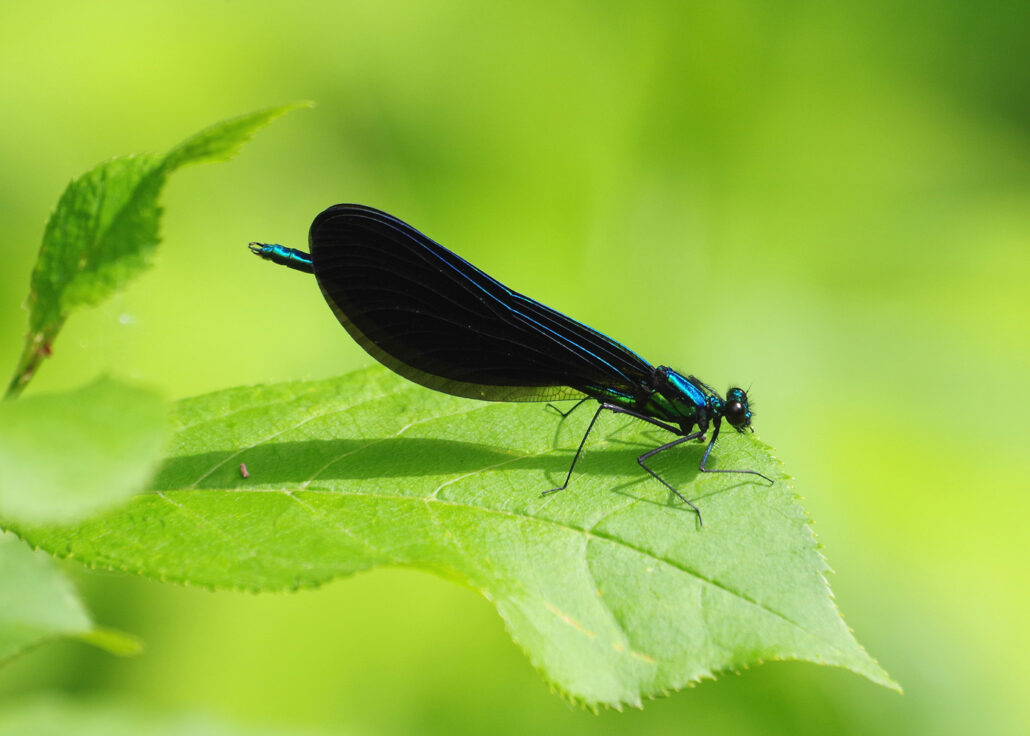
EBONY JEWELWING – What would a spring report be without a spectacular male Ebony Jewelwing? Along with very showy rubyspots https://www.bugguide.net/node/view/2178678/bgimage, jewelwings are in the Broad-winged damselfly family Calopterygidae (“beautiful wing”), the river damsels. Don’t look for them around quiet ponds. They put their beauty to good use in their showy courtship displays.
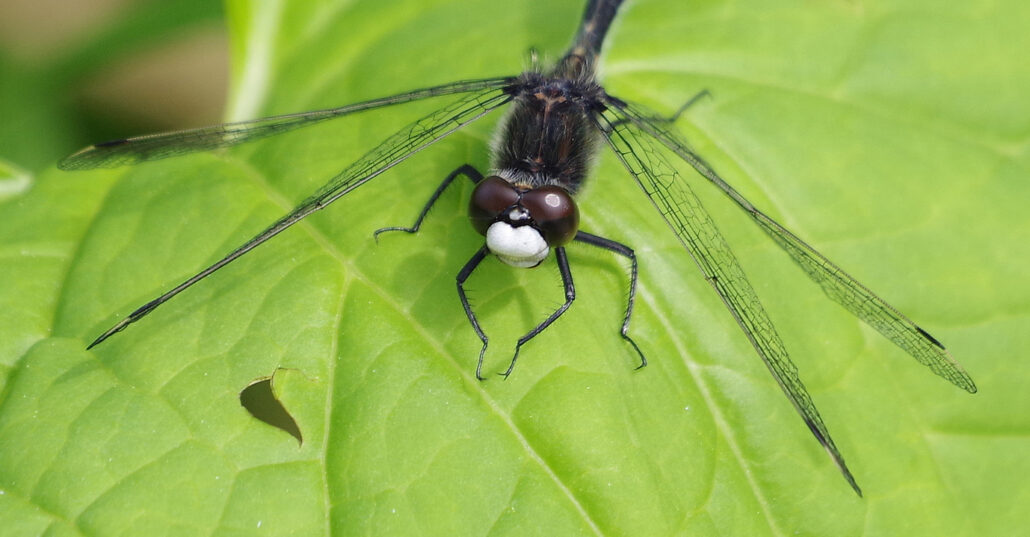
DOT-TAILED WHITEFACE – No doubt that this is a whiteface – here’s the dot-tail https://www.bugguide.net/node/view/26379.
We were so busy celebrating National Moth Week last week that we neglected to celebrate the simultaneous National Pollinator Week!
Kate Redmond, The BugLady
Bug of the Week archives:
http://uwm.edu/field-station/category/bug-of-the-week/