
by Kate Redmond
Monarchs 101 Reprised
Howdy, BugFans,
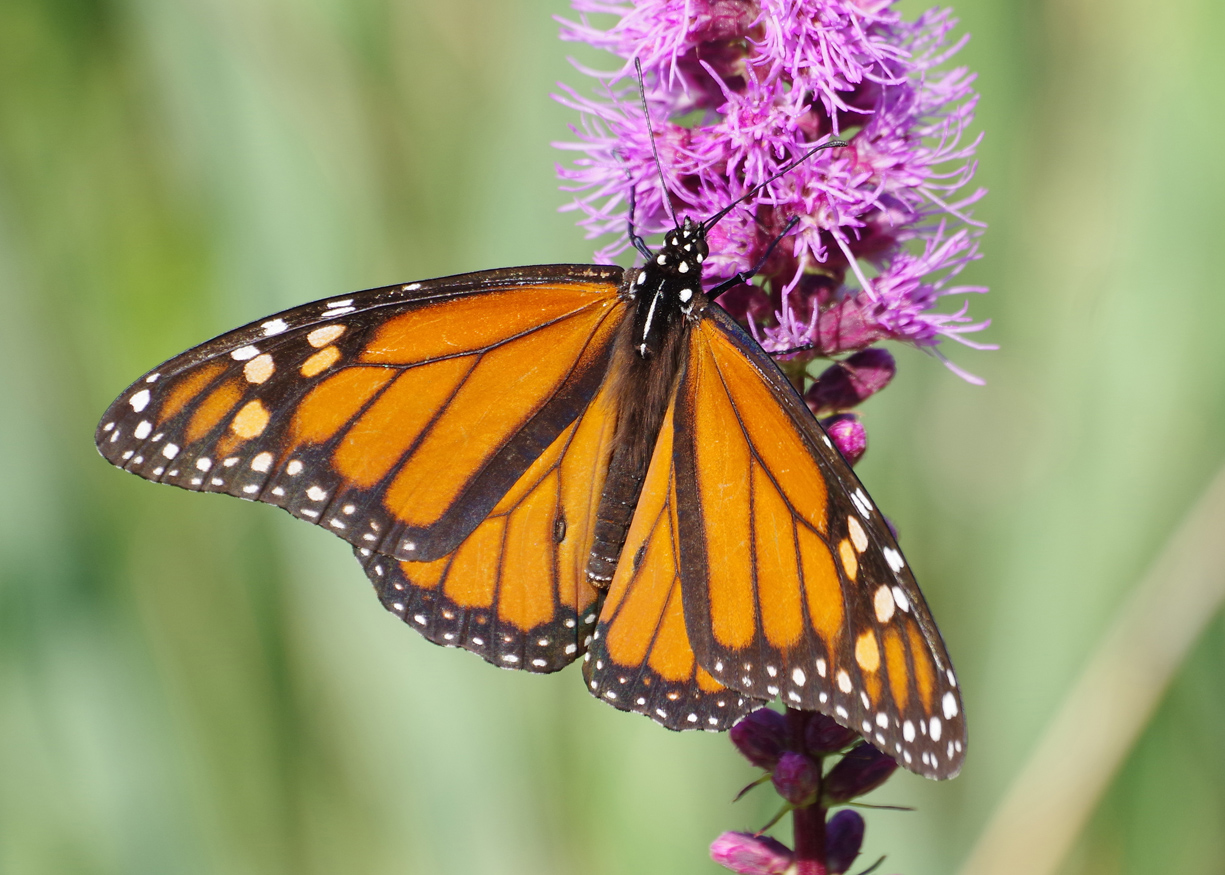
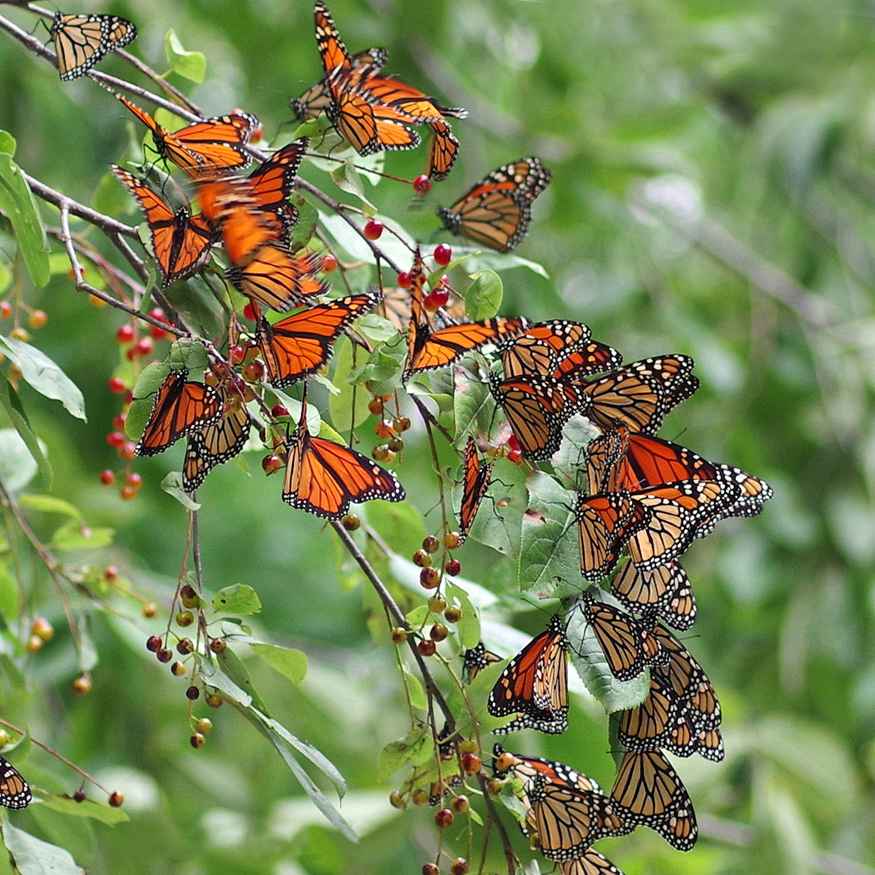
2026: it has been a quiet summer, Monarch-wise, but (OMG), it’s almost September! The BugLady once read that in September, every time they fly up in the air to search for flowers to nectar on, Monarchs will land a little south of where they took off from. The very definition of “drifting” south.
Anyway, here’s an upgrade (new words and new pictures) of the first of maybe a half dozen BOTWs about Monarch butterflies, written in June of 2008 (about a year into a series that started as a joke in August of 2007). You can find more by Googling “UWM Field Station Monarch.”
2008: Monarchs, famously, migrate, but they are not the only insects that do – snout and Painted Lady and Red Admiral butterflies do, a variety of large dragonflies like Common Green Darners and Black Saddlebags do, and even a few bug species do! Watching dragonflies drift down the shore of Lake Michigan on a soft, fall day can be mind-boggling, but Monarchs are the long-distance champs.
All of the Monarchs east of the Rockies overwinter on about 15 smallish sites in central Mexico, some 1500 miles from southeastern Wisconsin. Monarchs west of the Rockies overwinter along the coast of California, though a few overachievers do trans-Pacific jaunts to Hawaii (where they’ve established a beachhead) and even to Australia. Southern Texas and Florida boast non-migratory populations. There are several generations per year, but the Monarchs that emerge here at the end of summer migrate to Mexico. When young birds migrate, it is often with adult birds that have made the trip before – not so with monarchs.
In spring, that extra-long-lived generation (seven to eight months) that migrated south and spent the winter in a fairly dormant state, clinging to trees, stirs itself and turns back north. They lay eggs as they go and their offspring and their offspring’s offspring follow the emerging milkweed crop and eventually return to Wisconsin. Here, they may produce a few more generations. These non-migratory adults live only a few weeks after they emerge – their only job is to boost the population.
Putting all one’s eggs in the same basket, population-wise, is risky. In the winters of 1992 and 1995, there were snowstorms on the wintering grounds; some estimates were of greater than 60% mortality. As they headed north in the spring of 1996, an el Nino event brought heavy rains to the southeastern part of the US and more died, and for the next five years or more, Monarch sightings were alarmingly infrequent.
Scientists have discovered that in order to get to their destinations, Monarchs navigate by the sun, using an internal clock that allows them to correct their compasses in response to the sun’s movements across the sky. Not only that, it lets monarchs in Michigan, Maine and Montana file correct (but different) flight plans for central Mexico.
That discovery raised as many questions as it answered, because it is only the final brood of summer that turns its compound eyes southward and embarks on The Big Trip. Further experiments suggest that decreasing day length helps “set” the monarch’s clock; at a specific number of daylight hours, an internal clock is activated, and a generation of migrators is produced (they are the only ones that get tagged). The changing tilt of the earth in late summer also plays a role – wherever they are, Monarchs are cued to start moving when the sun recedes to around 57 degrees above their southern horizon. And all these calculations happen in a critter whose 3/16” long head contains a brain the size of a pinhead.
Monarch caterpillars, like many other youngsters, are picky eaters. Though the adults get nectar from a variety of flowers, the females lay eggs only on milkweed species. How does she identify a milkweed without a field guide? She spots a likely leaf by its shape and color and then descends to administer the scratch test. She abrades the leaf’s surface with rasps on her feet, which releases plant chemicals that she “tastes” using chemoreceptors also located on her feet. It’s a binary choice – Milkweed or Not milkweed – and she rejects the old, leathery milkweed plants in favor of those that are producing tender, new leaves.
Because they feed only on milkweed, whose sap contains cardiac glycosides, the caterpillars are poisonous. Insects deal with toxic chemicals in their food either by figuring out a way to segregate and store them safely internally or by figuring out a way to eliminate them quickly. Monarch caterpillars save and concentrate glycosides – caterpillar levels are higher than leaf levels – and the pupae and the adults are poisonous, too. A bird has to eat one to get with the program (Mother Nature is careful of the species but careless of the individual), but one is enough to encourage avoidance thereafter. The presumably tasty (or, at least, non-poisonous) Viceroy butterfly cashes in on this avoidance by mimicking the Monarch https://www.bugguide.net/node/view/1468774 (note the curved line running through the Viceroy’s hind wing, a line that a Monarch doesn’t have).
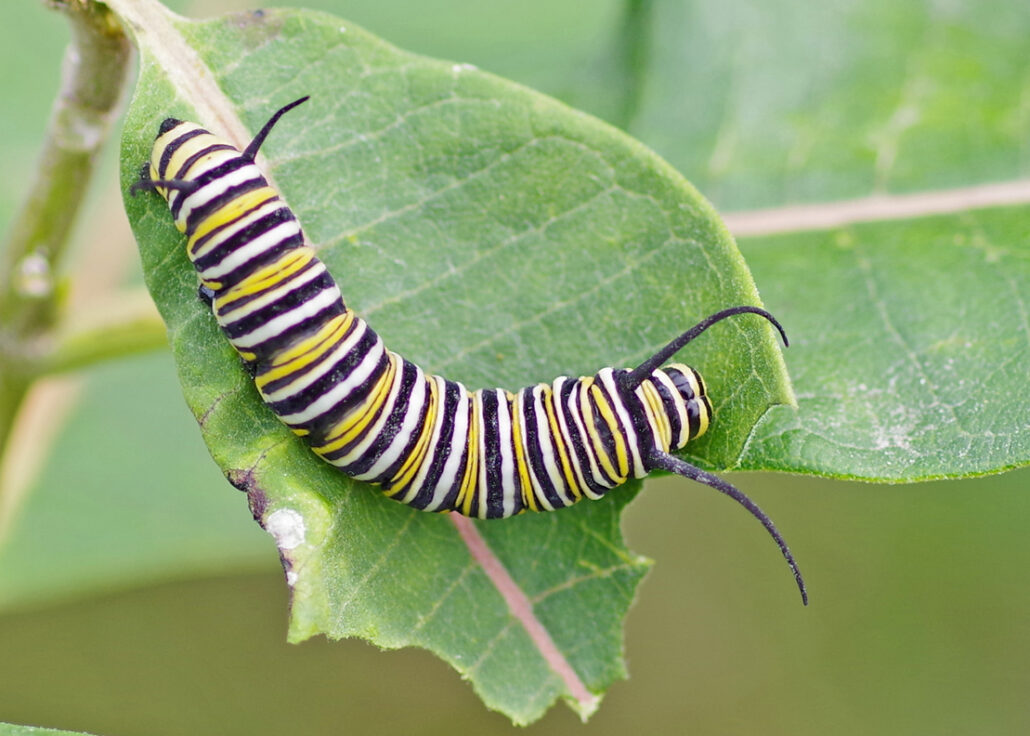
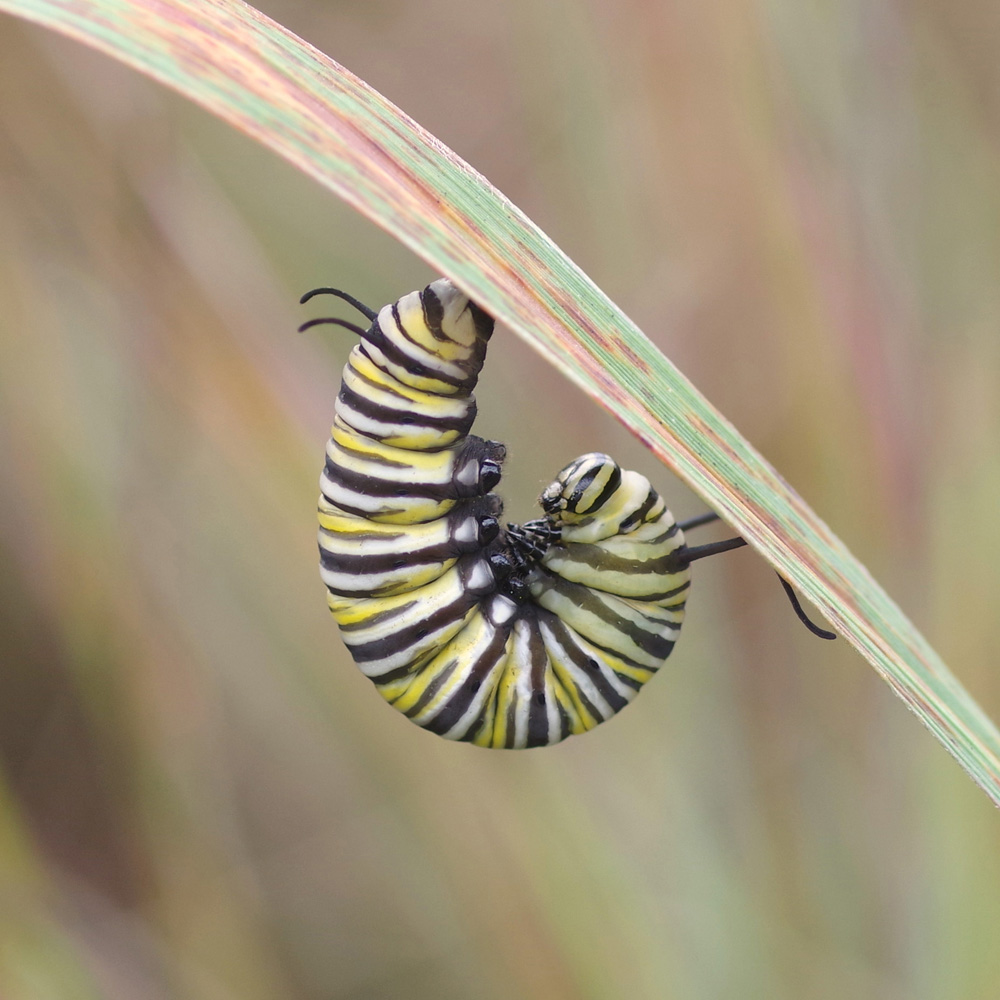
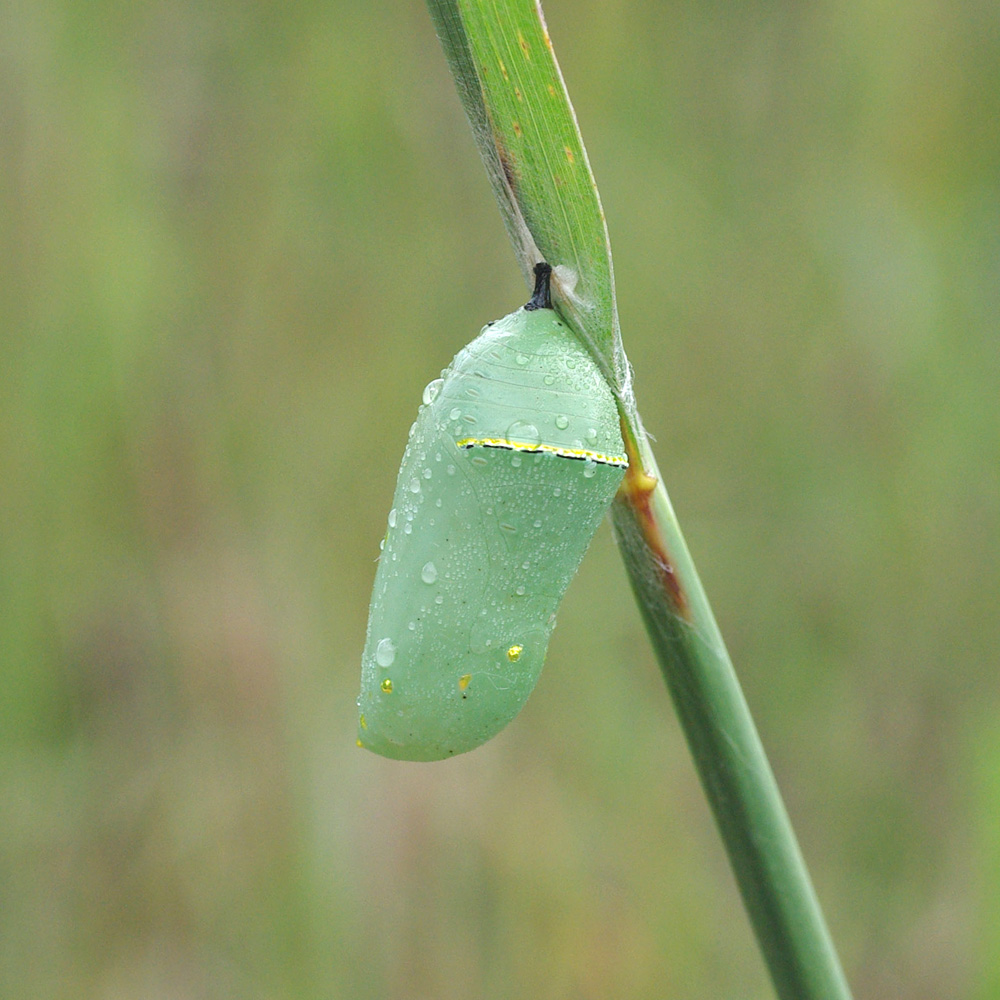
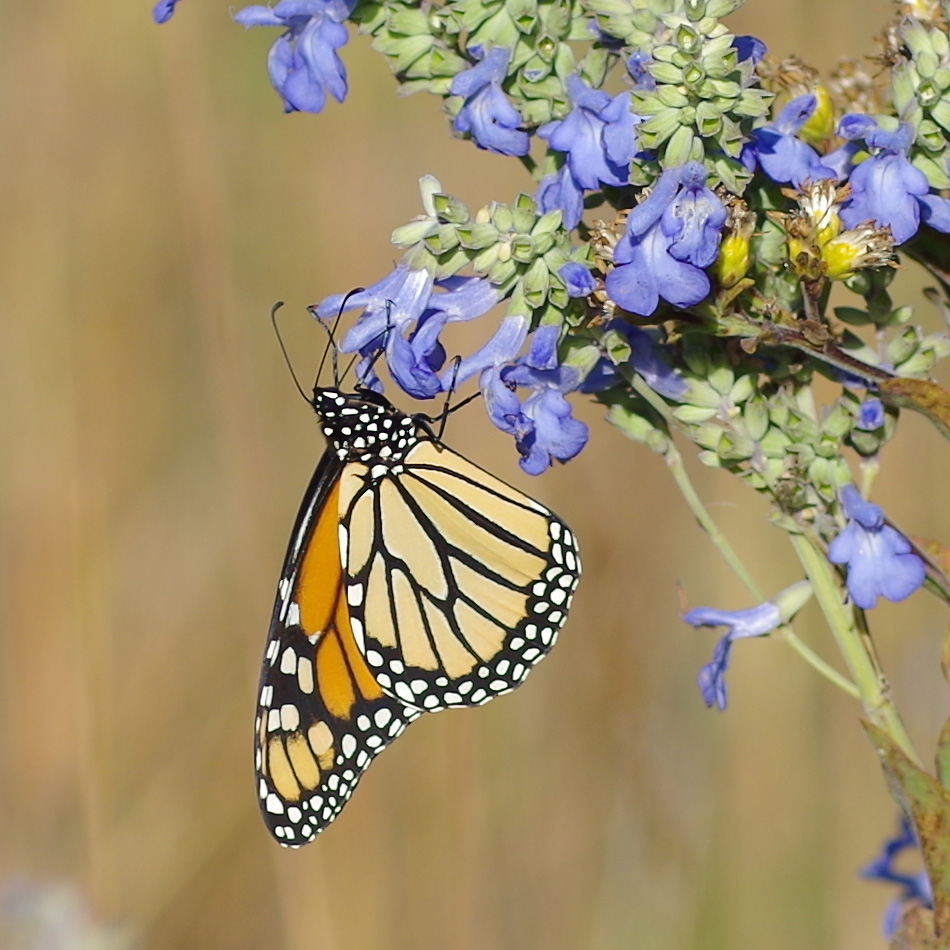
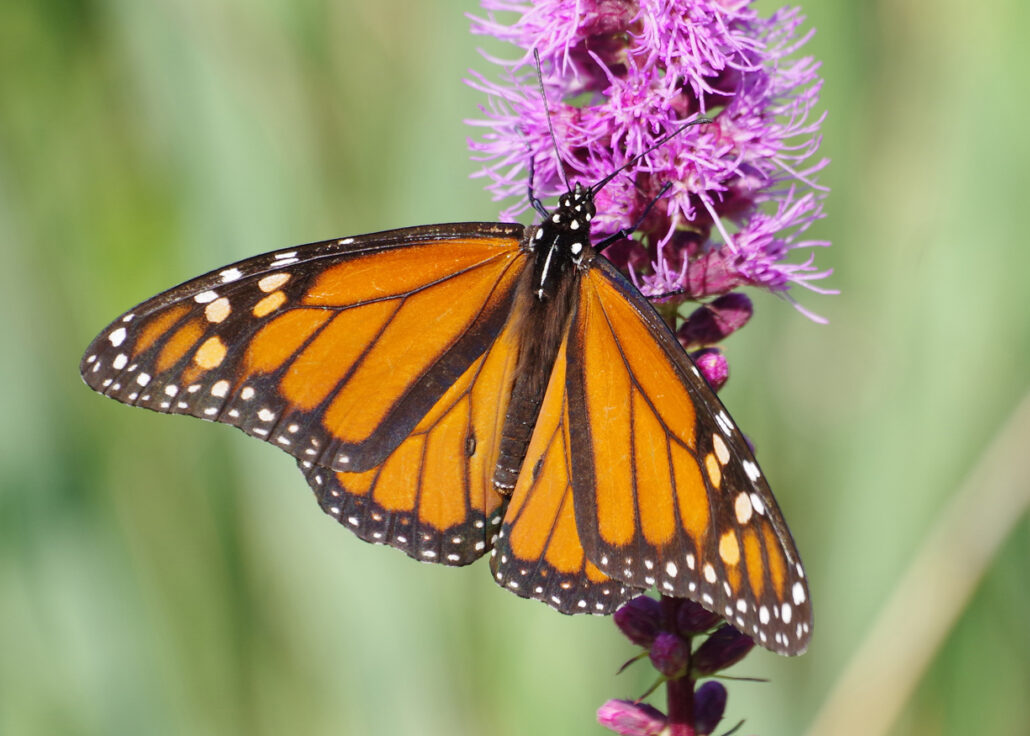
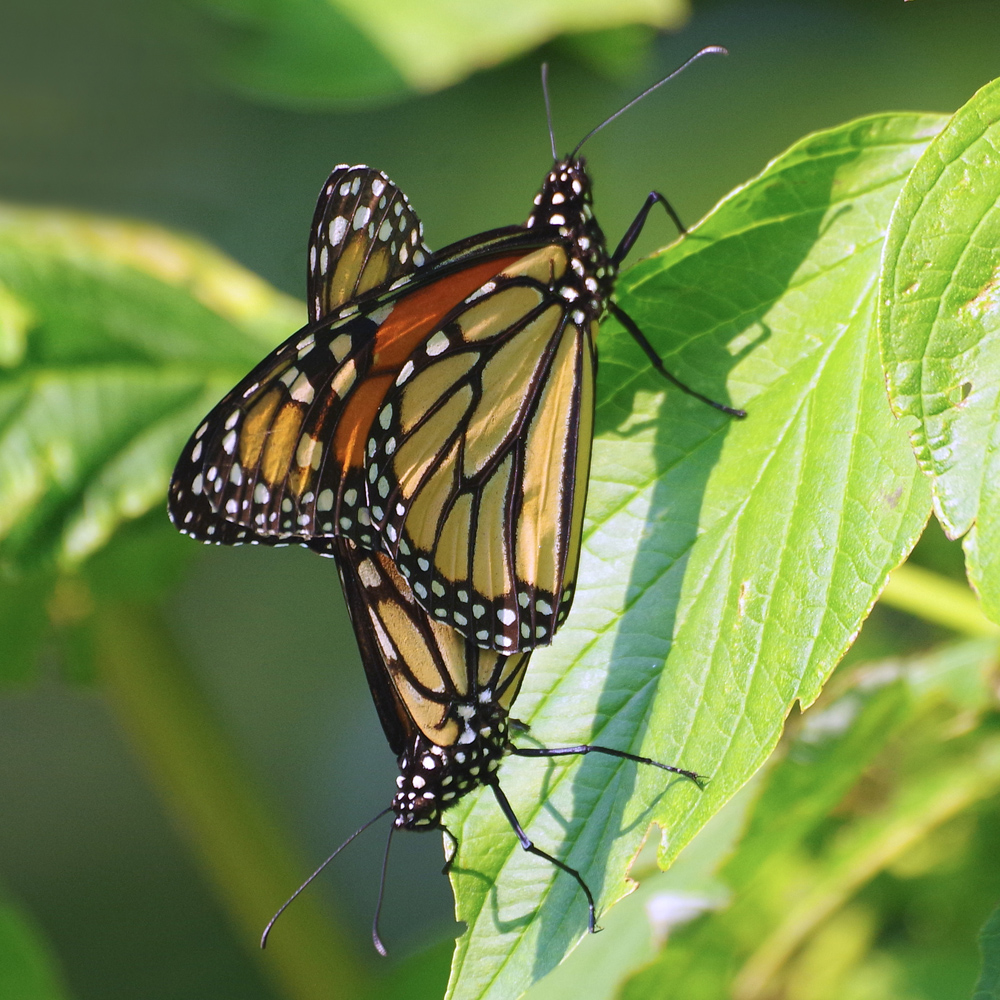
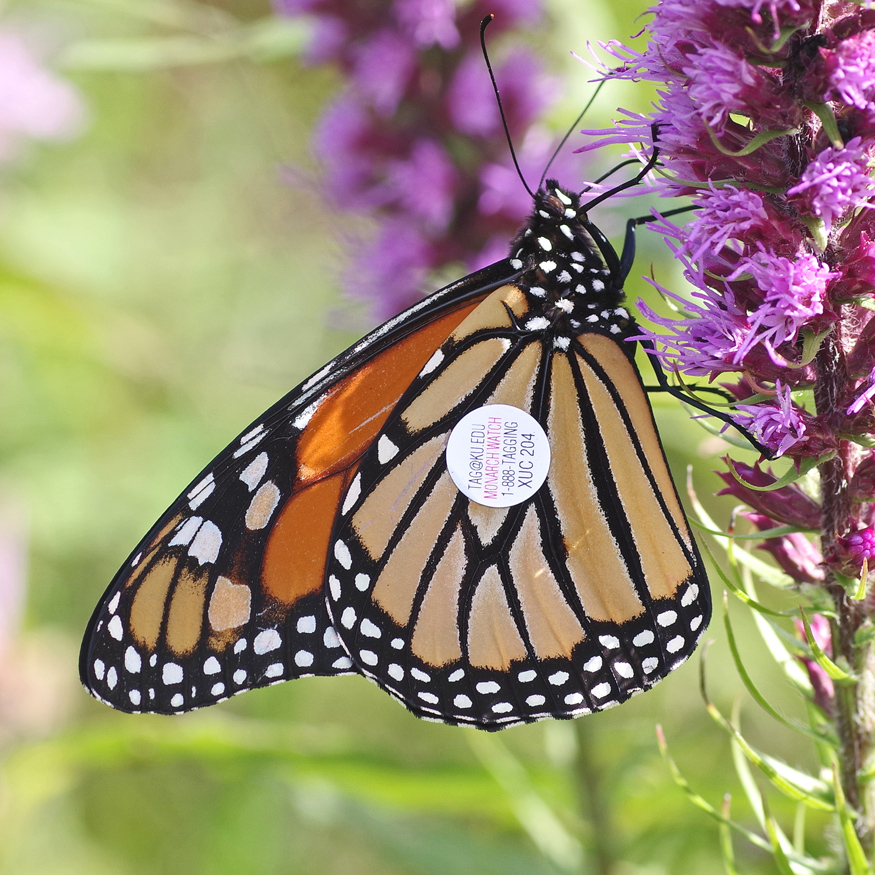
Monarchs grow from egg to adult in about one month, spending around four days in the egg, ten or twelve as a caterpillar (caterpillars hang in a “J” shape right before becoming a chrysalis), and twelve as a pupa in a glorious, pale-green, translucent case that allows voyeurs to observe the transformation (here’s what’s happening inside that chrysalis https://uwm.edu/field-station/bug-of-the-week/pupal-cases/).
Some people – but not people of Irish persuasion, or those who love them – call this butterfly “King Billy’ because orange and black were the colors of King William of Orange.
Go outside – wish the Monarchs bon voyage.
Kate Redmond, The BugLady
Bug of the Week archives:
http://uwm.edu/field-station/category/bug-of-the-week/