
by Kate Redmond
The End of Summer
Howdy, BugFans,
Well, we’re into October. The BugLady is still seeing and hearing lots of bugs as she makes her way to the hawk tower, where she counts migrating raptors from a perch 10 feet off the ground. Most of the goldenrod is done, but tons of syrphid/hover/flower flies, paper wasps, and bumble bees are decorating the asters; tree crickets and katydids are calling from the prairie; and there are still dragonflies and butterflies in the air. And on some of the recent, soft days, thin, horizontal spider silk has been streaming from the vegetation as spiderlings disperse. Here are some bugs from the last half of summer:
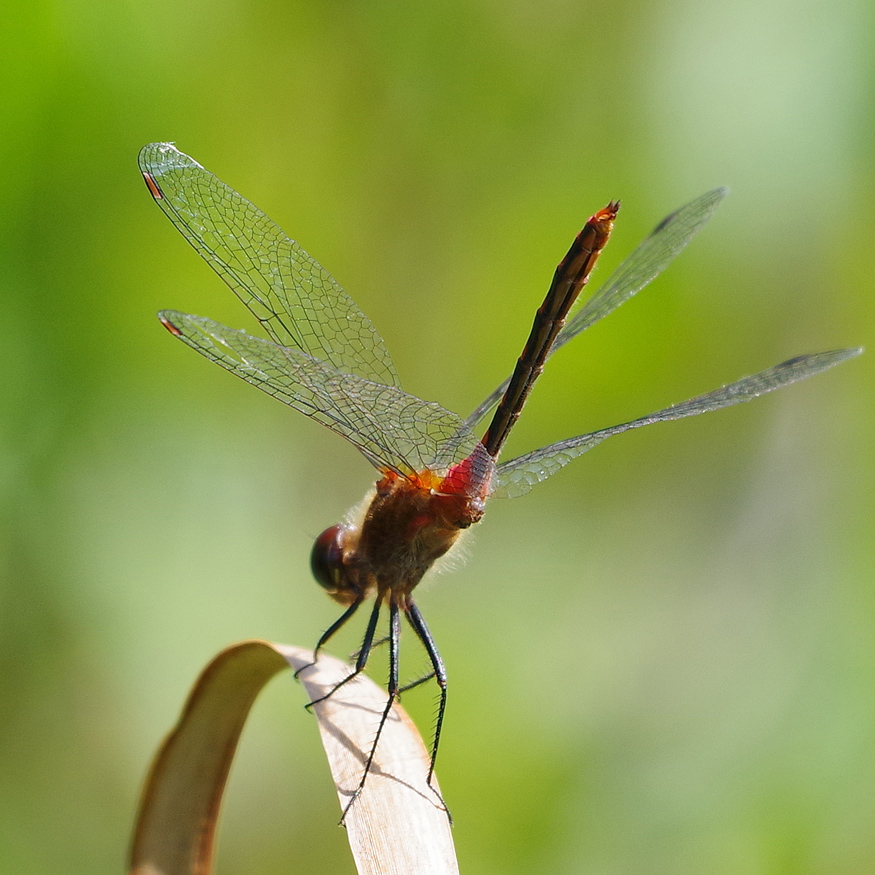
A WHITE-FACED MEADOWHAWK perched in an “obelisk” position on a hot day. It’s all about thermoregulation – the position minimizes the surface area of a dragonfly that’s exposed to the sun.
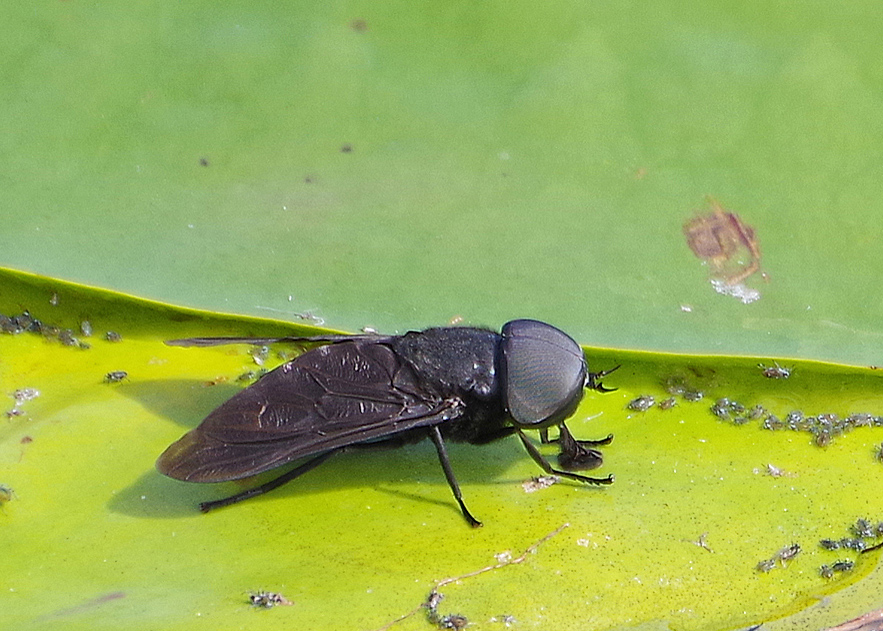
BLACK HORSE FLY – It’s hard to judge the size of an insect from a picture, but this Black horse fly is every bit as big as you think he is (males have huge eyes that cover most of their heads)! Fortunately, Black horse flies target livestock rather than people (mostly). For more information about this fly, see https://uwm.edu/field-station/bug-of-the-week/black-horse-fly-redo/.
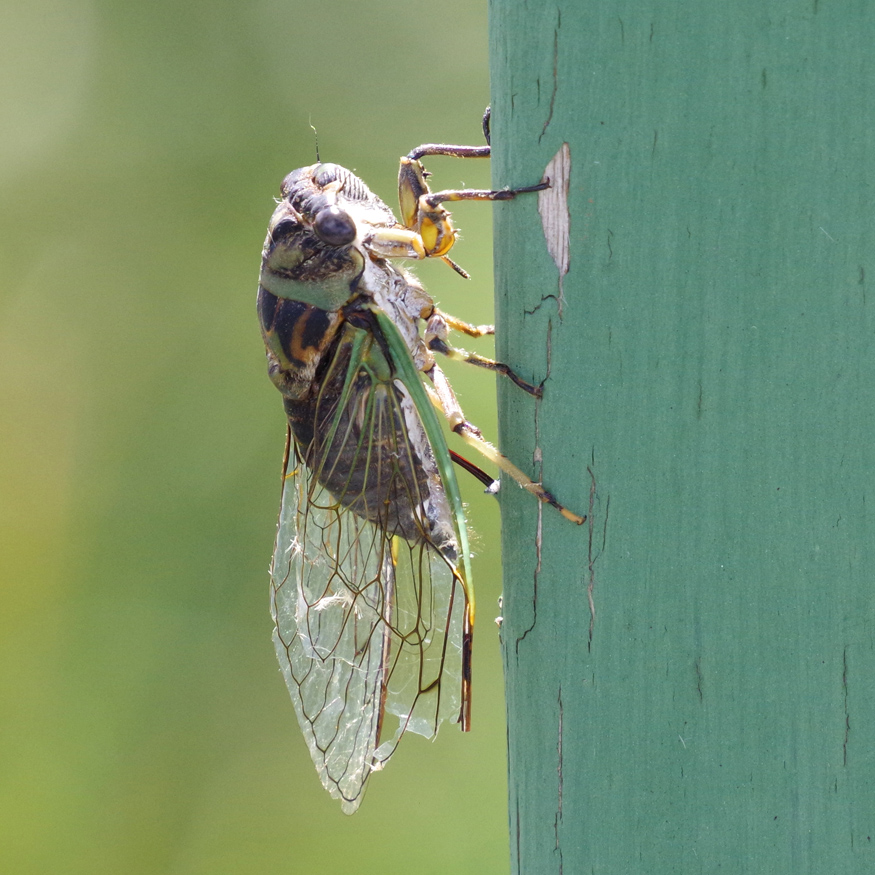
CICADA – One of our common cicadas, a Dog-day cicada in the genus Neotibicen, visited the BugLady on the tower recently.
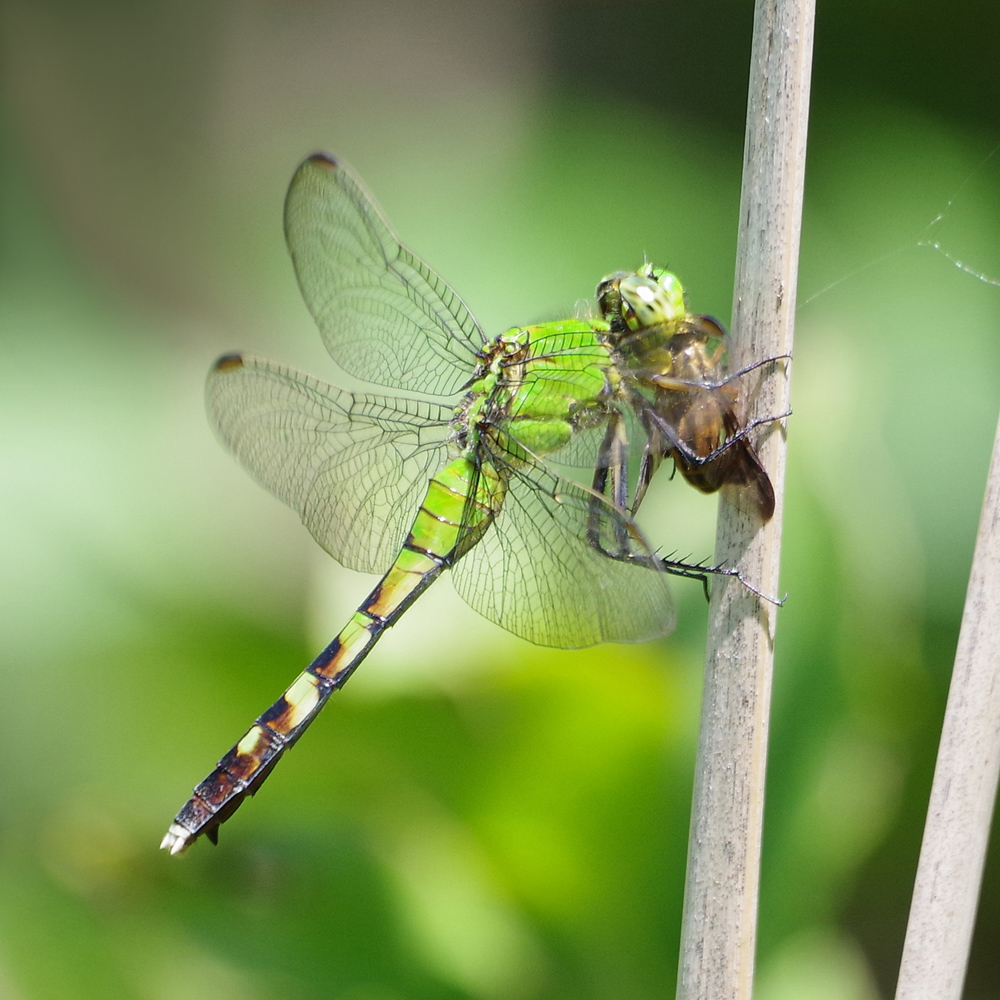
EASTERN PONDHAWK DRAGONFLY – the BugLady always appreciates a little help with deer fly control when she’s out on the trail, and this gorgeous female Eastern Pondhawk was willing to lend some hands.
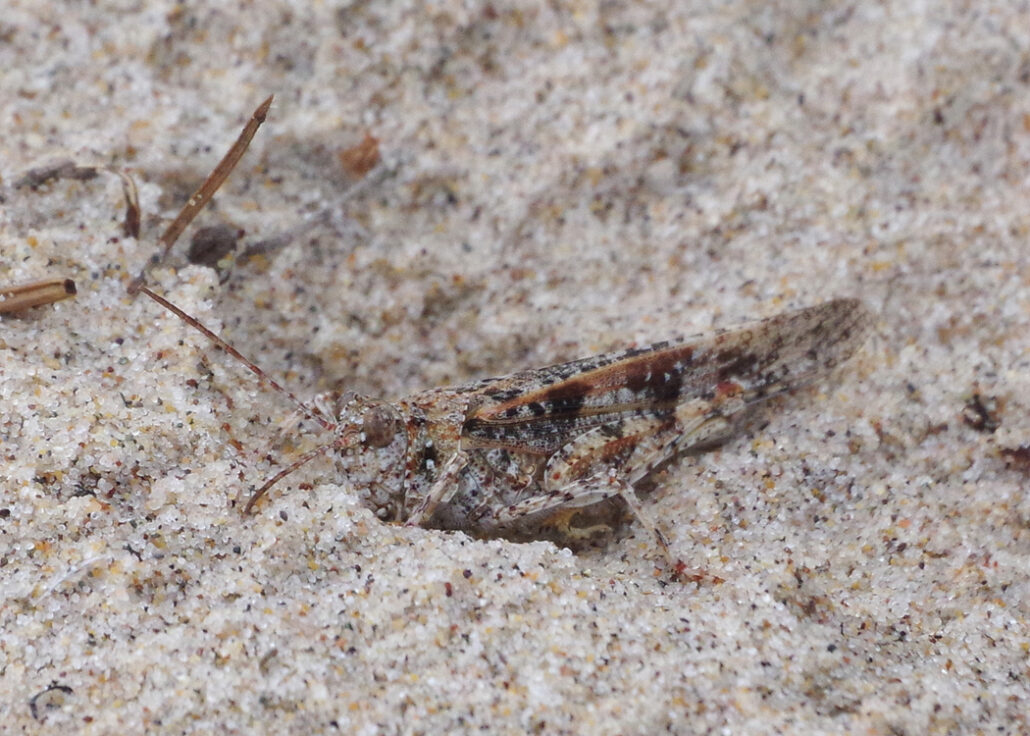
GRASSHOPPER ON SAND – Built for the beach!
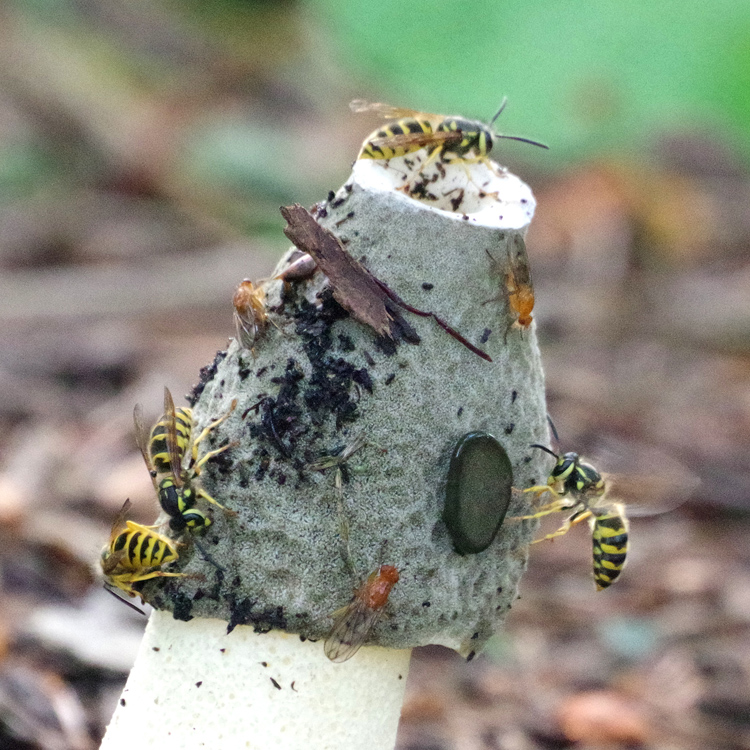
STINKHORN AND COMPANY -Stinkhorns are fascinating fungi. A succession of these Ravenel’s Stinkhorns came up out of the wood chips during September (high quality wood chips indeed – last year they grew some interesting slime molds). In an established “colony,” the stinkhorns emerge from clusters (“nests”) of half-buried, egg-like structures that some people call “Witches eggs” and others call “Dinosaur eggs.” Anyway, the name “stinkhorn” is an apt one, and their caps attracted yellowjackets, blow flies, and several other kinds of smaller flies.
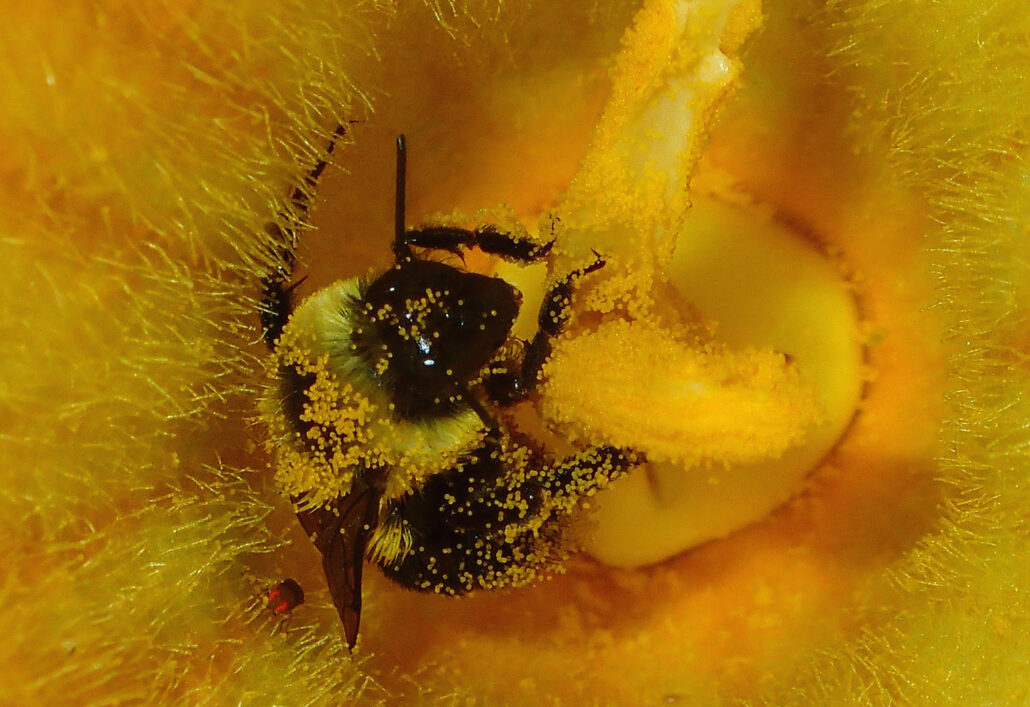
BUMBLE BEE IN A SQUASH FLOWER – BugFan Tom has been sharing a series of sensational shots of bumble bees deep in the throats of his squash flowers. Wow, Tom! And that’s why we call them pollinators!
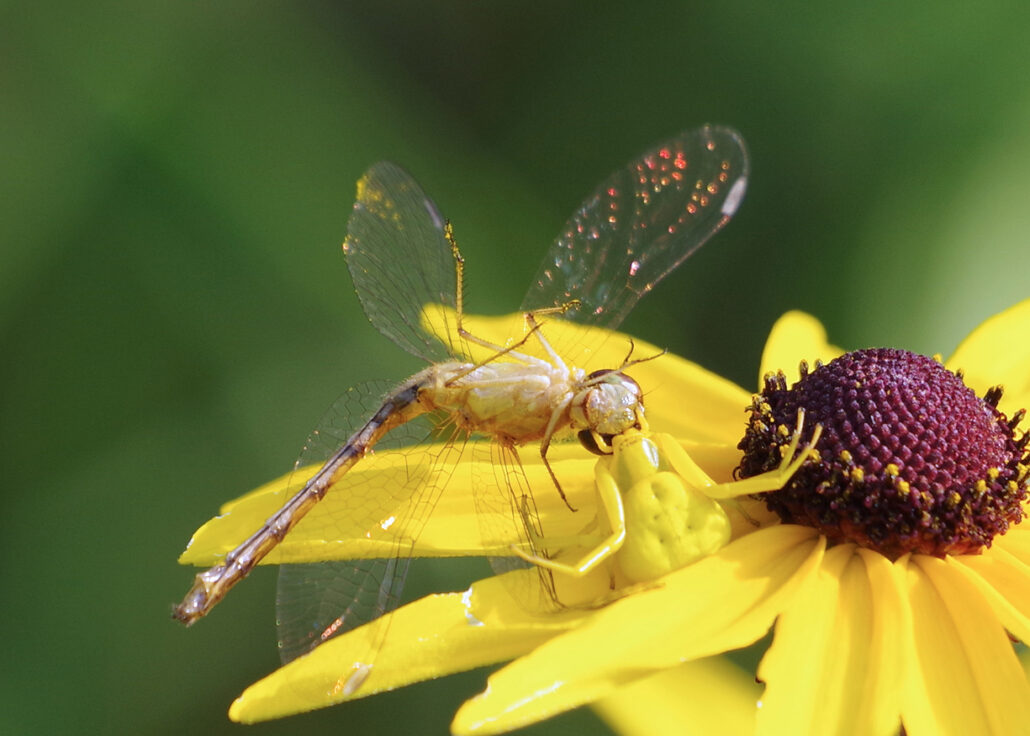
CRAB SPIDER AND AUTUMN MEADOWHAWK – A few years ago, when the BugLady was researching the Eastern Amberwing dragonfly, one of the hits was an image on the website of a photo company. The dragonfly was sitting on a flower, and the photo caption implied that it was a pollinator. ‘Fraid not. Dragonflies do perch on flowers – maybe to rest, or maybe to eat an insect they’ve just snagged, but pollinators, they are not. Sometimes, like this Autumn Meadowhawk, they pick the wrong landing place.
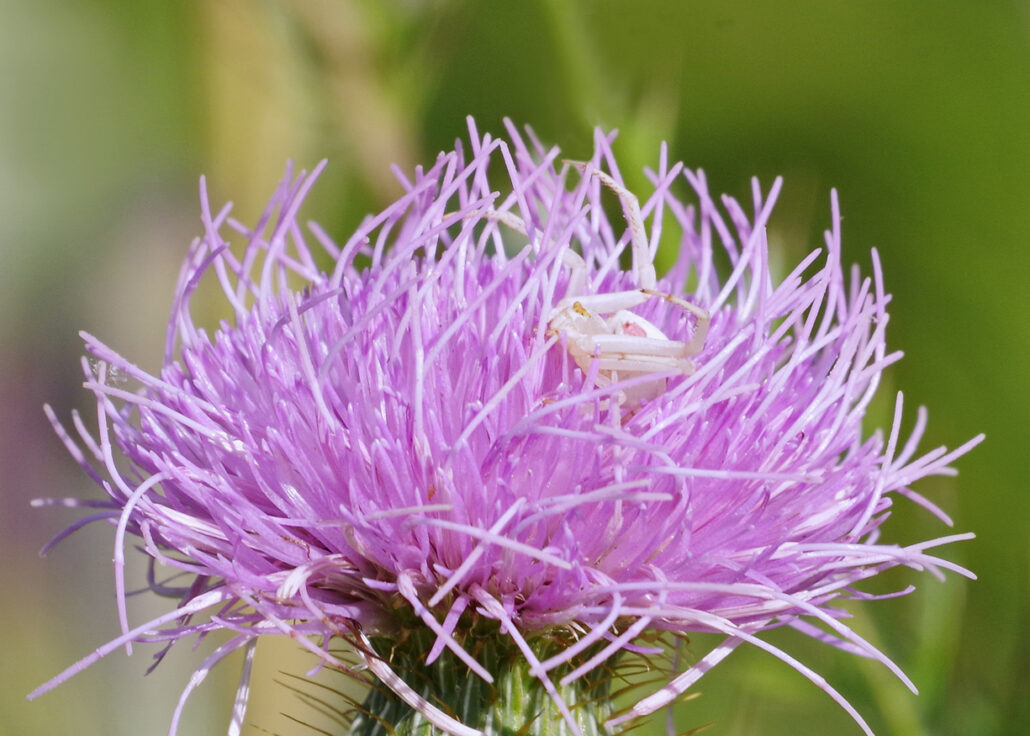
ANOTHER DAY, ANOTHER CRAB SPIDER – Goldenrod crab spiders can change color from white to yellow and back, depending on the color of the flower they’re sitting on. The change takes days. Their default color is white, so to turn yellow, they must produce yellow pigment and secrete it into their outer cell layer. To reverse, they excrete the pigment. They’re out of luck on blue, purple, or pink flowers, like this thistle, but the spider is still pretty well-camouflaged.
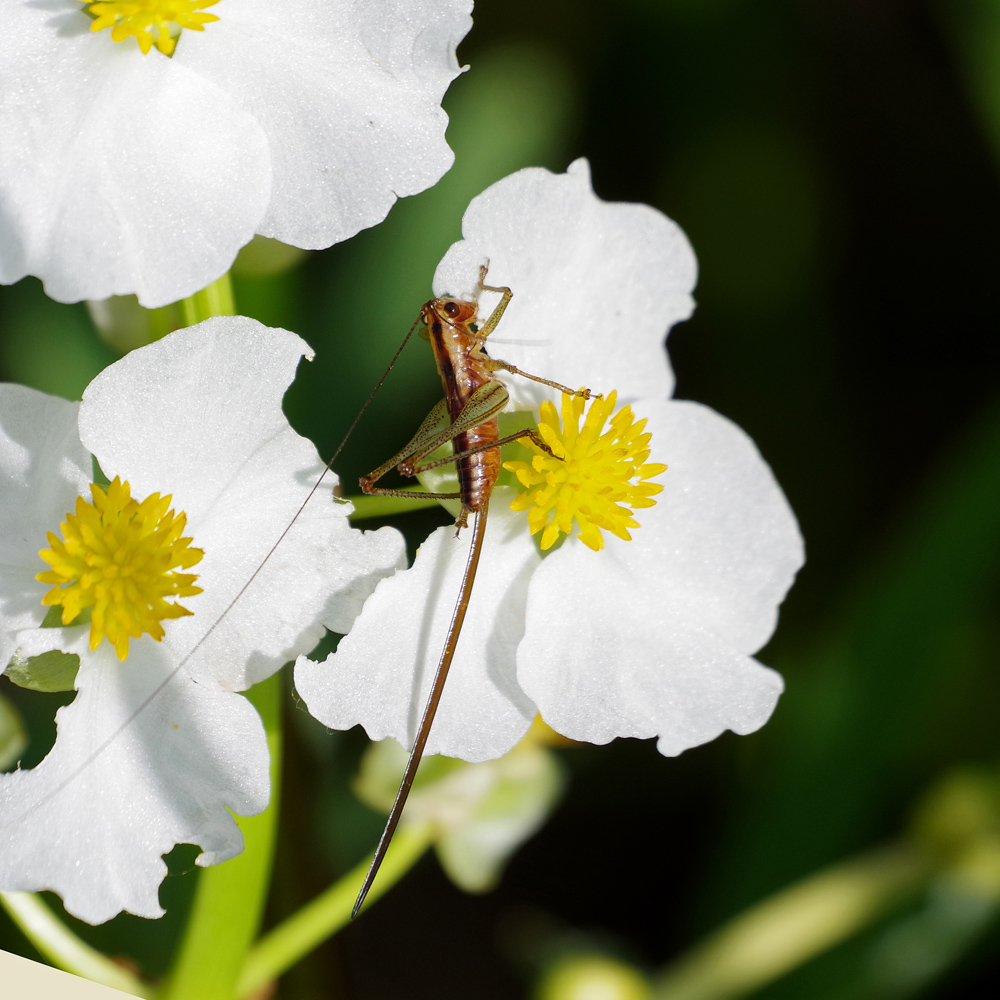
MEADOW KATYDID ON ARROWHEAD – Several kinds of meadow katydids were enjoying the petals and flower parts of arrowheads in Black River Marsh on a fine day in mid-August. The young lady with the impressive ovipositor is a Straight-lanced meadow katydid.
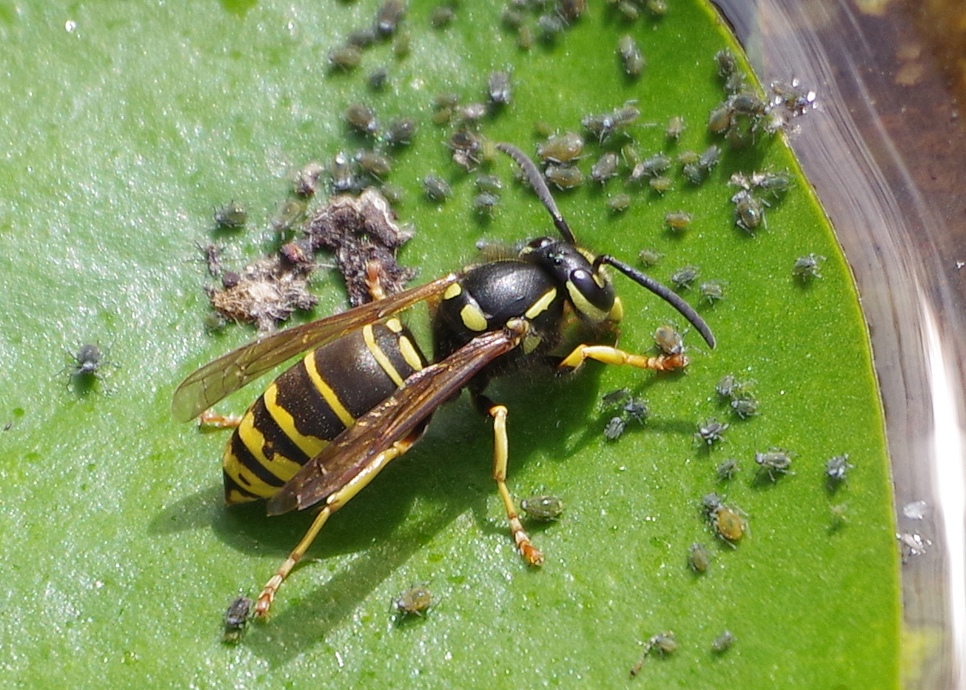
YELLOWJACKET and LILYPAD APHIDS – A yellowjacket on a mission. Adult yellowjackets tend to be vegetarians, feeding on aphid honeydew, sap, nectar, and fruit juices. Immature yellowjackets, however, require protein, so the adults collect and masticate small insects, compact them into “meatballs,” and feed them to the larvae (along the way, the adults swallow some of the meat juices, too). There’s another kind of nutrition that happens with yellowjackets – “trophallaxis.” When the larvae feed, they produce a sugary liquid that the adults, in turn, imbibe. And your picnic? Yellowjacket populations are peaking as the supply of flowers starts waning, so they may turn to our food and garbage cans.
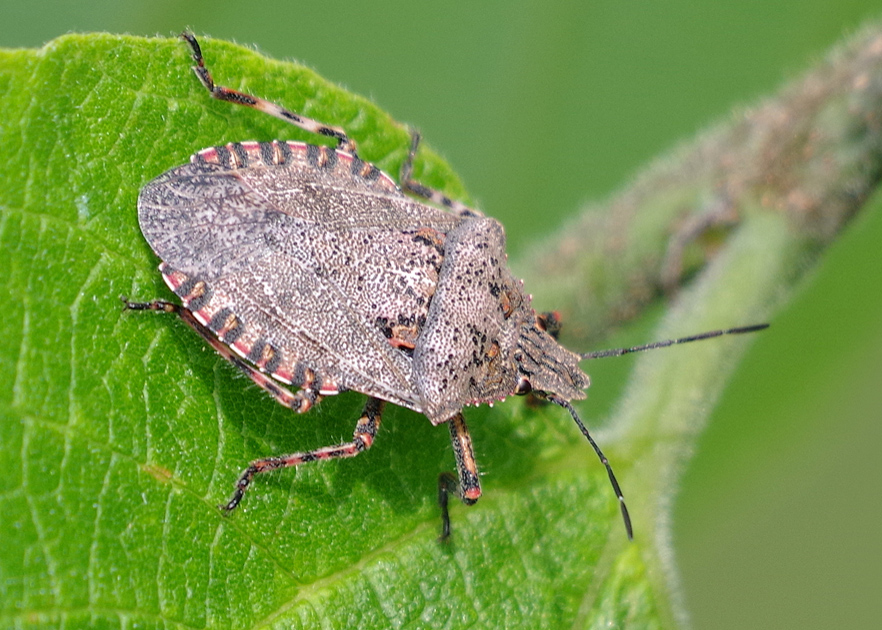
ROUGH STINK BUG – There are plenty of stink bugs that are brown that are not the invasive Brown marmorated stink bugs, and this is one of them, a Four-humped Brochymena, or rough stink bug. Their textured surfaces camouflage them on tree bark. Because they aren’t “pests,” no one’s really studied them much. In fact, there are even disagreements about whether they are mostly carnivorous or mostly herbivorous.
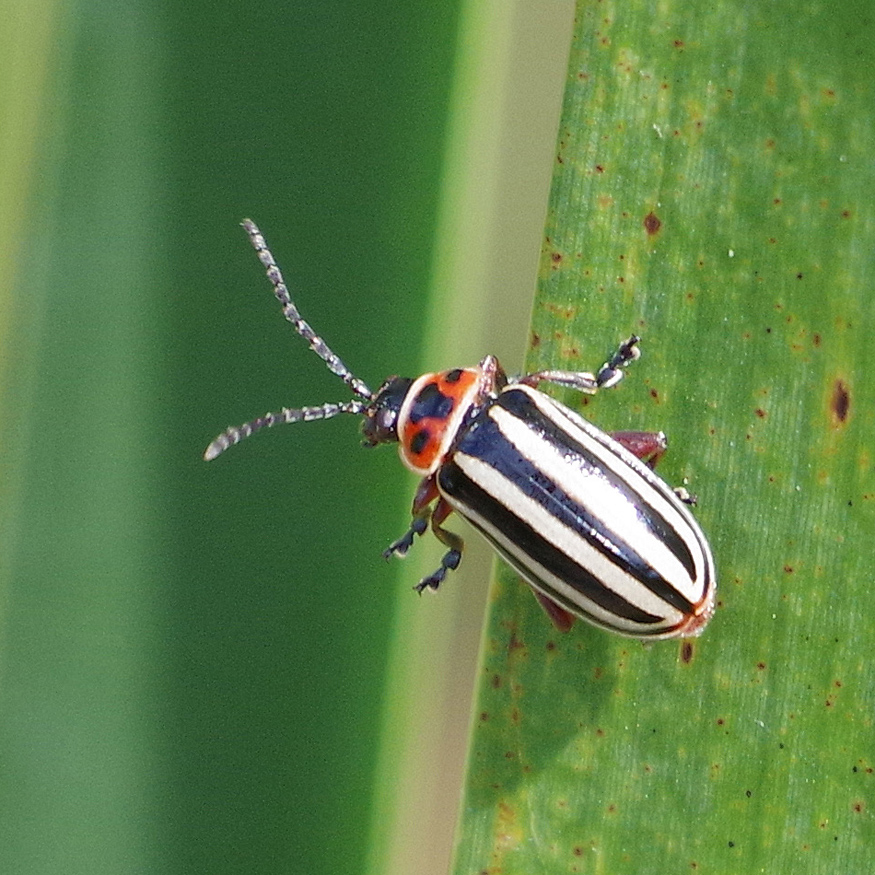
SMARTWEED DISONYCHA – This lovely leaf beetle belongs to a decorative genus of flea beetles that includes some species that (of course) are tricky to ID. According to bugguide.net, the Smartweed Disonycha are not actually a species, but are a “Dumping ground for images of D. pensylvanica-group in which a decision on one of the three species seems not possible.” Of course, it might also be Disonycha uniguttata (no common name), also one of those three species in the D. pensylvania group.
Nota Bene: The BugLady knows how to spell Pennsylvania. However, when this beetle was named, or soon afterwards, someone misspelled it, or that’s the way it was originally spelled, and that spelling has been enshrined in the nomenclature.
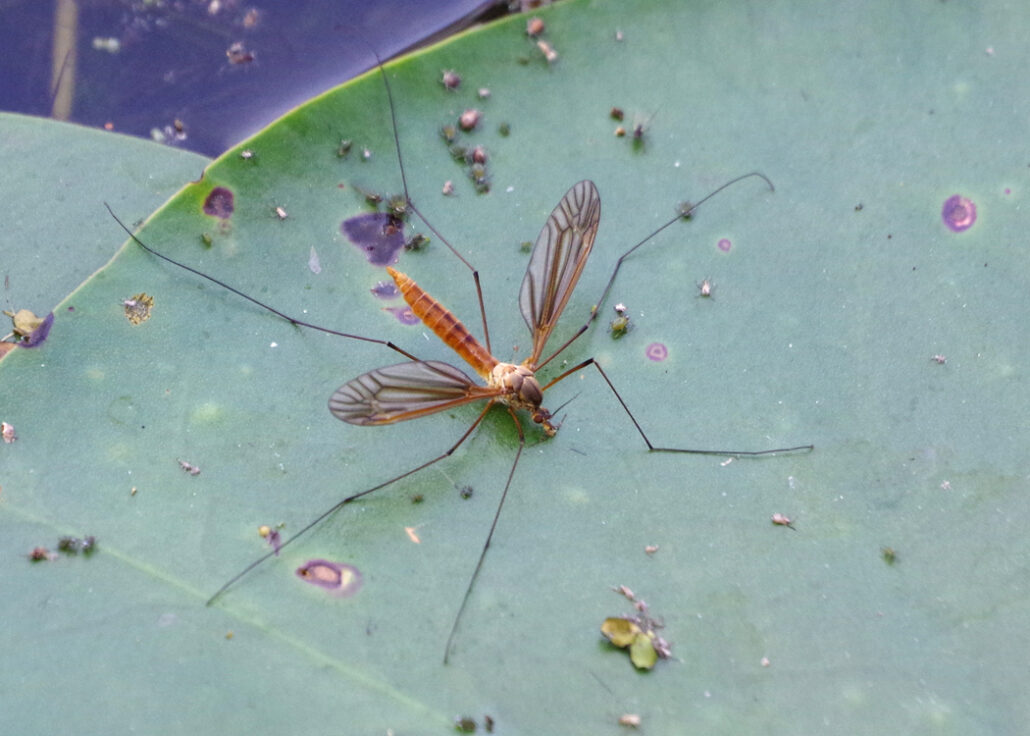
CRANE FLY – The BugLady was standing by a pond in late August when she saw a small insect flying over the water and dipping the tip of its abdomen into it, just like an ovipositing dragonfly or damselfly. She was pretty surprised when it landed on a water lily leaf and she saw that it was a crane fly. She knew that the larvae https://www.bugguide.net/node/view/1602094/bgimage of many species of crane flies grow up underwater, but she had never considered how they got there!
Go outside – find some bugs!
Kate Redmond, The BugLady
Bug of the Week archives:
http://uwm.edu/field-station/category/bug-of-the-week/