
by Kate Redmond
And Now for Something a Little Different A World without Cardinals??
Howdy, BugFans,
Life has been busy, so here’s an article that the BugLady wrote for the newsletter of the Lake Michigan Bird Observatory. Birders speak of their “Spark birds” – the species that got them into birding – the BugLady is willing to bet that lots of people were inspired by Cardinals!
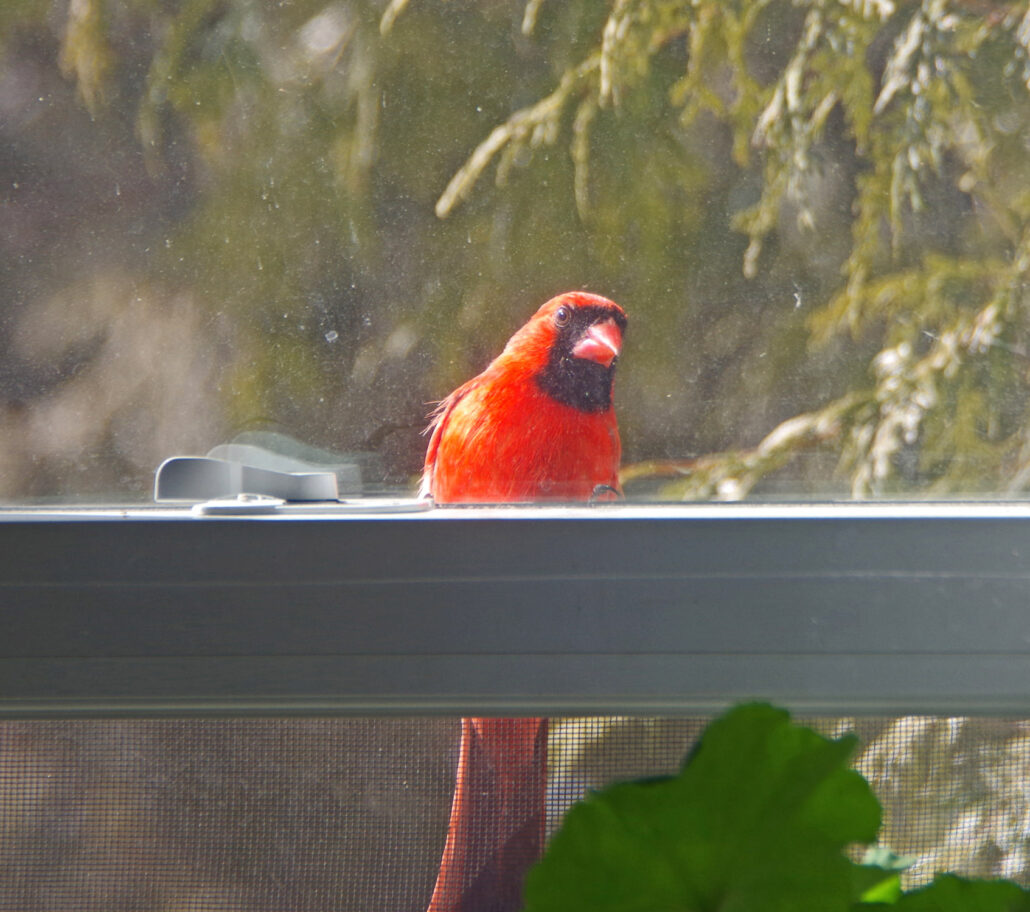
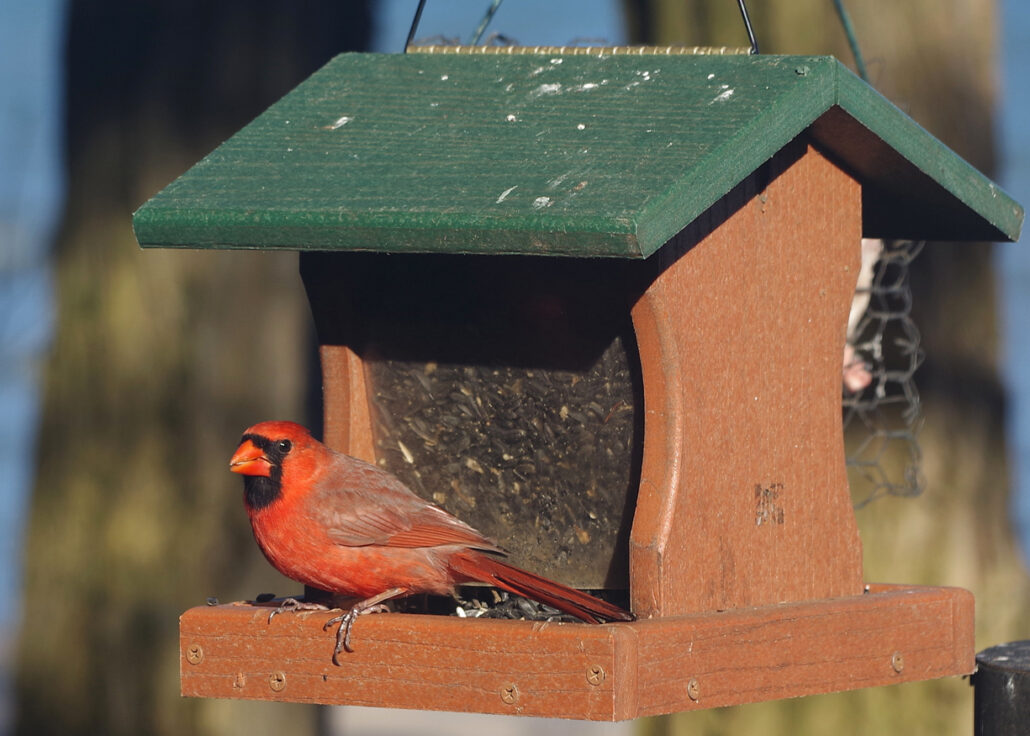
Feeder watchers know them as avid consumers of black oil sunflower seed, both on the ground and on the feeder — birds whose heavy bills make short work of the seed’s outer shell. It’s always surprising to watch them on the peanut feeder, wiggling shelled peanuts through the gaps in quarter-inch hardware cloth with that hefty bill. Bird banders know them as the bird that uses its beak to clamp down painfully on the webbing between a bird bander’s fingers or on their cuticle as they remove a Cardinal from the mist net. Many birders credit them as the species that turned them on to birding. Some home owners recognize them as the bird that tirelessly attacks its own reflection in the picture window during the breeding season (starting at dawn). Seven states celebrate them as their State bird. Their many admirers know them variously as the cardinal, redbird, Northern Cardinal, cardinal grosbeak, and red cardinal –- both the common and scientific name (Cardinalis cardinalis) are a nod to the red garments worn by Roman Catholic Cardinals.
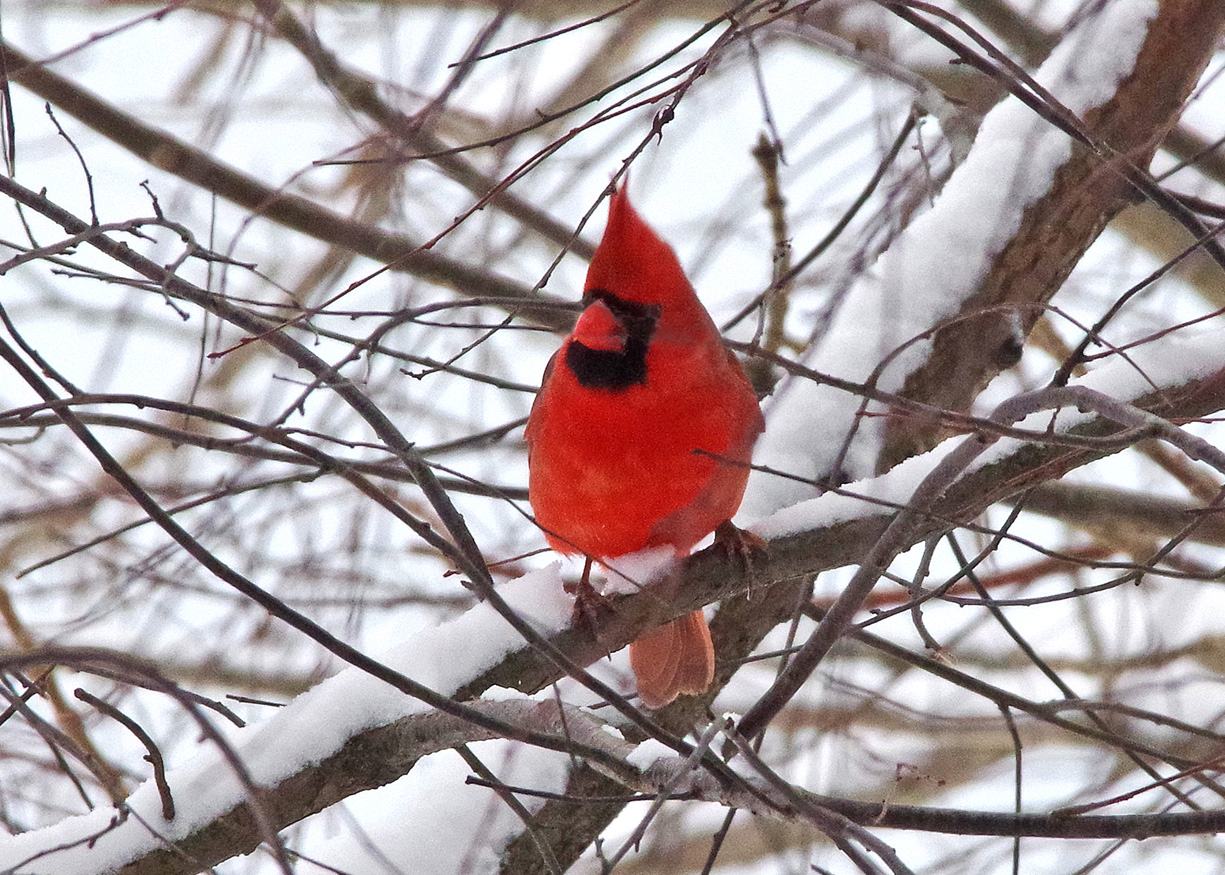
One thing is sure — whether you’ve been birding for five months or 50 years, the sight of a Cardinal singing in the sun at the top of a tree or sitting on a snow-covered branch never fails to take your breath away, and the sound of that rich whistle on a warm January day promises spring (eventually) and lifts your spirits.
Cardinals have always been here, right? Well, the people who settled Wisconsin in 1848 never saw one! Like other species of brightly-colored birds that we see here, their origins lie considerably to the south. Warming climate, less snow, changing habitat, and the popularity of bird feeding have allowed them to extend their range northwards over the past century. They were first recorded along the southern border of the state in 1903, in Milwaukee County in 1920, Waukesha County in 1927, Ozaukee County in 1929, Washington County in 1956, Dane County in 1935, and Door County in 1940. It wasn’t until the 1980’s that they were seen in most counties in the state.
In 1980, a total of 3,049 were counted on the state’s Christmas Bird Counts; in 2020, 1,008 were counted in the Madison Count, alone. Sam Robbins noted in Wisconsin Birdlife (1991) that they had followed the major waterways into the state and had spread out from those footholds, but that they still occurred in low numbers in the northern half of the state. Cardinals don’t migrate.
Cardinals (officially, Northern Cardinals) are found in backyards, parks, shrubby areas, swamps, and edges in North America east of the Great Plains, across Canada, from Minnesota to Maine, and south to Guatemala. They have been introduced to Hawaii, Bermuda, southern California, and Arizona.
Their diet is mostly fruits and seeds, supplemented by a variety of spiders and small insects. They are often the last birds to visit a feeder at dusk.
A male Cardinal sings to establish a territory, and he courts by feeding seeds to the female. The pair may spend a week or more surveying potential nest sites together (carrying bits of nesting material in their beaks as they look, according to Cornell’s All About Birds website), but when they decide, the toast-colored female does most of the nest construction. She “tenderizes” twigs by biting them, and then, holding one end of the twig, turns her body so that the twig curves around her body and into the cup of the nest. Then she tamps it down with her feet. Nests are usually in forks of branches and may be close to the ground or as high as 15 feet up
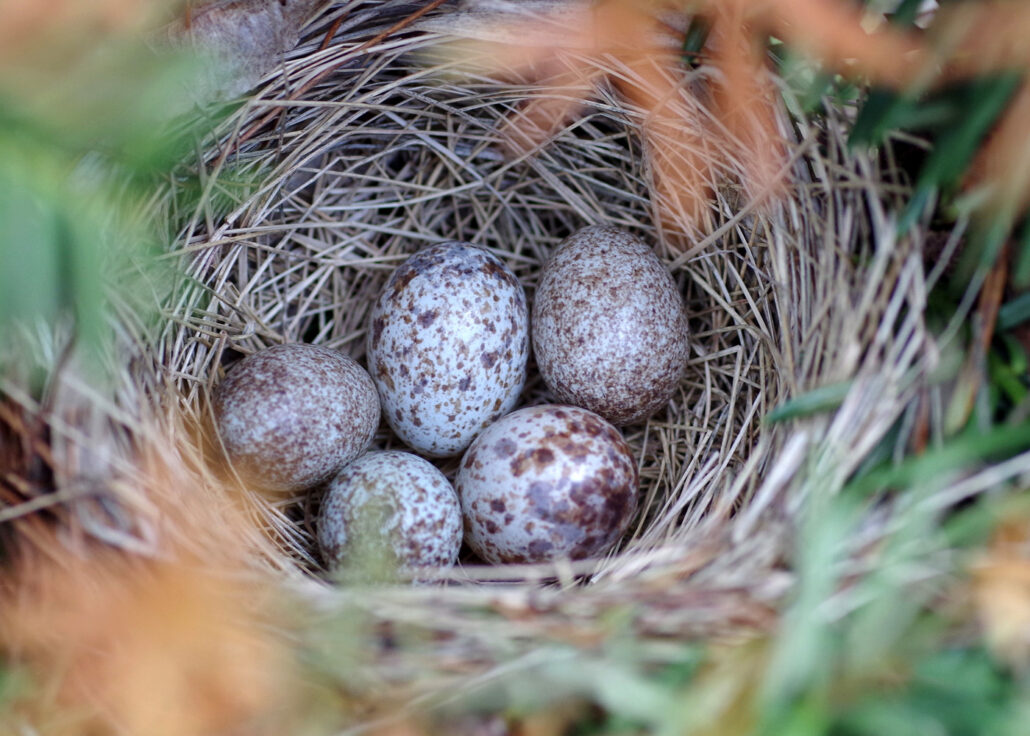
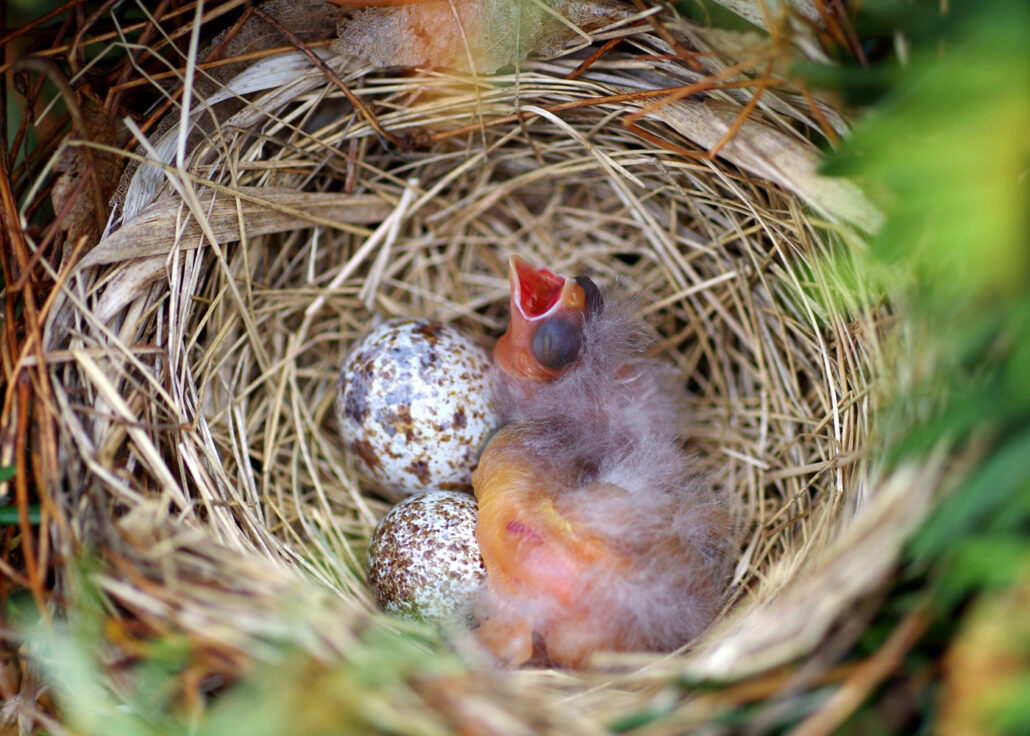
A pair may produce several clutches each summer (they rarely reuse a nest); females do most of the incubating, but males bring food to them on the nest. The young are fledged within two weeks, with the male caring for the fledglings while the female incubates the next brood.
Fun Facts about Cardinals:
- The male’s red color is related to his diet – he must eat enough foods that contain carotenoid pigments to maintain his brilliant color.
- The Migratory Bird Treaty Act of 1918 put an end to their popular use as caged birds.
- Unlike the females of many bird species, female Cardinals can sing as well as their mates can.
There’s a feeding hierarchy – males are first in line, females next, and young birds are last.
To enjoy their sounds – https://www.allaboutbirds.org/
Kate Redmond, The BugLady
Bug of the Week archives:
http://uwm.edu/field-station/category/bug-of-the-week/