
by Kate Redmond
Dun Skipper Butterflies
Greetings, BugFans,
Seasoned BugFans know that the BugLady’s relationship with skipper butterflies is fraught. These are small, speedy butterflies, most of which are either orange and brown, or brown and orange. Her interactions with skippers always start with the question, “What is it?” and end with “Are you sure?”
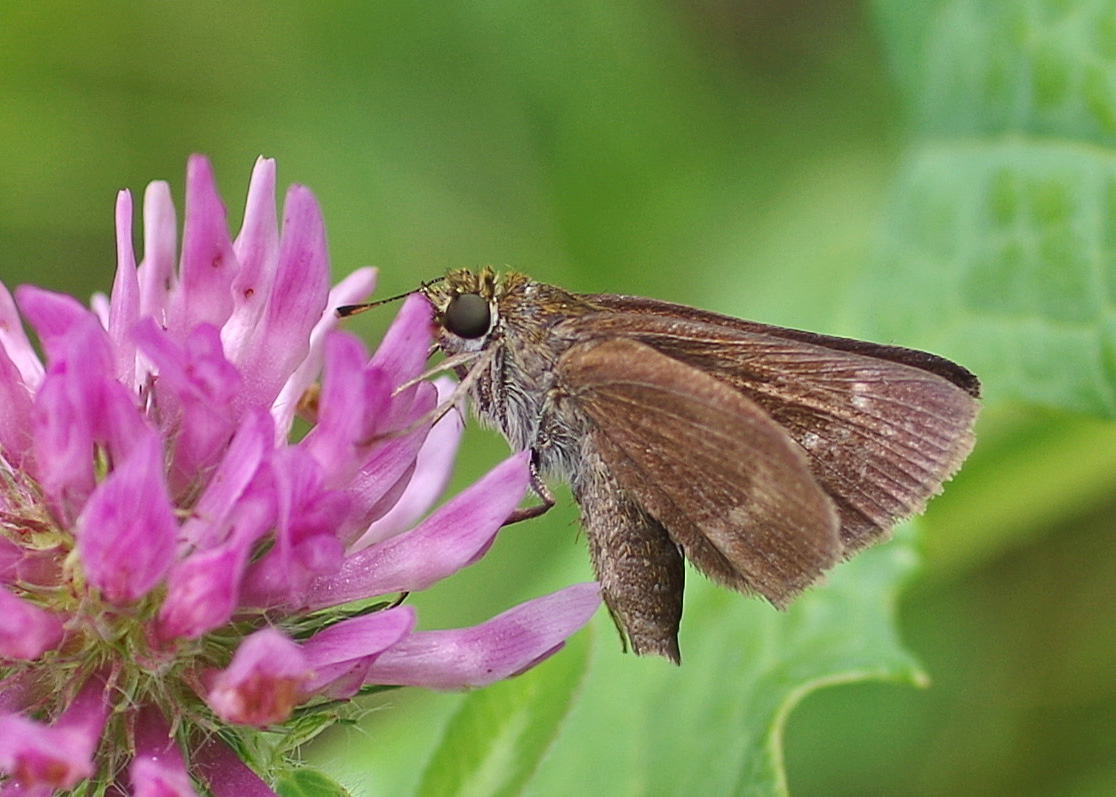
She’s (usually) pretty sure about Dun Skippers (Euphyes vestris), family Hesperiidae (the Skippers) and subfamily Hesperiinae (the Grass Skippers, so-called because the caterpillars of most species feed on and shelter in the leaves of grasses and sedges). They’re also known as the Dun Sedge Skipper and the Sedge Witch. Witch? They’re one of three skippers (the others are the Northern Broken-dash https://www.bugguide.net/node/view/2068070/bgimage, https://www.bugguide.net/node/view/2010950/bgimage and the Little Glassywing https://www.bugguide.net/node/view/2135356/bgimage, https://www.bugguide.net/node/view/1991796/bgimage whose flight periods overlap and who are called the Three Witches. The “Minnesota Seasons” website quips that they are thus named “because their dark wings make it difficult to tell ‘which one is which.’” They occur in North America in grasslands and along moist stream, wetland, and woodland edges east of the Great Plains.
[Nota Bene: the BugLady regrets, whenever she sees a range map like this https://www.bugguide.net/node/view/18403/data, not buying, decades ago, a copy of a National Enquirer in the checkout lane that featured a story about how a giant earthquake was going to fracture the continent from north to south along the Mississippi River. The accompanying map showed the Mississippi drawn along the western edge of Minnesota, Iowa, Missouri, etc.]
But we digress.
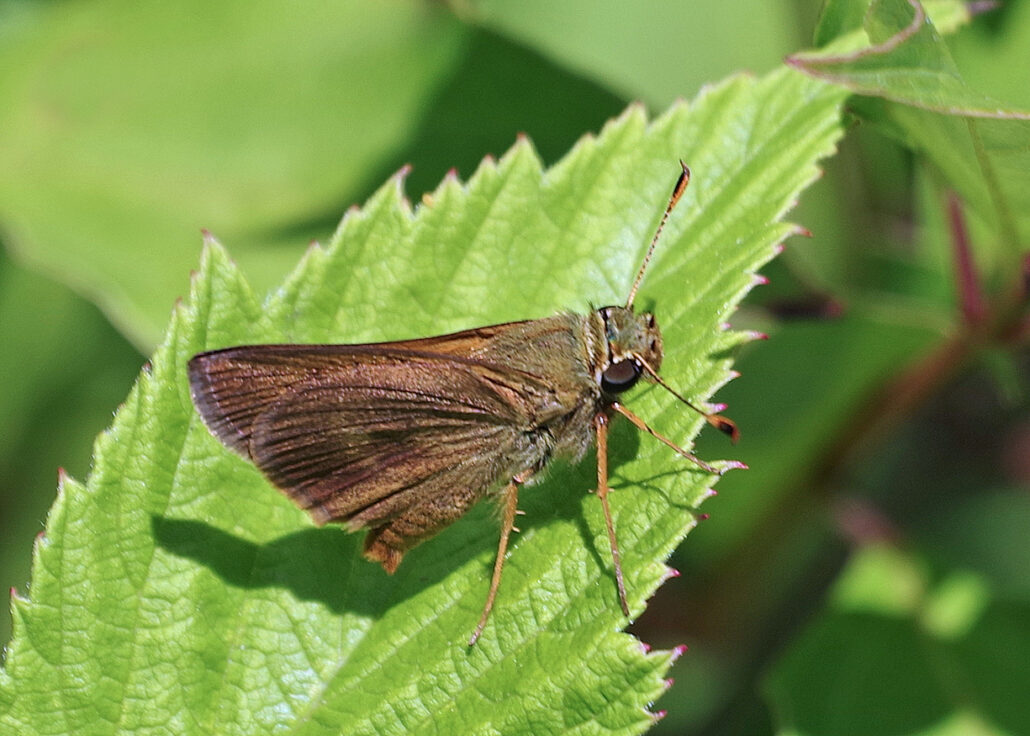
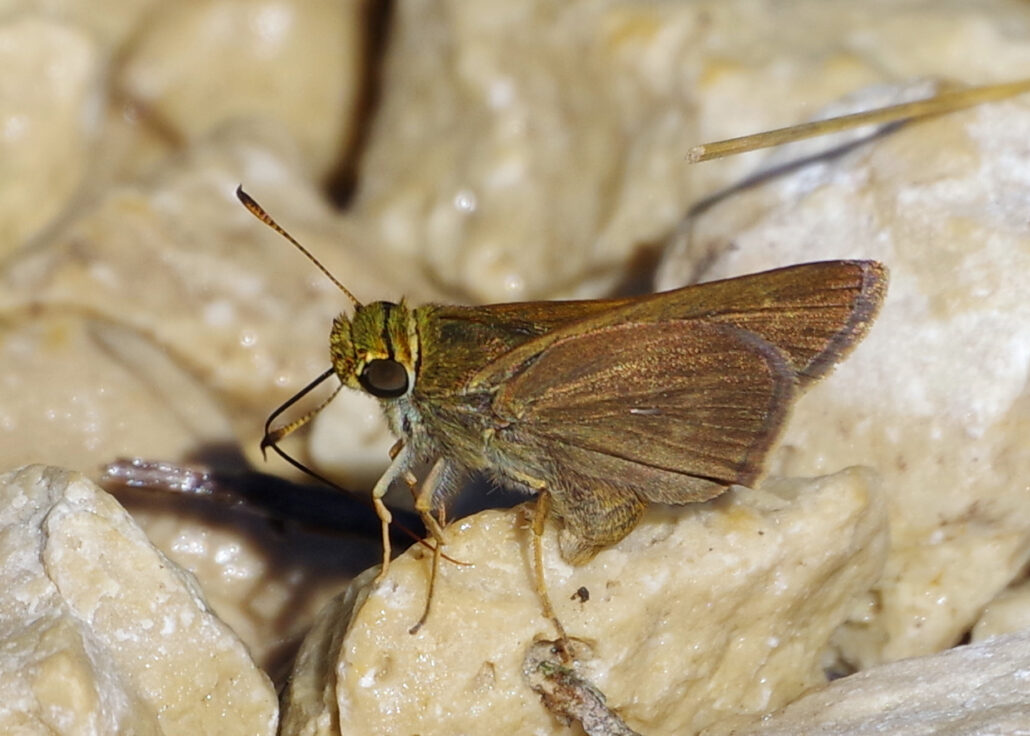
Dun Skippers are small (about 1” to 1 ½” wingspread), deep chocolate-brown skippers that sport a few pale spots on the upper surface of the forewing if they are females, and a diagonal black line if they are males.
They like wetlands because the caterpillar host plants are sedges. Various sources report that Dun Skippers feed on the sun sedge (Carex heliophila), tussock sedge (Carex stricta), and Chufa/Nut grass (Cyperus esculentus), but the estimable Butterflies of Massachusetts website states that “It is amazing and unfortunate that the exact host plant used by Dun Skipper in Massachusetts is not known,” and they speculate that because of their wide distribution, Dun Skippers probably also use some grass species. Adults sip nectar from white, pink, and purple flowers, and males also absorb minerals and moisture from damp ground, carcasses, and animal droppings (feels like there’s a Joseph Conrad allusion in there somewhere).
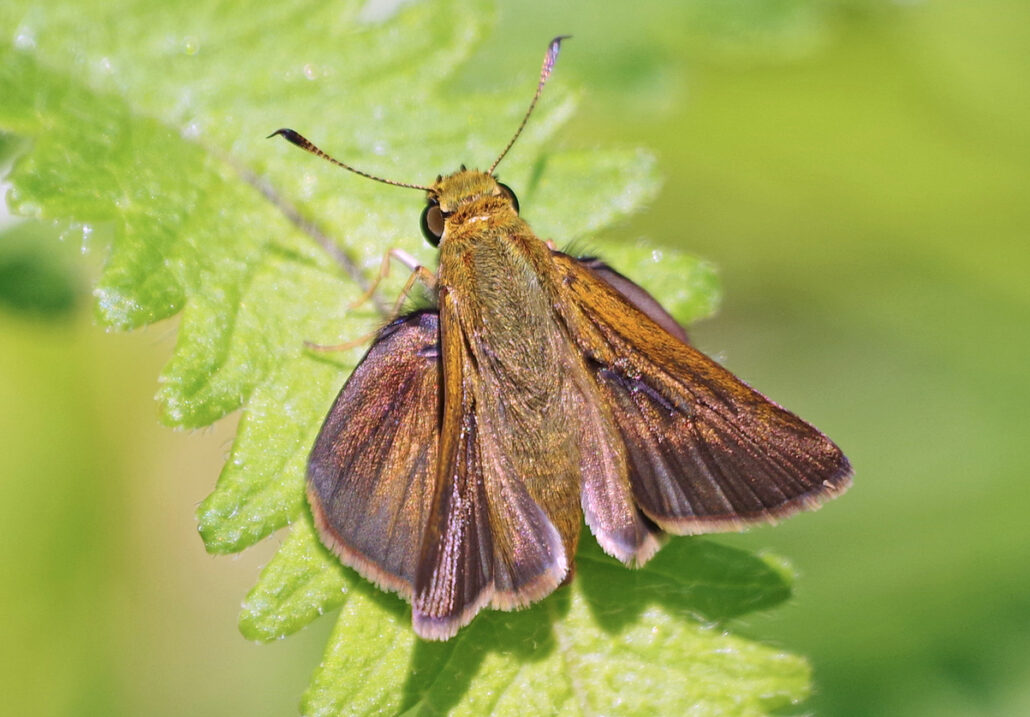
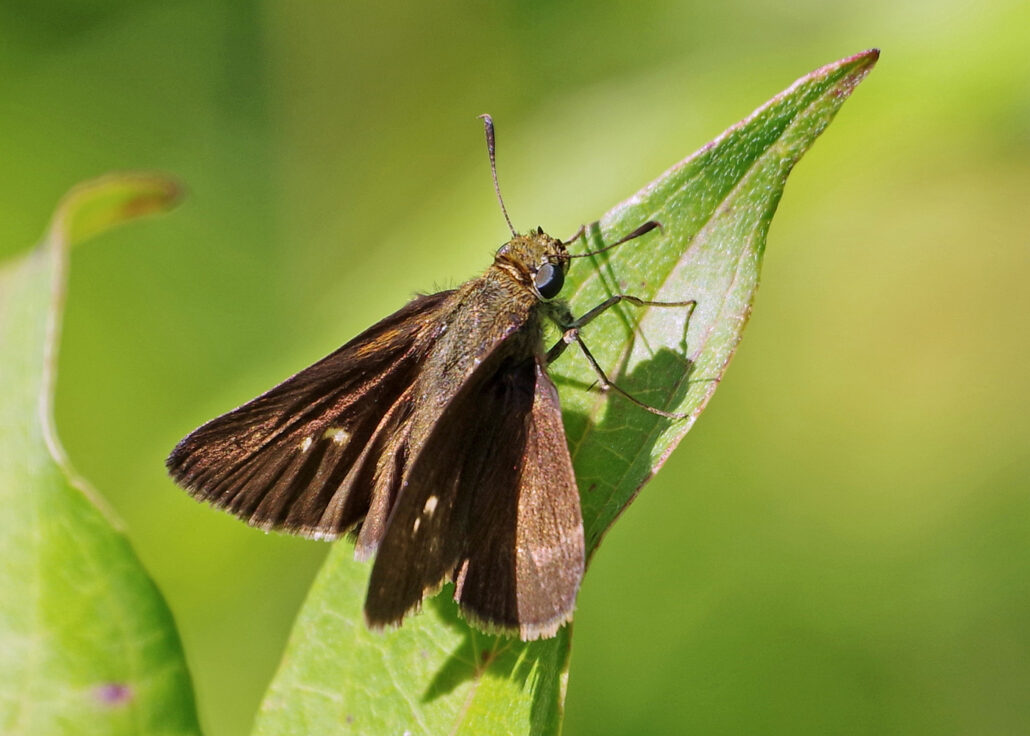
Males scan for females from perches on vegetation during the first half of summer. Eggs are laid in the middle of sedge leaves, and when the caterpillars hatch, they feed nocturnally on the leaves and make shelters by rolling or webbing them together into tubes. They overwinter as caterpillars, resume feeding in spring https://www.bugguide.net/node/view/1038810/bgimage, and then pupate in a silk-lined shelter low on the host plant, emerging as adults in very late spring/early summer. There’s one brood per year in our neck of the woods, but more in the South.
Dun Skippers have a wide range and are adaptable enough to use a variety of habitats, so they’re predicted to do well in a warming climate.
Kate Redmond, The BugLady
Bug of the Week archives:
http://uwm.edu/field-station/category/bug-of-the-week/