

by Kate Redmond
Bugs in the News XVII
Howdy BugFans,
The BugLady is deep into putting together a newsletter she curates, so here are someone else’s words for a change. If it’s a bit ant-heavy, well, there are a lot of ants.
INSECT ANCESTORS:
The latest chapter in the story of how insect ancestors may have started on the road from marine invertebrates to the six-legged land critters we love today: https://www.smithsonianmag.com/smart-news/this-ancient-insect-had-24-legs-and-could-help-explain-how-the-ancestors-of-modern-day-bugs-took-over-the-land-180989420/?utm_source=smithsoniandaily&utm_medium=email&utm_campaign=editorial&utm_content=20260828-daily&lctg=91269370&user_id=ad498c350b84ba2f411447e5cb7d669a90640c056267c91c033e8e88e5e0b4f9

BUTTERFLIES AND CLIMATE CHANGE:
Tiger Swallowtails, the BugLady’s favorite butterfly (favorite insect!) have been pretty scarce this summer (though heat and humidity have kept her off the trail more than usual). She feels that the weather patterns connected with climate change – early, cool, wet springs (interspersed with mini-heat waves), very hot, dry summers, early autumns, and wet winters – are tough on the occupants of chrysalises and pupal cases, and many don’t survive getting wet and then cold. There are two generations of Tigers each year. The brood that overwinters has a high mortality, and if the summer brood, which has life a little easier, doesn’t pick up the slack, the numbers are low going into winter, and the cycle continues.
Here’s a different kind of fallout: https://www.smithsonianmag.com/smart-news/butterflies-around-the-world-are-moving-to-new-habitats-largely-because-of-climate-change-a-study-suggests-180989279/?utm_source=smithsoniandaily&utm_medium=email&utm_campaign=editorial&lctg=91269370&user_id=ad498c350b84ba2f411447e5cb7d669a90640c056267c91c033e8e88e5e0b4f9
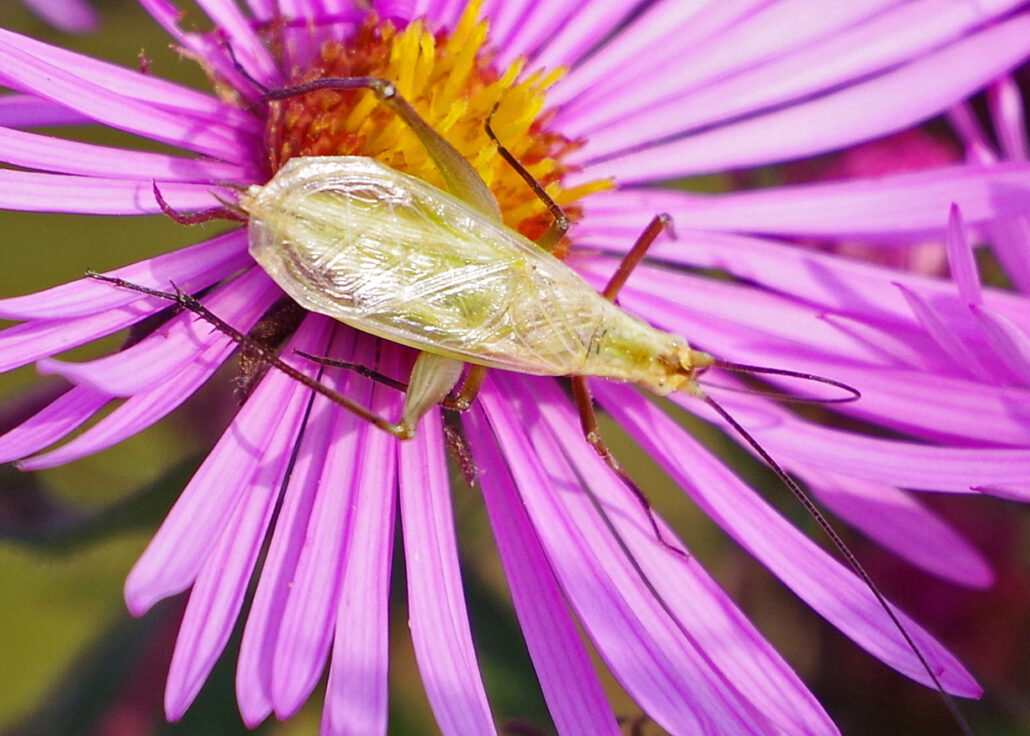
TREE CRICKETS:
It must be autumn (meteorological autumn, at this point) because the tree crickets are singing their hearts out in the bushes and tall grasses. Some are using megaphones. https://www.smithsonianmag.com/smart-news/compete-big-guys-tiny-crickets-fashion-leafy-megaphones-blast-their-mating-calls-180976579/?utm_source=smithsoniandaily&utm_medium=email&utm_campaign=20201218-daily-responsive&spMailingID=44134055&spUserID=ODg4Mzc3MzY0MTUyS0&spJobID=1901641888&spReportId=MTkwMTY0MTg4OAS2
Here are their songs – https://songsofinsects.com/thumbnail-guide-to-species and https://www.listeningtoinsects.com/tree-cricket-introduction.
MANHATTANTS:
There’s a new ant in town, and it’s kicking butt and taking names https://www.smithsonianmag.com/smart-news/invasive-manhattants-are-taking-over-new-york-city-and-spreading-quickly-180984917/?utm_source=smithsoniandaily&utm_medium=email&utm_campaign=editorial&spMailingID=50080715&spUserID=ODg4Mzc3MzY0MTUyS0&spJobID=2761652941&spReportId=Mjc2MTY1Mjk0MQS2


MORE ANTS:
And speaking of ants, there sure are a lot of them! As Ed McMahon used to say, “How many ARE there?”
EVEN MORE ANTS:
Ants like junk foods – is that a problem? https://www.smithsonianmag.com/smithsonian-institution/ants-can-get-distracted-by-cookies-chips-and-other-junk-food-heres-why-that-could-be-a-problem-for-the-environment-180988962/?utm_source=smithsoniandaily&utm_medium=email&utm_campaign=editorial&lctg=91269370&user_id=ad498c350b84ba2f411447e5cb7d669a90640c056267c91c033e8e88e5e0b4f9

BUMBLE BEES:
The Federally-endangered Rusty-patched bumblebee https://www.smithsonianmag.com/science-nature/can-the-endangered-rusty-patched-bumblebee-survive-180984894/?utm_source=smithsoniandaily&utm_medium=email&utm_campaign=editorial&spMailingID=50099331&spUserID=ODg4Mzc3MzY0MTUyS0&spJobID=2762283843&spReportId=Mjc2MjI4Mzg0MwS2
AND ONE LAST ANT:
Kate Redmond, The BugLady
Bug of the Week archives:
http://uwm.edu/field-station/category/bug-of-the-week/