
by Kate Redmond
The Prairie Trail
Howdy, BugFans,
Over the years, the BugLady has written episodes about bugs, about groups of bugs, and about flowers that support bugs. Today she’s writing about one of her favorite trails – the Pasque Flower Trail in the upper/south prairie at Riveredge – a sunny, sandy trail that runs through a prairie that’s bounded on three sides by trees. It offers a fine array of wildflowers, from early season Pasque flowers, prairie smoke, and coreopsis through mid-season butterfly weed and purple coneflowers, to late-season goldenrods, asters, and wild sunflowers, all attended by their pollinators. Despite the wildflower show, the BugLady is often looking down as she walks it, because of the insects that are attracted to the bare trail. So many stories!
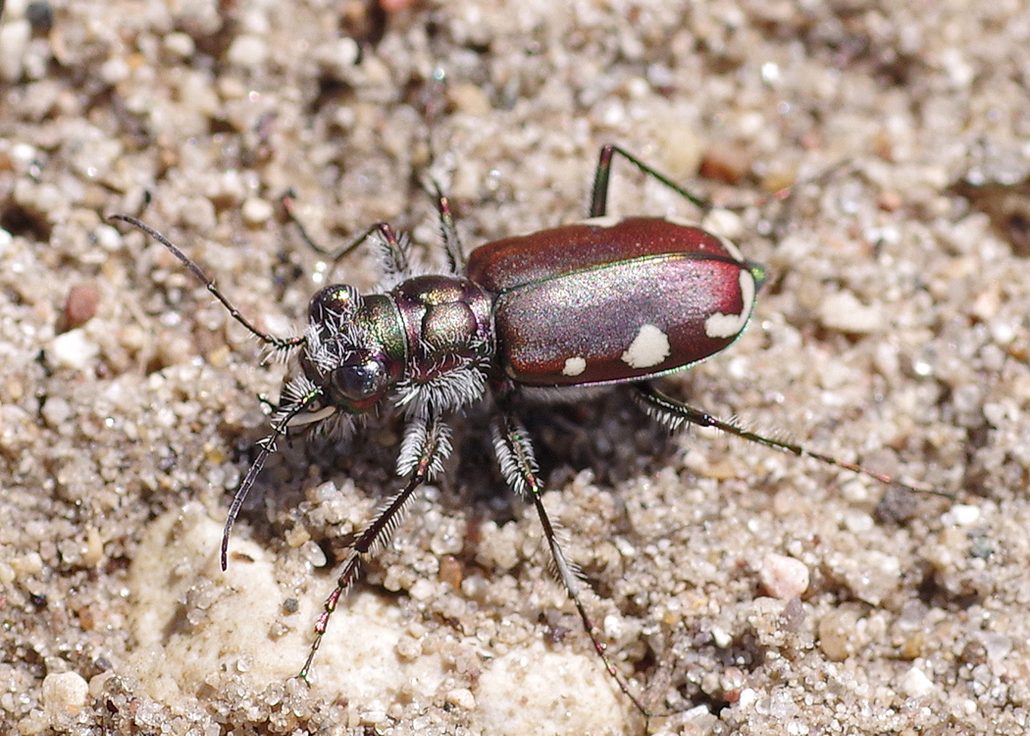
Three species of TIGER BEETLES hunt here; this one is a Festive Tiger Beetle. Adult tiger beetles chase their prey in open spaces, and larvae wait for passers-by within the lips of pencil-thin tunnels (they clean the area around their tunnel’s entry fastidiously). The beetles have the distinction of being able to run faster than their brains can focus, so that everything becomes a blur – including their prey – and they have to stop and relocate it
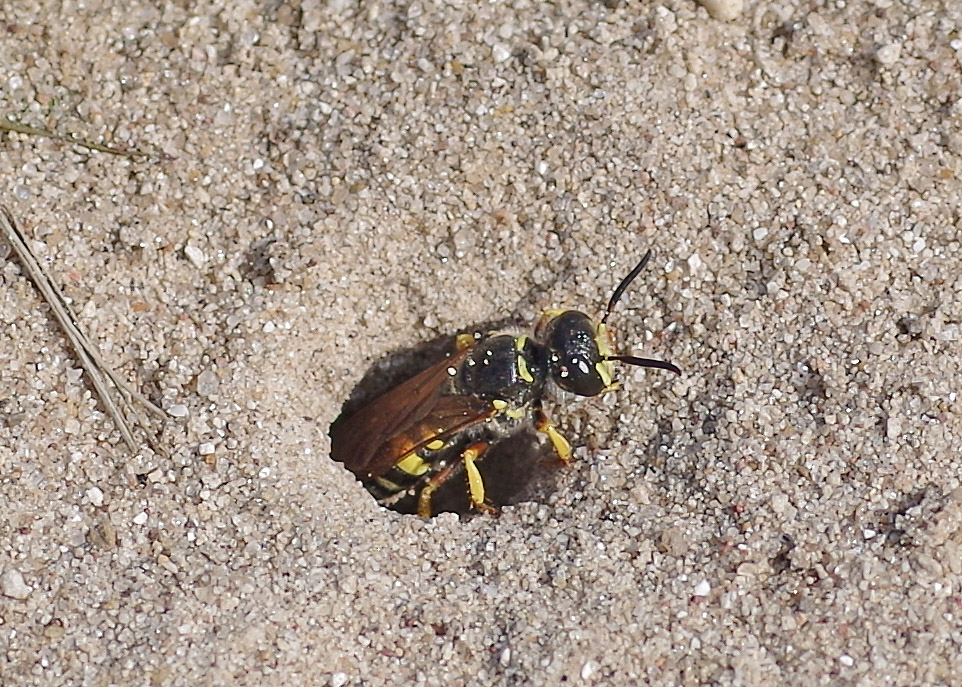
SAND WASPS – Despite all the traffic on the trail, the ground is soft enough to excavate, and a number of solitary wasps like Bembix make tunnels for their eggs.
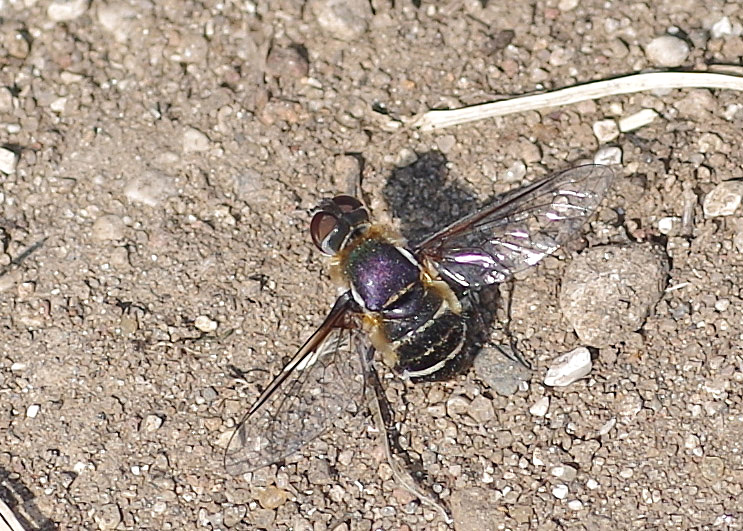
BEE FLIES parasitize those eggs, laying their own eggs on the ground next to a tunnel or hovering in its entry and lobbing them down the tunnel. The flies’ larvae climb down the tunnel, find the wasp larvae, and gradually consume them from the outside-in (a lifestyle called parasitoidism, in which the host is kept alive until the parasitoid is ready to pupate and no longer needs fresh protein). Different species of bee fly target different hosts.
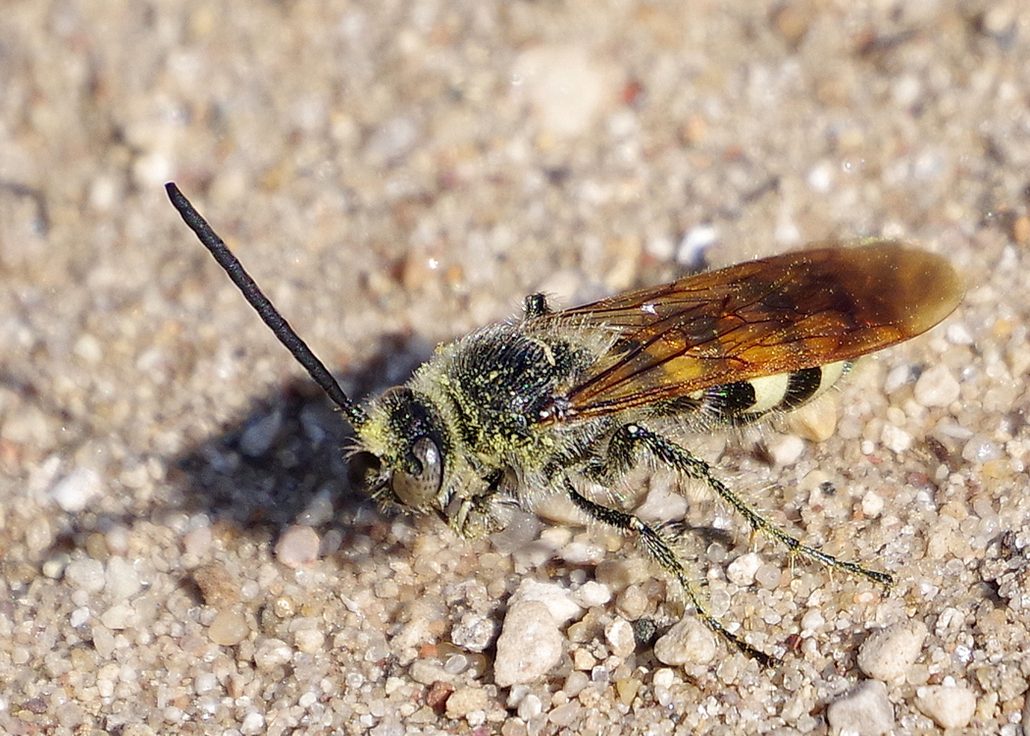
SCOLIID WASPS, like this Feather-legged Scoliid Wasp, have a similar modus operandi, but their targets are beetle larvae, including those of Japanese beetles. The female digs into the ground to locate a beetle larva and lays an egg on it, sometimes enlarging the compartment made by the beetle so that her larva has more elbow room.
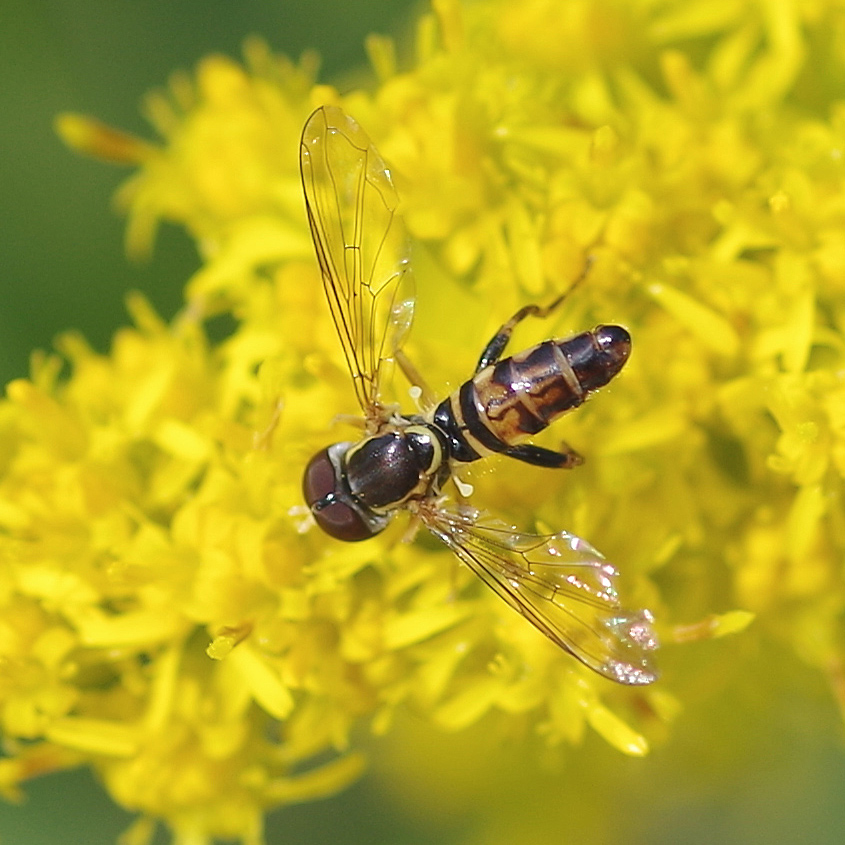
SYRPHID/FLOWER/HOVER FLIES sit lightly on the flowers.
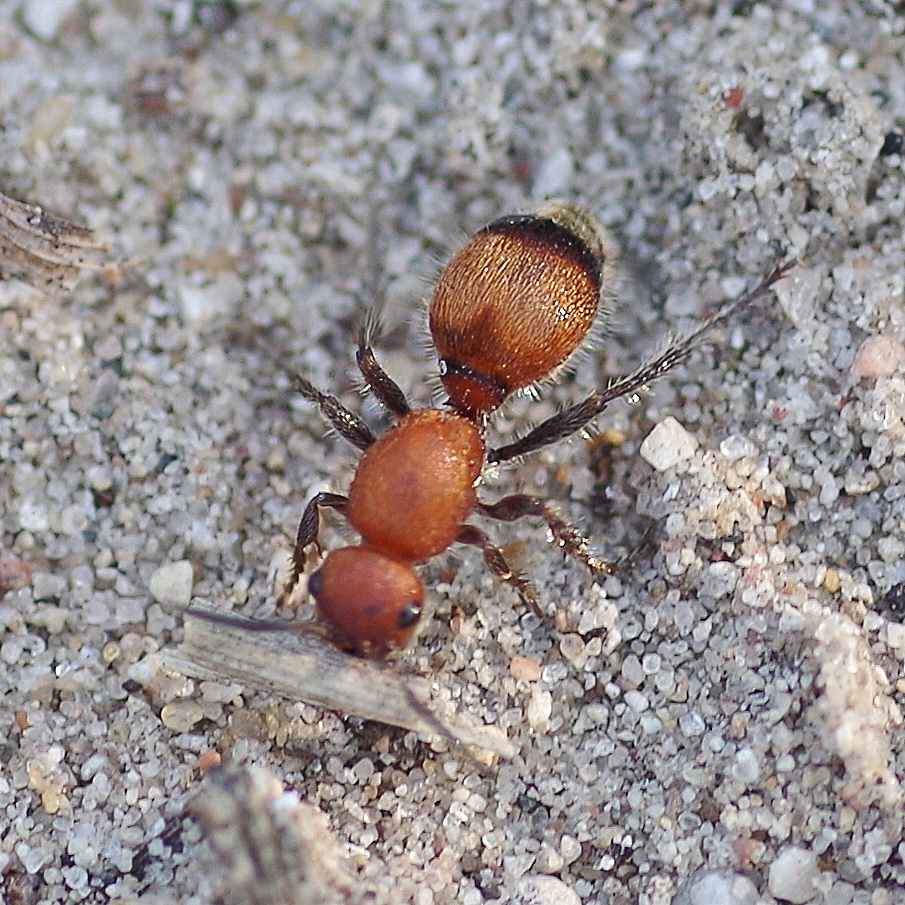
The BugLady was shocked to find VELVET ANTS on the trail (anyone who thinks that tiger beetles are hard to photograph should try velvet ants) because she hadn’t seen one since she left Texas. Some https://www.bugguide.net/node/view/2140452/bgpage https://www.bugguide.net/node/view/1669173/bgimage are more velvety than others. Two things about velvet ants: 1) they’re really wasps, but only the males have wings; and 2) their sting is memorable – some Southern species have earned the nickname “cow-killer wasp.”
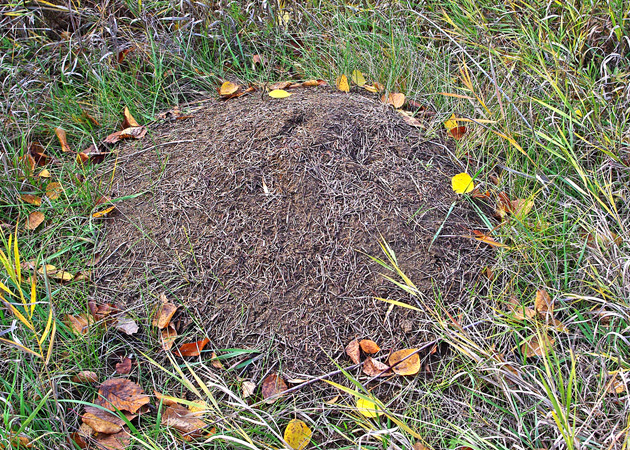
WESTERN THATCH ANTS have developed some big mounds near the trail (a mound like this might house 15,000 inhabitants). Some mound-building ants keep the tops of their nests clear of vegetation, and some plant vegetation, but these ants scatter debris over the top of the mound, possibly to cut down on direct sunlight to the mound’s top. They are omnivores that get most of their carbs from honeydew produced by leafhoppers and aphids, and their protein from dead or weakened insects.
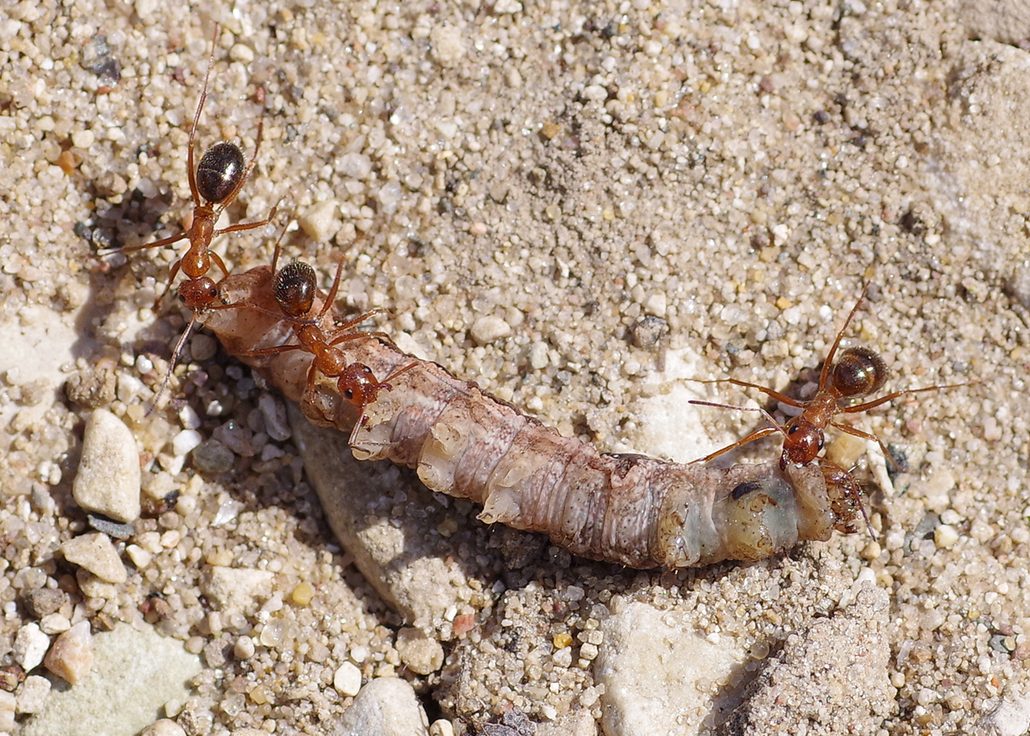
ANTS WITH CATERPILLAR – Like this caterpillar. Quod erat demonstrandum.
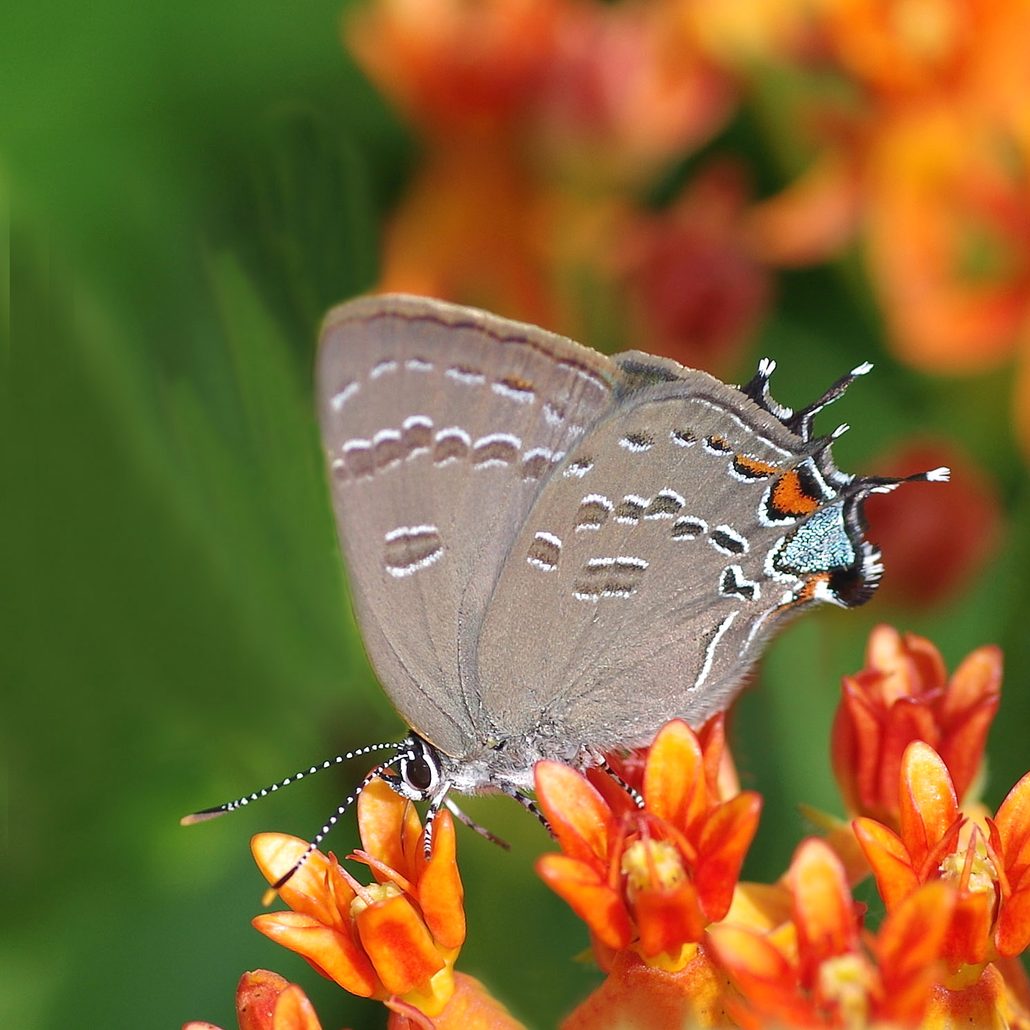
BUTTERFLY WEED, a lovely and aptly-named milkweed, attracts tiny Edward’s Hairstreaks as well as larger Monarchs and Fritillaries.
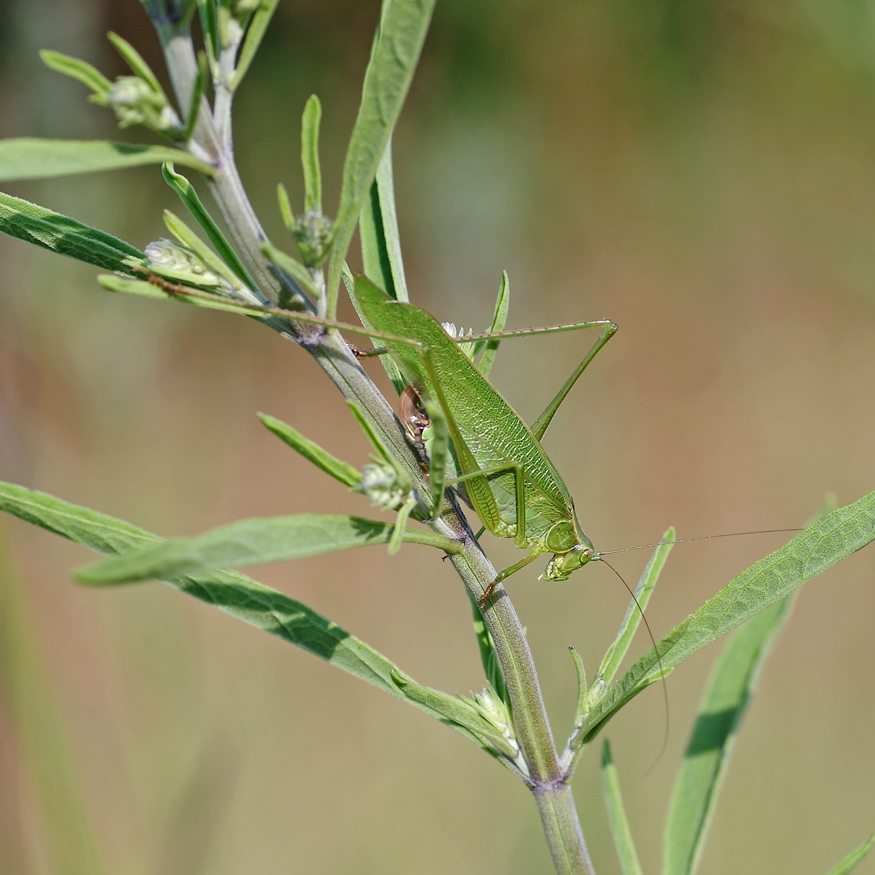
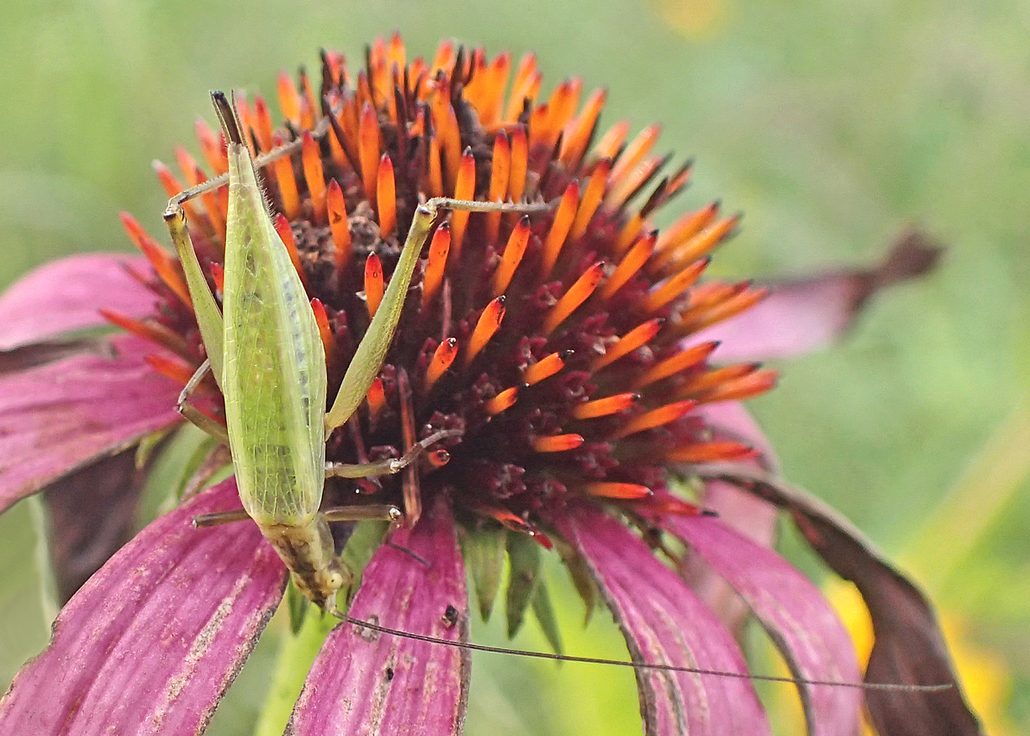
KATYDIDS and TREE CRICKETS call from the vegetation next to the trail.
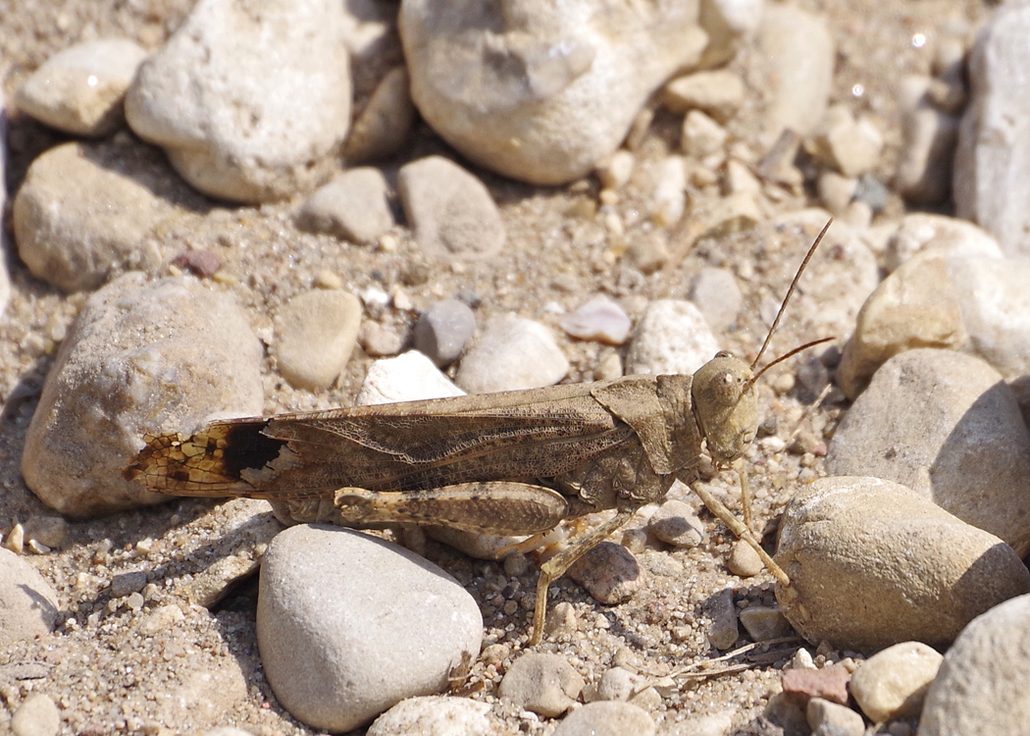
CAROLINA LOCUSTS, aka CAROLINA GRASSHOPPERS are pretty well camouflaged when they sit on the dirt, but when they’re courting, not so much. They jump into the air and hover, jerkily, while crepitating – making snap-crackle-pop noises with their wings by tightening membranes between the wing veins (it’s also called “wing popping”). They are in the “Band-winged” grasshopper group, and as it happens, their dark wings bordered with cream make them look, briefly, like Mourning Cloak butterflies.
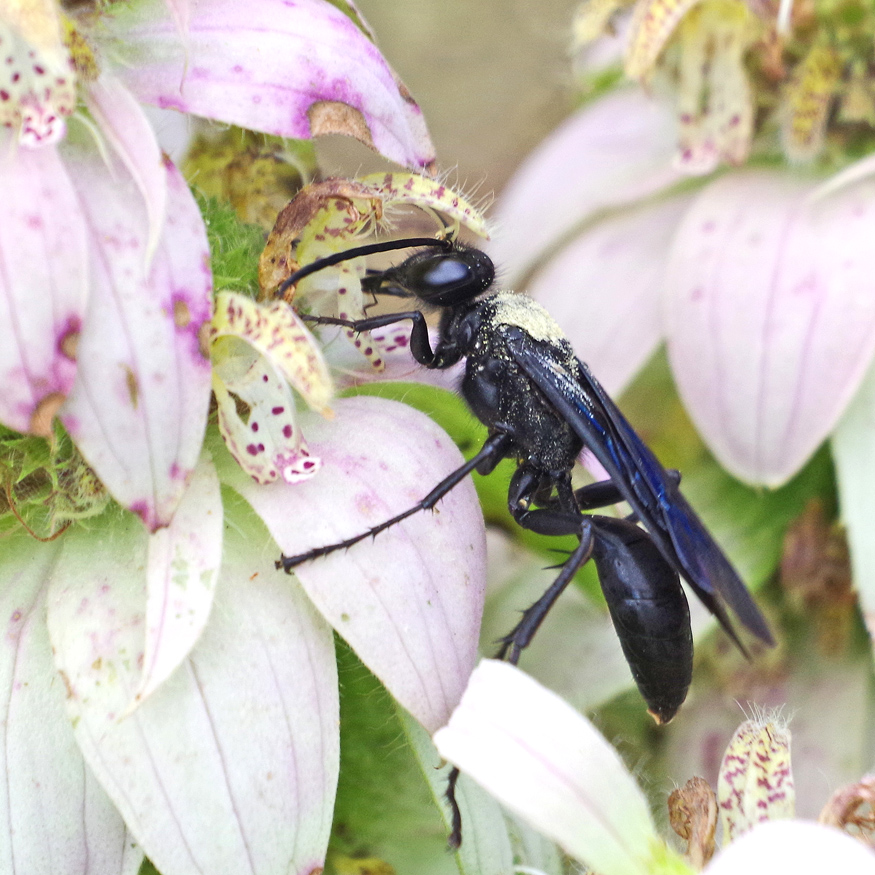
GREAT BLACK WASPS and their relatives, Great Golden Digger Wasps, are big fans of mints. They stick their heads into the tubular flowers and pull them out dusted with pollen.
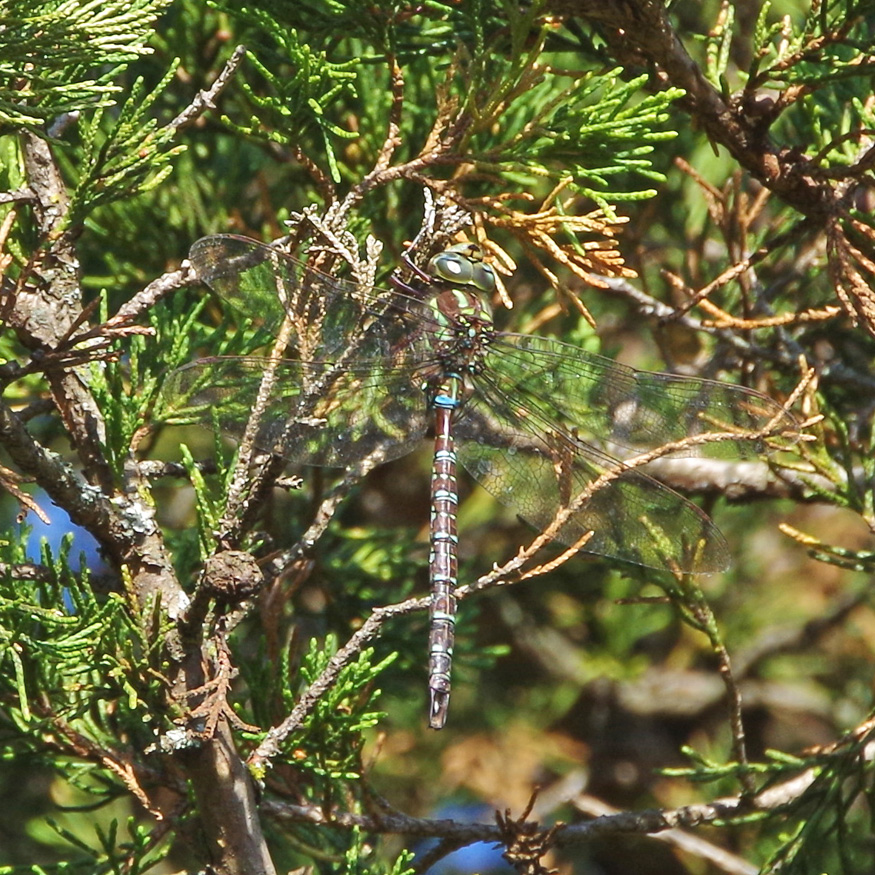
As always, DRAGONFLIES. In early summer, a Midland Clubtail may hunt there briefly before heading to the river. By late summer, this prairie is a great place to see feeding swarms of darners making lazy figure-8’s above the grasses, picking off midges and mosquitoes and other insects they find in the air. Common Green Darners and mosaic darners tuck in for the night along the east-facing edges of the mown trail, waiting for the warmth of the next day’s sun (and getting disturbed by the BugLady’s peregrinations). Some, like this Shadow Darner, rest in red cedars.
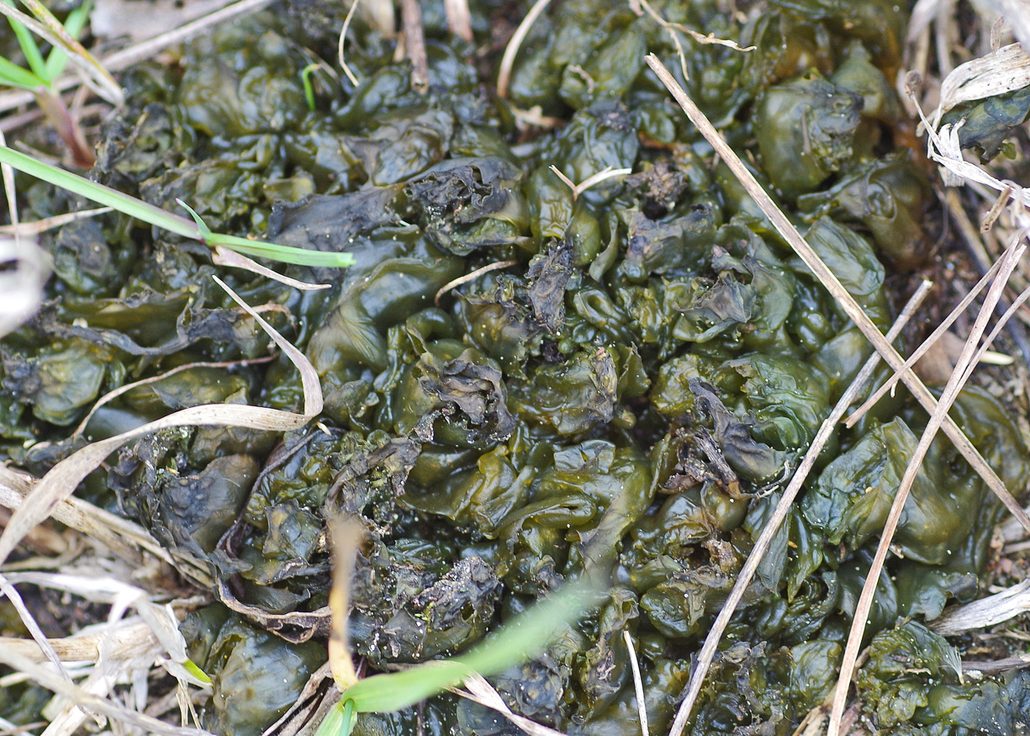
But the most amazing organism is NOSTOC COMMUNE, aka witch’s butter, mare’s eggs, or star jelly. Not an animal, not a plant, it’s a species of cyanobacteria that occurs in colonies. It was formerly grouped with the blue-green algae. The BugLady finds it from mid-September to mid-October, if there’s been sufficient rain.
Here’s a great article from an Ohio State University blog: https://bygl.osu.edu/node/2404, which calls it “Almost older than dirt,” and also notes, “I’ve posted several Alerts over the years about the ancient cyanobacterium, Nostoc commune (Nc) and always cautioned that the mucilaginous mass can be as slippery as ice. Based on a recent face-to-turf experience, I can say the ice comparison is no exaggeration.”
Nostoc has the ability to fix nitrogen, so it can survive on poor soils, and when the weather is harsh, it can stay dormant, desiccated but alive. Photosynthetic pigments allow it to make both food and oxygen.
It’s eaten in Japan, China, and the Philippines, but the BugLady didn’t see any information about uses by wildlife. It may be an effective medicine to treat inflammation, and its potential effectiveness as an anti-cancer, antioxidant, and immune-boosting agent is being explored.
Kate Redmond, The BugLady
Bug of the Week archives:
http://uwm.edu/field-station/category/bug-of-the-week/