
by Kate Redmond
Wildflower Watch Daisy Fleabane
Howdy, BugFans,
Daisy fleabane (Erigeron sp.) is blooming. If you’re not familiar with it, the name “teeny daisy” – given to it by the BugLady’s then four-year-old, firstborn child – describes it well.
It’s in the Aster/Composite family Asteraceae, so each fleabane “flower” is actually a whole bouquet made up of a mass of tiny, central flowers called disc flowers and an outer rim of ray flowers. But the Asteraceae like to mix things up – some family members, like dandelions, consist of only ray flowers, while others, like Beggars’ ticks, have very conspicuous disc flowers and inconspicuous ray flowers, and still others, like Blazing stars (Liatris) and thistles, have only disc flowers.
The word “bane” in a plant’s name usually predicts trouble – for someone, anyway. In this case, flies, gnats, fleas and other bothersome insects were (allegedly) repelled by the smoke when the plant was burned, and the flowers were dried and added to mattress stuffing and tied into brooms.
Astringent, anti-inflammatory fleabane plants, flowers, and oils were widely used medicinally by both the Native peoples and the European settlers to treat migraines, gout, sore muscles, epilepsy, skin issues, “female problems,” fevers, heart troubles, and more, and the dried flowers were used as a snuff to break up nasal congestion. The Lakota name for fleabane translates to “sore mouth medicine.” It was also one of the plants that were smoked in pipes.
Bugs like it, too. As always, the BugLady found insects and spiders who came to rest, to eat, and to be eaten, and with all that going on, some pollination happens, too. Today’s episode is a bit moth-heavy because we are approaching National Moth Week.
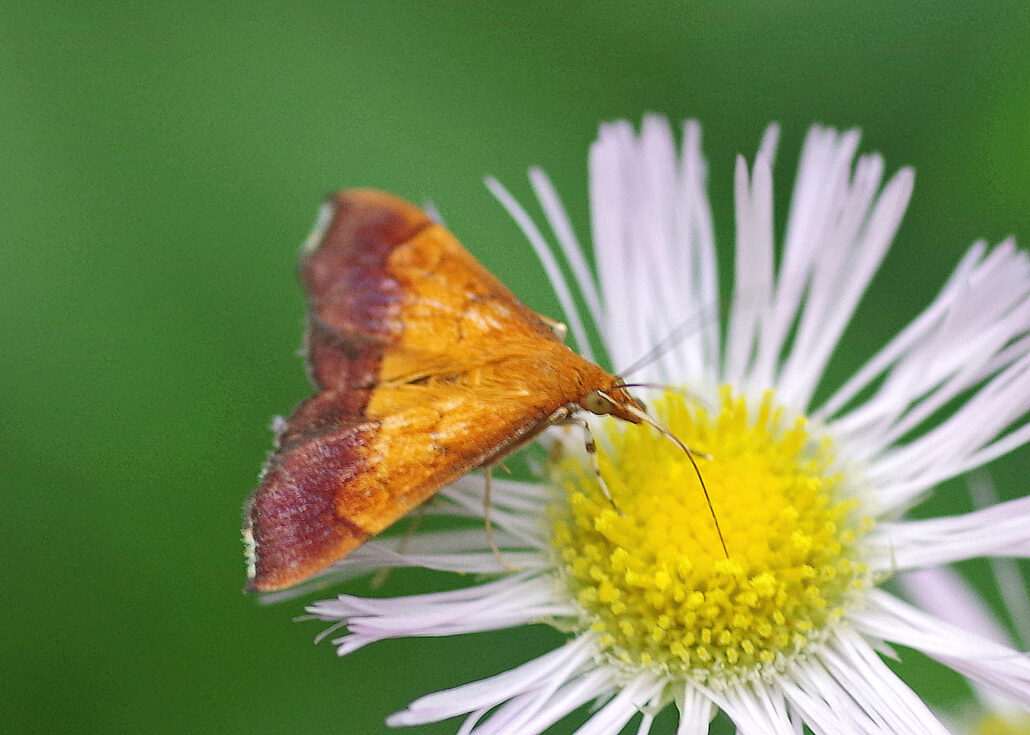
BI-COLORED PYRAUSTA MOTH – The BugLady has been seeing these small moths (wingspread just over ½”), but they don’t stick around to have their portraits made – they make a rapid, scrambling flight and then tuck themselves in under a leaf.
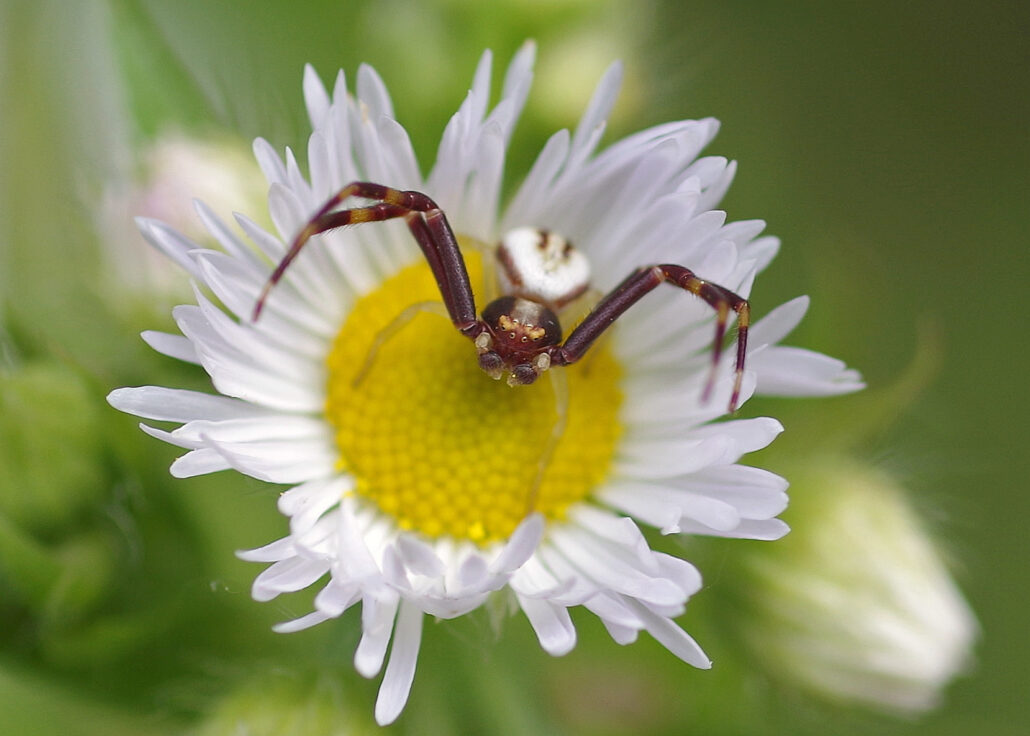
A CRAB SPIDER waiting for a little carry-out.
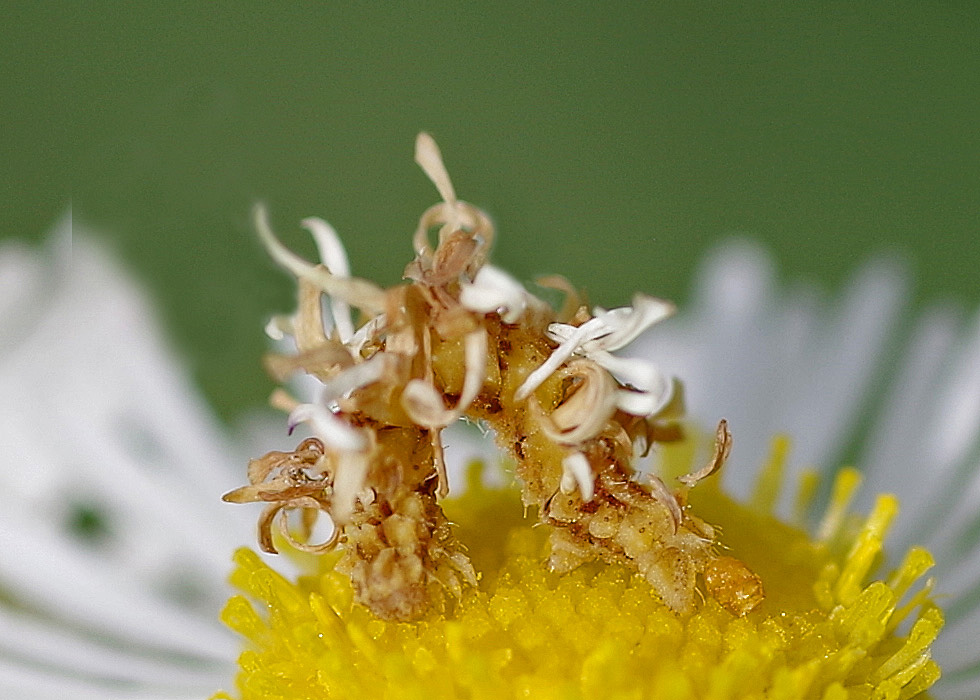
WAVY-LINED EMERALD – If you’re going to feed in plain sight in the daytime, you need a disguise. This caterpillar makes its own by clipping bits of fresh petals and sticking the pieces to spines on its back https://www.bugguide.net/node/view/1038322/bgimage. When the vegetation dries, the trim makes it hard for birds to spot them. Here’s what it will look like when it grows up https://www.bugguide.net/node/view/2260155/bgimage.
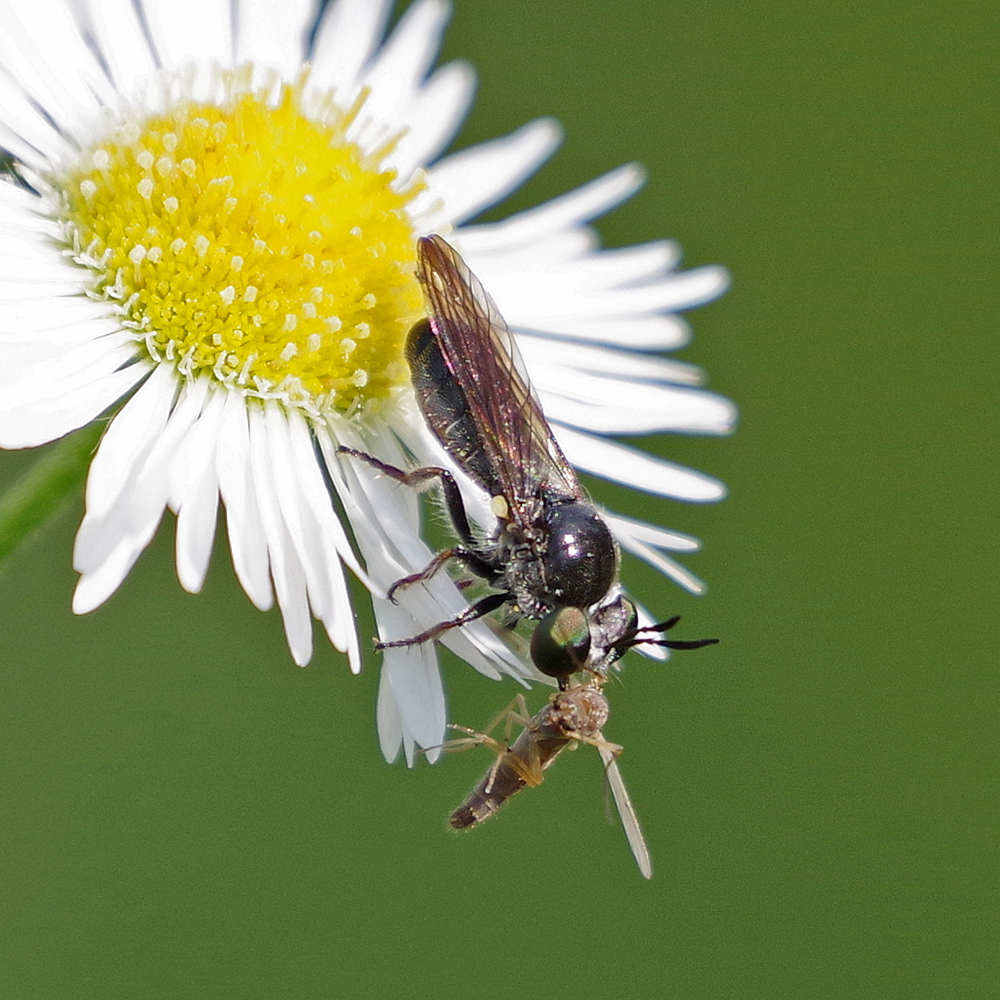
A ROBBER FLY enjoying a meal.
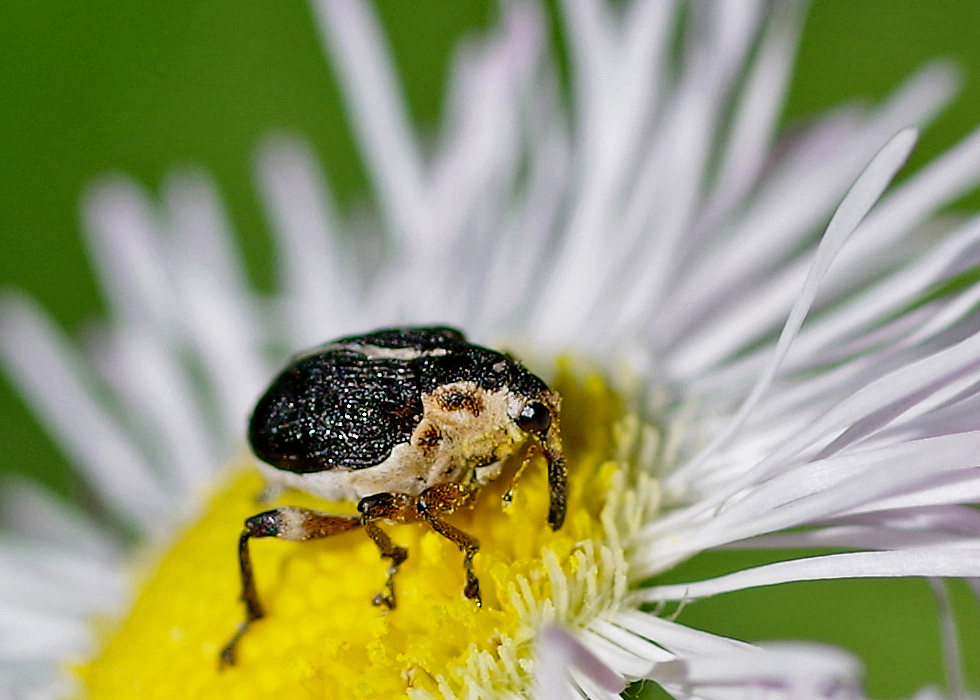
IRIS WEEVIL – The BugLady has seen more Iris weevils on fleabane and ox-eye daisies than she has on irises. Adults chew into the iris flower’s ovary and oviposit there. While the adults are feeding on the flowers, pods, and seeds, the larvae within eat seeds and their surrounding tissues. This doesn’t affect the health of the plant, but the weevils are not welcomed by people who want to harvest iris seeds.
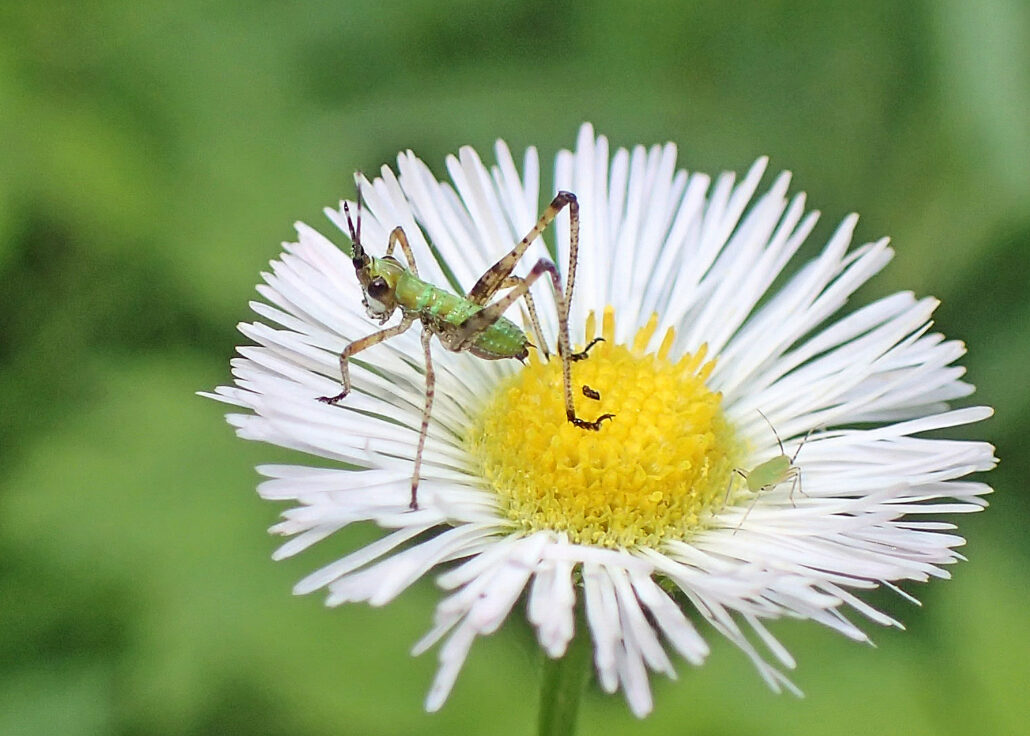
KATYDID – Katydid nymphs are awesome.
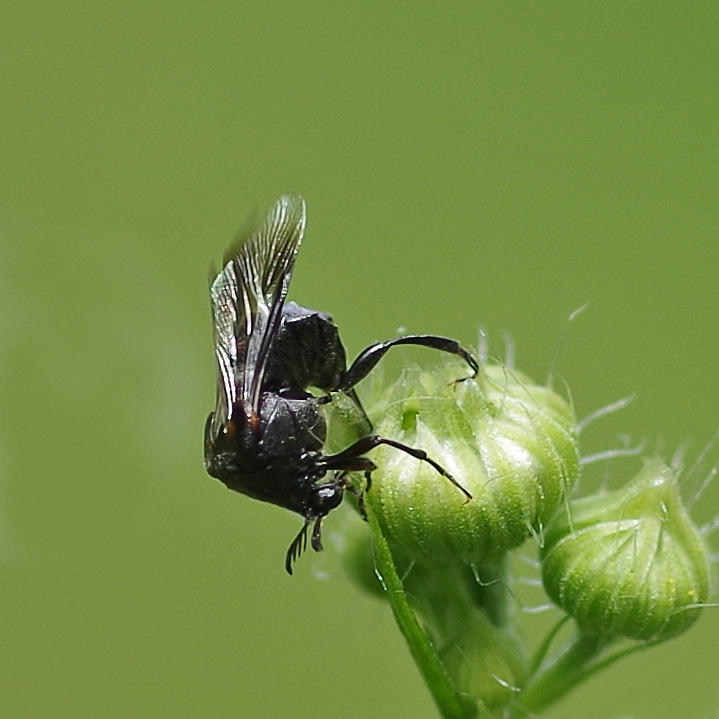
RIPIPHORUS BEETLE – One of the “wedge-shaped” beetles in the family Ripiphoridae (which comes from a Greek word meaning fan carrier, a reference to the fancy antennae sported by the male). Ripiphorus fasciatus is a beetle dressed like a fly, a disguise that undoubtedly allows them to cozy up to other insects on flower tops. Females oviposit there, and their unusually-energetic larvae stand erect on the flowers, ready to board ground-nesting, solitary bees so that they can be transported back to the bee’s egg chambers. There, they enter an egg chamber and then enter the larva in the chamber and consume it from the inside. Look fast – males live for a single day, and females for not much longer.
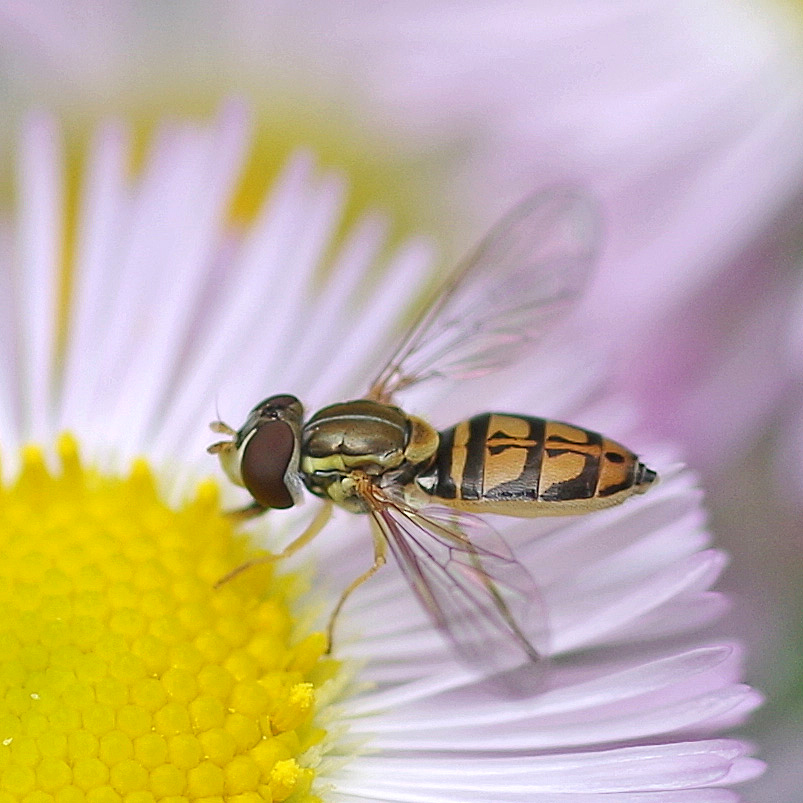
SYRPHID FLY – Some syrphid/flower/hover flies are chunky bumble bee mimics, but some are delicate and beautifully-patterned, and when they land on your skin (to check out its salt content) your skin feels minutely cool.
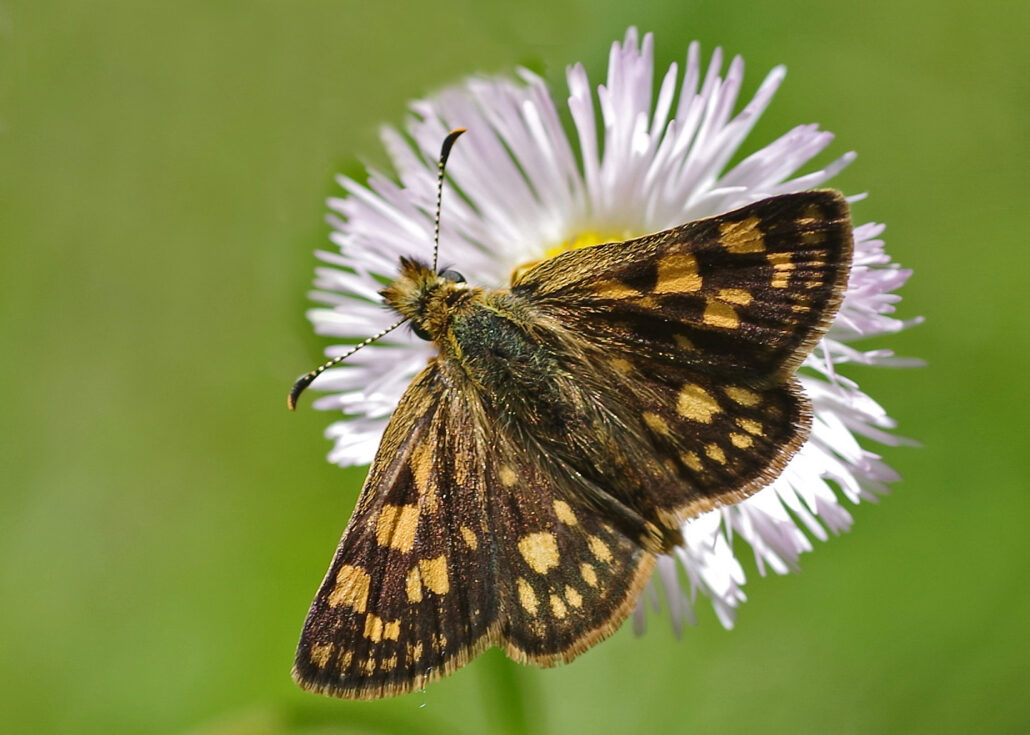
ARCTIC SKIPPER BUTTERFLY – Officially the BugLady’s favorite skipper because although it is, like many skippers, brown and orange, you can’t mistake it for any other species. They have a preference for bluish/purplish flowers, but fleabane works, too.
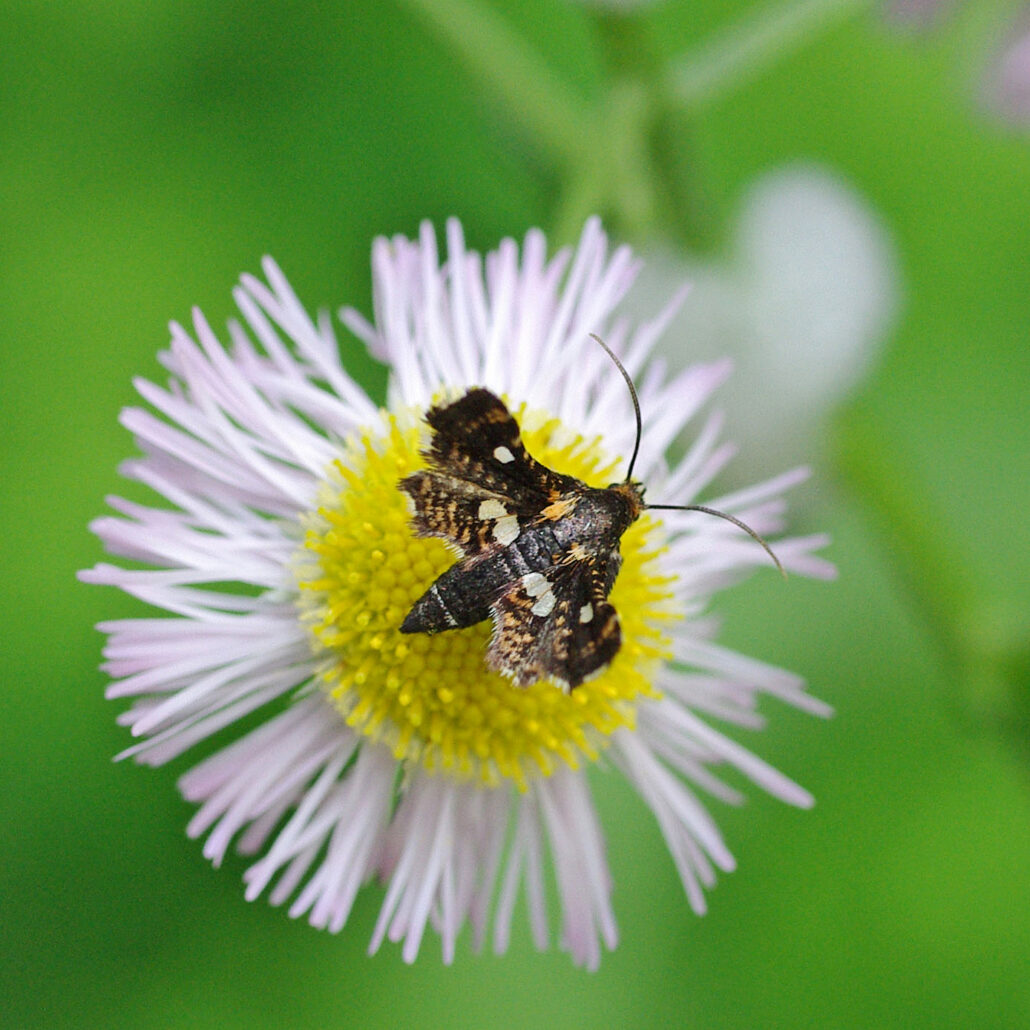
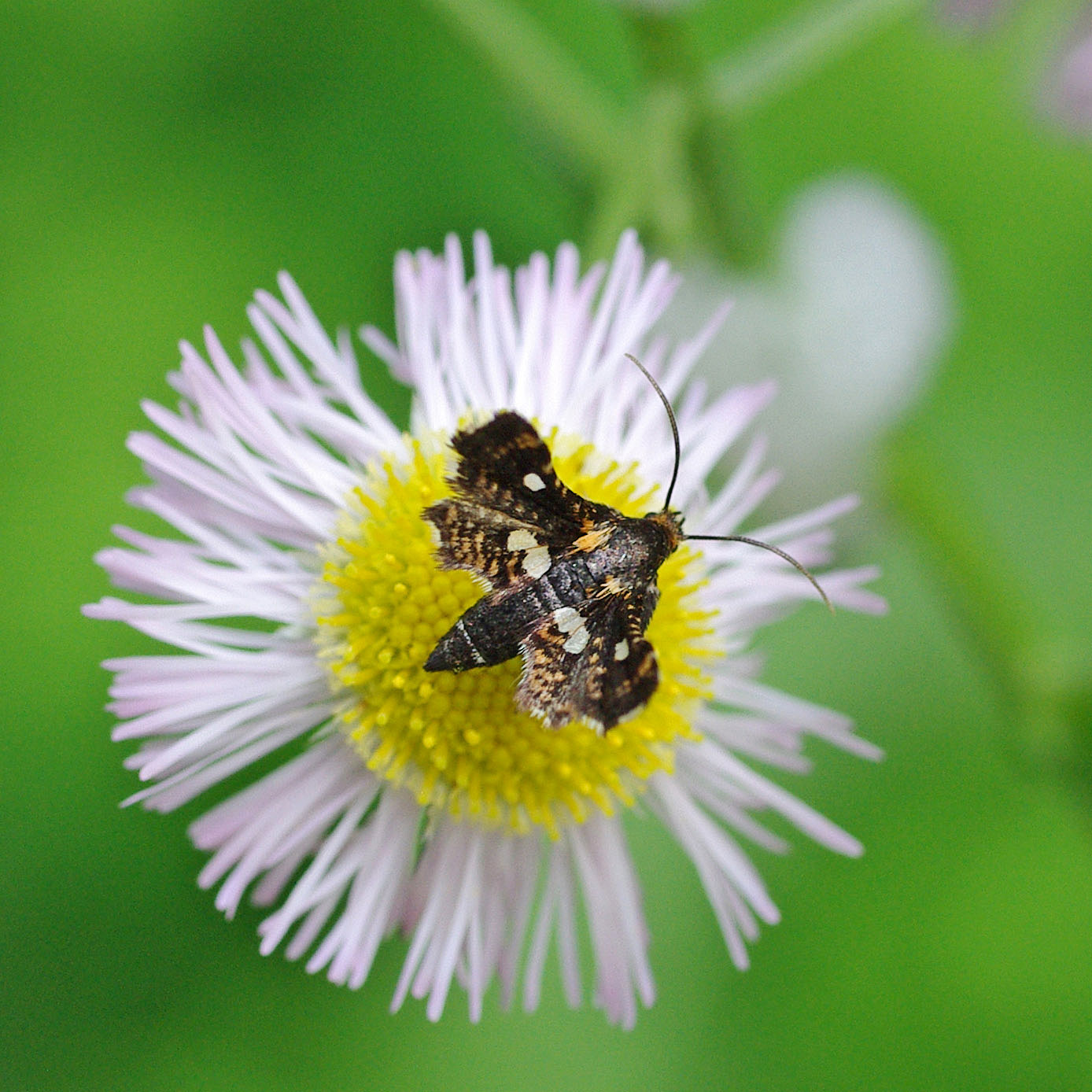
SPOTTED THYRIS MOTH – This chunky, little moth has a wingspan of just under a half-inch, so it fits easily on the fleabane’s disc flower. Although they’re a day-flying moth, they’re easily overlooked, because they’re slightly smaller than a honeybee, and so they’re probably more common than we realize. The Prairie Haven blogger (https://www.prairiehaven.com/?page_id=8920) says that “They looked like tiny crumpled butterflies.”
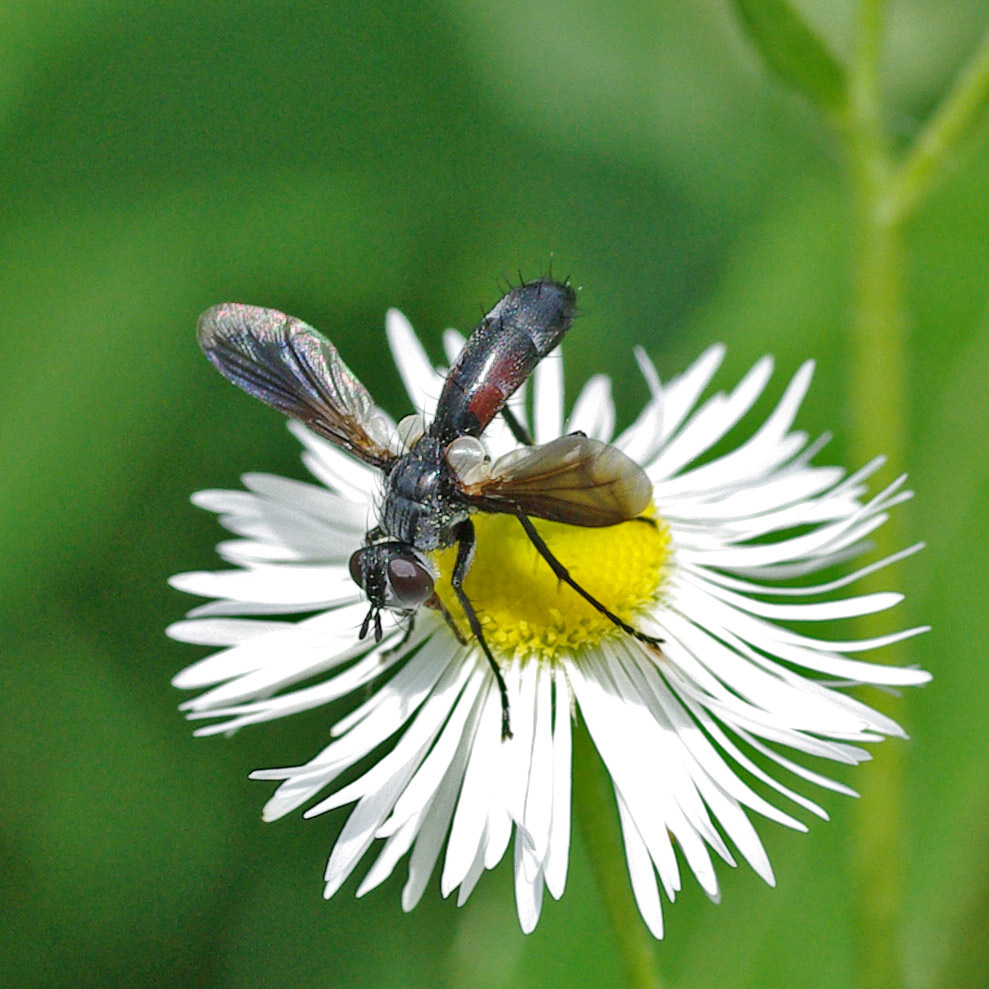
TACHINID FLY – Lots of tachinids are bulky, bristly, and house-fly-shaped. Not Cylindromyia. Tachinid flies are parasitic flies, many of which are considered beneficial biological controls of agricultural pests. Not Cylindromyia. This wasp-mimic targets a few species of predatory stink bugs that are, themselves, biological controls, plus some of the giant silk moths (Cecropia, Polyphemus, etc.).
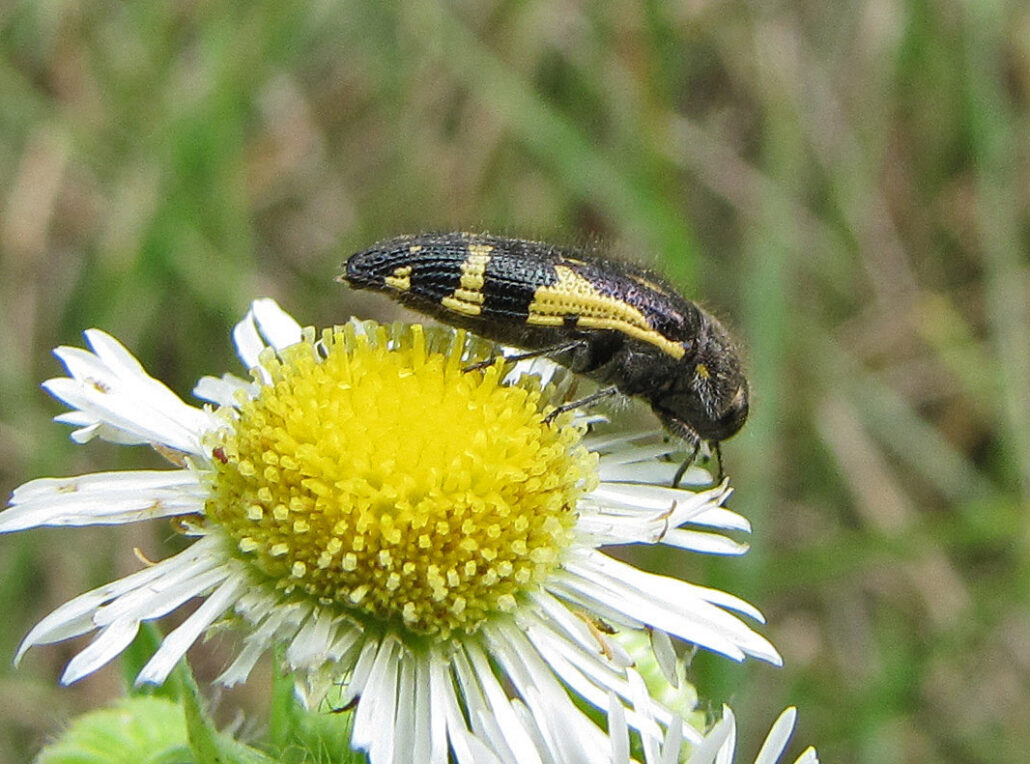
BLACK AND YELLOW FLOWER BUPRESTID – A.K.A. the Yellow-marked Buprestid, Hairy Yellow-marked Buprestid, Spotted Flower Buprestid, Beautiful Flower Buprestid, and Flat-headed Sapwood Borer. Buprestids, many of which are tough-looking, bullet-shaped beetles, are known as the Metallic Wood-borers (though this one is dull and hairy rather than shiny). Adults eat pollen and nectar and are hard to spot on yellow flowers; larvae are wood borers.
All of the stars of today’s episode have also starred in their own BOTWs, which you can find by typing into the search box “UWM Field Station Arctic Skipper,” or “Iris weevil,” or whatever. (it took the BugLady an embarrassingly long time to figure that out).
Go outside – check the fleabane.
Kate Redmond, The BugLady
Bug of the Week archives:
http://uwm.edu/field-station/category/bug-of-the-week/