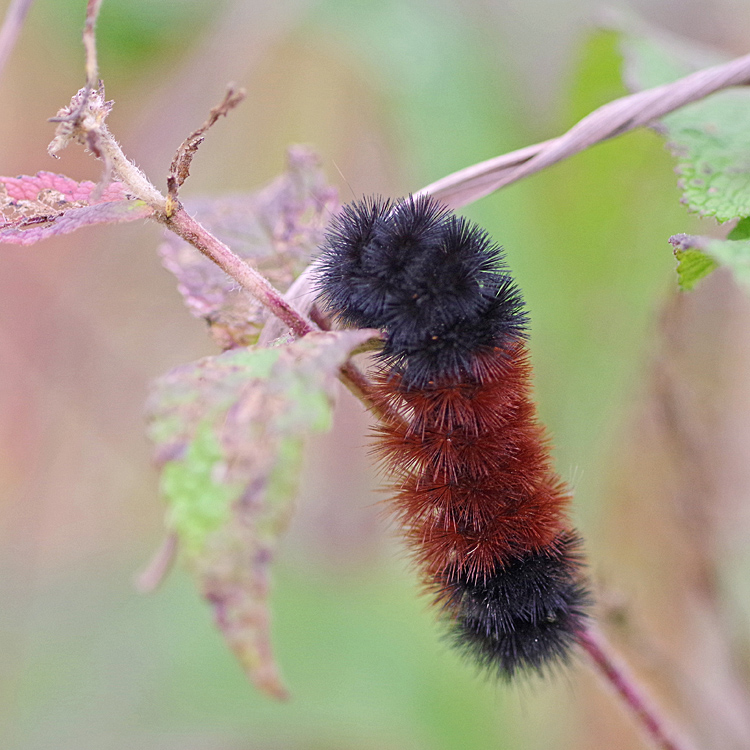
Bug o’the Week – Procecidochares atra fruit fly

Greetings, BugFans,

The story of this fly (whose name is considerably longer than the fly itself) demonstrates why the BugLady loves BOTW.  Could she dig up a lot of details about how this little beauty lives its life?  She could not.  But she found two interesting side stories about it.

As always, our first episode of the New Year is vocabulary-rich.

Procecidochares atra is a true fruit fly in the family Tephritidae – not one of those red-eyed, flying lab rats that circle your bowl of grapes in summer, or that escape from confinement and live in labs in perpetuity.  Those are more properly called Pomace or Vinegar flies, family Drosophilidae.  Because of the simplicity of their DNA and the ease in raising them, some Drosophila are extraordinarily well-studied and experimented on.

Fun Drosophila Fact: according to Wikipedia, if a female Drosophila melanogaster sees a female larva of an endoparasitic wasp, she will start laying her eggs on rotting fruit or some other alcoholic substrate.  Why?  Because her offspring will imbibe it, and wasps have a low tolerance for alcohol.

But we digress.

Tephritid flies are also called Picture-winged flies and Peacock flies, but those names are more properly applied to other tiny flies.  Those fancy wing patterns are used both in courtship and in defense (more about that in a sec).  Wikipedia says that the females use their telescopic ovipositors to insert their eggs in living plant material.  The larvae of most species are vegetarians, they feed on plant tissue that the eggs are deposited in, or like the genus Procecidochares, they make a gall https://bugguide.net/node/view/443421/bgimage and feed, and finally pupate inside it https://bugguide.net/node/view/857057/bgimage.  Some family members are food specialists while others enjoy a more varied menu; some are agricultural pests, and others help to control agricultural pests.  Adults feed blamelessly on nectar, pollen, honeydew, and decaying vegetation.

There are about 15 species in the genus Procecidochares in North America, all of which are gall-makers on goldenrods, and Procecidochares atra (no common name), found from the Atlantic to the Great Plains, is one of the larger and more common species (here’s a better picture https://bugguide.net/node/view/838430/bgimage).  Procecidochares atra has been recorded on three species of goldenrod.

Interesting Side Story Number 1 (and vocabulary challenge):

Most, but not all, genus members are univoltine (one generation per year), but Procecidochares atra is bivoltine (two generations).  The spring generation forms a stem gall near the base of an emerging goldenrod, and that gall is polythalamous (containing multiple larvae, as many as 21).  Galls of the late-summer generation are formed above mid-stem, often on the buds https://bugguide.net/node/view/1426536/bgimage, and are monothalamous (each houses a single larva).  The galls are leafy rosettes.  The photographer of this gall https://bugguide.net/node/view/1436982/bgimage bagged it to see what kind of fly would emerge and got wasps instead – the wasps had probably parasitized the larva of the gall-making fly (unless they were inquilines).  It’s probable that the adults overwinter and lay eggs as goldenrod starts to grow in spring.

But, as author Isaac Asimov once wrote, “The most exciting phrase to hear in science, the one that heralds new discoveries, is not ‘Eureka!’ but, ‘That’s funny….'”  Researchers Phillips and Smith studied Procecidochares atra, noting the seasonal and structural differences in its gall making habits and identifying two new host species, Canada goldenrod and horseweed (Erigeron canadensis).  To complicate things even more, the late summer gall they found on horseweed was a stem gall located inches from the ground, not a bud gall.

What’s going on?  The researchers suspected that they might be dealing with what is called a “cryptic species,” a described species that’s actually made up of several distinct species that don’t interbreed but that look (to us) identical.  This would explain the differences in hosts and seasons and gall formation.  Although (using the tools available in the 1990’s) they were “unable to differentiate this specimen [on Erigeron] morphologically from other specimens of Procecidochares atra,” they didn’t rule out the potential for two or more cryptic species, separating the spring, fall, and Erigeron gall makers.  And, of course, they noted that there needed to be a “systematic revision of the genus.”

Interesting side story Number 2:

Yes, males use their patterned wings like semaphore flags in courtship, to signal to females, but tephritids also use them in defense.  In its write-up about the family Tephritidae, bugguide.net says

  • Some spp. mimic jumping spiders. The wing-waving apparently deters the approach of jumping spiders, important predators of the flies. 
  • ‘Spider predation has been intense enough to mold the evolution of prey characteristics: predation by salticids (jumping spiders) has shaped the morphology and behavior of some tephritid flies. Their wing markings resemble the pattern of the legs of jumping spiders; the flies also wave their wings in a fashion that appears to mimic the agonistic behavior of salticids – making them ‘proverbial sheep in wolf’s clothing.’”

Researchers Greene, Orsak, and Whitman studied a tephritid in a different genus, Zonosemata (https://bugguide.net/node/view/836289/bgimage) and wrote.  “When disturbed, these flies hold their wings perpendicular to the body and wave them up and down; this resembles the agonistic leg-waving behavior typical of the jumping spider.  Zonosemata flies initiate this display when stalked by jumping spiders, causing the spiders to display back and retreat.”

A New York Times article about the study elaborates “These spiders use this aggressive behavior to warn other members of their species to stay out of their territory.


When the fly flaps its wings, it fools the spider into thinking it has entered the territory of another spider. As Mr. Greene put it, the fly is sending the counterfeit message ‘’I am a mean jumping spider, so come no closer.’”

For the long version (if you haven’t used up your free NYT reads for the month) see https://www.nytimes.com/1987/04/28/science/fly-mimics-attakcing-spider-to-save-its-skin.html.

A jumping spider may back away from the encounter, but the subterfuge doesn’t work on other predators, even on non-jumping spiders.  The team speculated that even though this behavior hasn’t been observed a lot, it may be more common that we think.

Confession – the BugLady has a bit of trouble seeing a spider in the fly, but if she were ¼” long, it would probably be easier.

Kate Redmond, The BugLady

Bug of the Week archives:
http://uwm.edu/field-station/category/bug-of-the-week/

Bug o’the Week – Colorado potato beetle redux

Greetings, BugFans,

Between Christmas and New Year’s Day, it’s all reruns.  Please enjoy this slightly updated episode about a pretty little garden scourge, along with a year-end sermonette. .

This is the story of The Little Beetle That Could, of a half-inch beetle that’s much too good at what it does.  So good, in fact, that it’s on Cooperative Extension Most Wanted Posters across the US, and its emigration to foreign countries was no cause for celebration (but it did inspire some great postage stamps and educational/propaganda posters – scroll through http://www.potatobeetle.org/memorabilia.html).

One source says that the Colorado potato beetle (aka the Potato bug) (Leptinotarsa decemlineata) (“ten lines”) is among the 10 insects that everyone should know.  Gardeners from California through Central America to Florida to Nova Scotia to British Columbia certainly know it – it’s said to make itself at home in more than 3 million square miles of North America (that’s about one-third of the land mass) and close to 2.5 million square miles  of Europe and Asia. 

At the end of a BOTW about the dogbane leaf beetle (August, 2010) the BugLady threw in this “by the way” paragraph about the dogbane beetle’s infamous Chrysomelid leaf beetle relative, the CPB:

The Colorado Potato beetle’s is an amazing story of a home-grown pest.  A native leaf beetle, its “pre-settlement” range was restricted to the Upper Missouri River Basin (alternate sources place its origins in the Rocky Mountains and/or south of the Rio Grande), where it fed unobtrusively on a few members of the Potato family like buffalo bur, ground cherry, and nightshade, in harmony with its environment.  Wherever it started, it was enough of a presence in Colorado by the mid-1860’s that the state’s name was attached to it.  When the settlers pushed West, bringing their kitchen gardens, they planted “Irish potatoes” (potatoes are native to the Andes and had been brought to the Old World a few centuries earlier, had conquered Europe, had come back across the Atlantic to New England in the 1700’s, and then headed West by wagon train).  The CPB adopted potatoes, and with its food source increasing logarithmically, it left the Plains and headed East in 1854, hop-scotching from garden plot to garden plot and arriving on the Atlantic shore twenty years later, a “reverse pioneer.  That CPB’s had quietly switched their main host plant to potatoes was noticed when the first CPB outbreak occurred in 1859, about 100 miles west of Omaha.

Both the adults and the larvae feed on the leaves of plants in the potato family, and the people who measure these things tell us that during its entire larval life, a CPB may eat about 6 square inches of leaves, but that an adult can put away 1.5 square inches of leaves daily.  The larvae feed in groups, compounding the destruction.

No BOTW is complete without a vocabulary challenge – the humpbacked CPB larvae/grubs are cyphosomatic – their dorsal and ventral surfaces are decidedly not parallel.

CPBs are in “survival mode” 24/7.  They lay a lot of eggs on the undersides of potato leaves (as many as 800 in a lifetime), and multiple encounters with multiple partners result in lots of genetic diversity.  They grow fast, have several generations per year, and overwinter in the soil as adults so they can come out swinging when the sun warms the earth in spring.  Adults, including gravid females, may move from field to field, so all of their eggs are not in the same basket.  Add to these external/behavioral attributes the CPBs’ enviable ability to develop an inheritable resistance to almost any of the chemicals we’ve thrown at them (possibly because they’ve “practiced” by rendering harmless the naturally occurring toxic glycoalkaloids of their host plants), and you’ve truly got a force to be reckoned with.

CPBs and their eggs and larvae have a number of natural predators including some species of ladybugs, stinkbugs, and ground beetles, and CPB larvae that hatch first may cannibalize the nearby unhatched eggs of their siblings.  Home and organic gardeners can control them by hand-picking the adults, larvae, and eggs, by mulching or row covering, and by removing related weeds that feed spring adults, but our reactions to their presence have typically been chemical.

The BugLady doesn’t work for Cooperative Extension (any more) and she tries not to get embroiled in debates about pest control measures, but she’s weighing in on this one.  In a nutshell, the BugLady doesn’t like “collateral damage.”  The neonicotinoid insecticides (nicotine-like neurotoxins) that have been successful against CPBs and other agricultural pests since the mid-‘90’s (some CPBs, though, are beginning to show resistance to “neo-nics”).  Neonicotinoids have been implicated in Colony Collapse Disorder in bees – the chemicals spread throughout the treated plants, appearing in pollen and other plant parts, and they are transported back to the hive.  They disturb the central nervous system, disorienting homeward bound bees.

They also make bees (wild and domestic, solitary and colonial) more susceptible to lethal fungal and viral infections, and less dramatically, it was recently discovered that exposure to “neo-nics” causes an “insomnia” in honeybees that simply causes them to run out of steam due to sleep loss.  Thirty-five per cent of agricultural crops rely on pollinators, honey bees and native bees alike.  This group of pesticides is also bad for butterfly caterpillars, including Monarchs, and for a variety of native pollinators.

No one can blame farmers for wanting a single product that is effective across the board, and heaven knows we all want to be able to afford to eat, but the complete answer to “How much does it cost?” may take years to calculate.  This is not Either-Or; not Potatoes vs. Butterflies.  Bees are one of the canaries in our mineshaft.  Generalized pesticides kill indiscriminately, randomly lopping off strands of food webs, and that is fundamentally unsustainable.  The result will be an oversimplified world where imbalances favor outbreaks of the pests whose predators perished in the chemical or bacterial barrage, and who then require more chemicals.  And then there’s the domino effect, in which fewer insects means fewer insect-eaters, including birds, bats, spiders, and the BugLady’s beloved dragonflies and more.  A very different world.

The real questions are “Why would we think that we can eliminate organisms, disrupt eons-old connections, and lower biodiversity, and still expect the subtle systems that keep us alive and healthy to keep functioning?”  What can we do about it?

If you shake the tree of BugFans, an awful lot of scientists and educators would fall out.  So, folks, how about it?  In an era where people have drifted pretty far from the natural world, how do we bridge this “disconnect” between our actions and their ecological effects?  How do we educate people about keeping our life-support healthy?

For some great pictures, check the always-excellent University of Florida Entomology and Nematology Department’s Featured Creatures: http://entnemdept.ufl.edu/creatures/veg/leaf/potato_beetles.htm.

Meanwhile, do you want fries with that?


Kate Redmond, The BugLady

Bug of the Week archives:
http://uwm.edu/field-station/category/bug-of-the-week/

Bug o’the Week – Red-cross shield bug

Howdy, BugFans,

The BugLady found this beautiful, rosy Red-cross shield bug while she was wandering around at the north end of the Bog on a fine day in May.  Once upon a time, she would have been correct if she had called this a stink bug.  Stink bugs are in the family Pentatomidae, a large bunch (5,000 species worldwide) of true bugs that defend themselves, as both nymphs and adults, by producing and deploying a smelly liquid from glands in their thorax (the “penta” refers to the five segments in their antennae).  They have a conspicuous “scutellum,” that triangular-to-oblong bit of the thorax that extends back over the abdomen; their lower legs (tarsi) usually have three segments; and they have piercing/drinking straw mouthparts for sucking plant juices.

Here are some common species of Wisconsin stink bugs:

the green stink bug https://bugguide.net/node/view/1330776/bgimage;

the brown stink bug https://bugguide.net/node/view/228181/bgimage;

and a Rough stink bug https://bugguide.net/node/view/1430154/bgimage;

(and some spectacular Southern stinkbugs – https://bugguide.net/node/view/158742/bgpagehttps://bugguide.net/node/view/837817/bgpage, and https://bugguide.net/node/view/1329274/bgimage).

Because of the shape of the adults, Pentatomids have also been called shield bugs, but these days, that name is more properly attached to the family Acanthosomatidae, a group that, you guessed it, was moved out of Pentatomidae and elevated to family level.

Acanthosomatidae is a small family (only six of the 180 species live in North America) that favors northern/temperate climes (and in the south, higher elevations).  Their shape is oval, their scutellum moderate, and while their antennae have five segments, their tarsi have only two.  They also have piercing mouthparts https://bugguide.net/node/view/296169/bgimage, and they can also make a stink, though the operative glands are on the abdomen.  Shield bugs have carved out a feeding niche for themselves – unlike their stink bug brethren, most of which (except the predaceous species) feed on juices of herbaceous plants, they’re found on woody plants.

Their family name comes from Greek words acanthos for “spine/thorn” and soma for “body,” which refers to a forward-pointing spine on the underside of the abdomen.  The BugLady couldn’t find a super picture of it, but she thinks you can see it right smack in the middle of this bug https://bugguide.net/node/view/643681/bgimage, near the dark tip of the mouthparts.

Another common name for the Acanthosomatidae is “Parent bugs.”

Parental care is uncommon in insects, whose usual approach to ovipositing is “lay ‘em and leave ‘em.”  Although there are instances of paternal care, most is maternal (isn’t it cool that paternal and parental have the same letters in them?).  Some species of Parent bugs protect both their eggs and the early nymphal instars from predators and parasites, which really boosts survival rates https://bugguide.net/node/view/118724.

If it’s such a good idea, why doesn’t everybody do it?  Not all family members provide hands-on care, but their eggs are not without resources – before they depart, females smear the egg surface with a substance that repels potential marauders.  The goo is created in paired, abdominal organs called Pendergrast’s organs (your esoterica for the day), and the female spreads it on the eggs with her hind legs.  Hanging around and protecting offspring can be costly physically, but producing the protective egg coating is costly, physiologically.  Research by Tsai, Kudo and Yoshizawa demonstrates that the bugs don’t do both, and that Pendergrast’s organs are reduced or absent in species that practice maternal care (which is interesting because some scientists have suggested that the organs also produce pheromones that are part of the courtship).

The BugLady couldn’t find a lot of life history information about the Red-cross shield bug (Elasmostethus cruciatus) (cruciatus means “crossed” and refers to dorsal markings).  They’re found across the continent as far south as northern Georgia and far north into Canada, but uncommonly on the Great Plains.  Their host plants are alder, with maybe some birch thrown in.

Elasmostethus genus members do not provide maternal care for their young.  Based on biographies of other genus members, the RCSB does not put all of her eggs in one basket; she lays lots of small batches of eggs (predators may find some, but not all), and she places them near the developing fruits of alders (a European member of the genus sometimes cannibalizes the eggs of her sisters).  A group of newly-hatched nymphs will hang around their empty eggs until their first molt, and then they start puncturing the fruits.  Here’s a nice collection of pictures http://somethingscrawlinginmyhair.com/2015/03/28/red-cross-shield-bug/.

The Red-cross shield bug that the BugLady spied in May was nearing the end of its life cycle.  They overwinter as adults in sheltered spots, and procreate and die when the warm spring air wakes the plants.

Kate Redmond, The BugLady

Bug of the Week archives:
http://uwm.edu/field-station/category/bug-of-the-week/
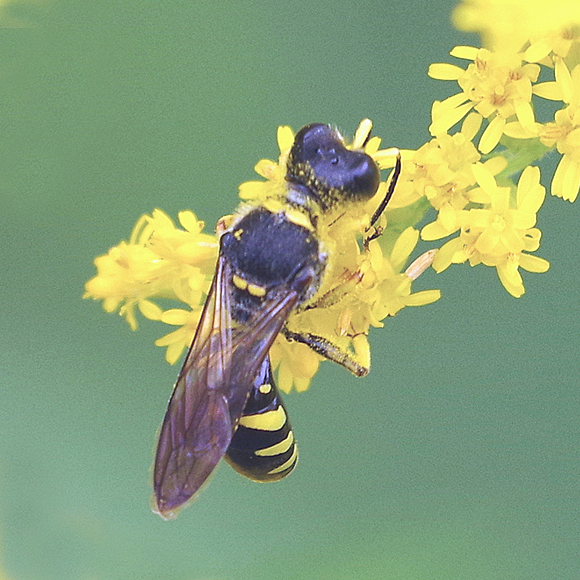
Bug o’the Week – Bugs in the News IX

Greetings, BugFans,

The BugLady’s file of insect-related media stories runneth over, and it’s time to share.  Here’s a potpourri of items on invasive insect species, insect behavior, spectacular insects, and on people discovering new things about insects.  Enjoy (fingers crossed that NatGeo and the New York Times aren’t feeling too proprietary).

Six years ago, the BugLady wrote about the (slowly) growing interest in eating insects (https://uwm.edu/field-station/entomophagy/).  What’s sauce for the goose is apparently sauce for the family pet:  https://www.smithsonianmag.com/smart-news/fido-how-about-some-fly-larvae-dinner-180976270/?utm_source=smithsoniandaily&utm_medium=email&utm_campaign=20201112-daily-responsive&spMailingID=43896066&spUserID=ODg4Mzc3MzY0MTUyS0&spJobID=1881004916&spReportId=MTg4MTAwNDkxNgS2.

What do Monarch caterpillars do when food gets scarce?  They get feisty, that’s what.  https://www.smithsonianmag.com/smart-news/monarch-caterpillars-butt-heads-over-milkweed-180976405/?utm_source=smithsoniandaily&utm_medium=email&utm_campaign=20201125-daily-responsive&spMailingID=43984386&spUserID=ODg4Mzc3MzY0MTUyS0&spJobID=1882182288&spReportId=MTg4MjE4MjI4OAS2.

In 2011, the BugLady included the alien and invasive (remember – some species are both, but those terms are not synonyms) Brown marmorated stink bug in a Stink bug overview (https://uwm.edu/field-station/stink-bugs-revisited/) and she plans to revisit it someday.  Meanwhile, here’s a story of a potential biological control.  https://www.sciencemag.org/news/2018/08/scientists-spent-years-plan-import-wasp-kill-stinkbugs-then-it-showed-its-own.

Another invasive, the newly-arrived (2014) Spotted lanternfly, is poised to do a lot of damage in North America.  While it may look like a butterfly https://bugguide.net/node/view/1916873/bgimage, the Spotted Lanternfly is an actual “bug,” – a planthopper https://www.smithsonianmag.com/science-nature/what-is-the-spotted-lanternfly-180975778/?utm_source=smithsoniandaily&utm_medium=email&utm_campaign=20200922-daily-responsive&spMailingID=43523226&spUserID=ODg4Mzc3MzY0MTUyS0&spJobID=1841889851&spReportId=MTg0MTg4OTg1MQS2.

Would a “Bugs in the News” episode be complete without the Murder Hornet?  https://www.smithsonianmag.com/smart-news/first-live-murder-hornet-captured-us-180975987/?utm_source=smithsoniandaily&utm_medium=email&utm_campaign=20201005-daily-responsive&spMailingID=43617656&spUserID=ODg4Mzc3MzY0MTUyS0&spJobID=1860410574&spReportId=MTg2MDQxMDU3NAS2.

Beautiful!!!! https://www.smithsonianmag.com/science-nature/worlds-most-interesting-insects-180974748/?utm_source=smithsoniandaily&utm_medium=email&utm_campaign=20200429-daily-responsive&spMailingID=42388948&spUserID=ODg4Mzc3MzY0MTUyS0&spJobID=1743054653&spReportId=MTc0MzA1NDY1MwS2.

Plus a great story about Leaf/stick insects – https://www.nytimes.com/2020/12/01/science/leaf-stick-insects-phyllium-asekiense.html?campaign_id=61&emc=edit_ts_20201201&instance_id=24610&nl=the-great-read&regi_id=106911568&segment_id=45778&te=1&user_id=48ae4cbec4a693ab58f7a257b0a261ad.

And finally – this is one of the BEST VIDEOS EVER – https://www.nationalgeographic.com/animals/2019/07/ghost-orchids-florida-surprising-pollinators-moths/.

Stay healthy,

The BugLady

Bug o’the Week – Square-headed wasp

Greetings, BugFans,

The BugLady is living proof that there’s a big difference between looking and seeing.  For years, she’s been photographing these little black and yellow wasps and filing them under “Potter wasps,” but she had an “Oh Duh” moment this summer, and yeah, yeah – she sees it now.  As Henry David Thoreau once said, “We must look a long time before we can see.”

So – not potter wasps https://bugguide.net/node/view/1906174/bgimage – these are Square-headed wasps in the family Crabronidae.  Members of the family were formerly placed in the Thread-waisted wasp family Sphecidae, a family that includes some conspicuous beauties like the Blue mud dauber, the Black and yellow mud dauber, the Great golden digger wasp, and the Great black wasp, but now they’re viewed as a separate family.  Stand by for further taxonomic tweaking.

We have visited the Crabronidae before, in the form of the organ-pipe mud daubers (https://uwm.edu/field-station/organ-pipe-mud-dauber/) and the sand wasps (https://uwm.edu/field-station/sand-wasps/).  It’s a large and diverse bunch, with about 9,000 species worldwide (1,225 in North America).

The name “Square-headed wasps” only applies to species in the subfamily Crabroninae, which has 4,700 species (520 here) – a number of sources call them digger wasps.

Square-headed wasps are solitary wasps that use their impressive jaws (https://bugguide.net/node/view/1684606/bgimage) to make nests in the ground, in hollow stems, in the pith of broken stems, and in old galleries (tunnels) chewed in wood by beetle larvae.

Solitary wasps typically create an egg chamber and stuff killed/stunned/bitten/stung spiders and/or small insects into it (scroll down to the fly-stuffed stem https://prairieecologist.com/tag/ectemnius/).  Here’s a Square-headed wasp with a crane fly https://bugguide.net/node/view/110413/bgimage.  Mom lays an egg on one of the bodies, closes the chamber up, and moves on.  The carnivorous larva hatches out into its own personal pantry stocked with enough food to get it to the pupal stage.  Some species of Crabronids, like the sand wasp above, do what’s called “progressive provisioning” – instead of providing a cache, the female sticks around her egg tunnels and brings food to her developing young – but Square-headed wasps seem to use the standard method.  Many Square-headed wasps are very specific about the kinds of insects they pursue.  Adults feed on nectar.

The first question (but never the last, of course) is “which Square-headed wasp is this?” Alas, the BugLady can’t provide a definitive answer.  She thinks she’s photographed several species, and she’s been squinting at pictures until she’s cross-eyed, and she’s guessing that her wasps are either in the genus Lestica https://bugguide.net/node/view/624516/bgimage (three species in North America) or Ectimnius https://bugguide.net/node/view/1406440 (27 species), or Crossocerus https://bugguide.net/node/view/214928/bgimage the Equilateral Square-headed Wasps (!) (40 species in North America but only a few have yellow markings on the abdomen).  They are differentiated by field marks like the sharpness of the longitudinal grooves along the inner eye margin.  BugFans are always welcome to weigh in.

Their MO’s are similar, differing slightly in the medium they pick for their egg chambers and the type of insect they hunt in behalf of their young.

The BugLady gives Thanks for the six-legged and the eight-legged and the no-legged.

Kate Redmond, The BugLady

Bug of the Week archives:
http://uwm.edu/field-station/category/bug-of-the-week/

Bug o’the Week – Phantom Crane Fly rerun

Salutations, BugFans,

Here’s a rerun from August of 2014.

What a magical little fly!

Most BugFans are familiar with crane flies, those giant, non-biting “mosquitoes” in the family Tipulidae https://bugguide.net/node/view/1895587/bgimage (some of the fall-flying crane flies in the family Pediciidae (the Hairy-eyed Crane Flies) are pretty spectacular too https://bugguide.net/node/view/147834/bgimage).   Phantom crane flies belong in the small family Ptychopteridae (only three genera).  Crane flies were named for their long legs, and most authors attribute the “phantom” part of the name to the way Phantom crane flies drift through the air, appearing and disappearing in patches of light and shadow.  Our Phantom crane fly (Bittacomorpha clavipes) can be seen east of the Rockies, from late spring to early autumn, in the fairly dense vegetation along the shady edges of wetlands.

They aren’t huge.  If you join the tips of your thumb and forefinger, you’d be approximating the leg-span.  They’re like a flying daddy long-legs, but without the bulk – a Phantom crane fly’s body is a slender half-inch.  Sources describe them as floating through the air, legs spread, flapping their wings minimally, assisted aerodynamically by the flared areas on their legs.  Can they fly up-wind?  Yes, if the breeze isn’t too strong, but most of the time, they appear to move randomly through the vegetation, two or three feet off the ground, ricocheting off of leaves.

The odd flanges on the legs are a characteristic of this species.  Twentieth century entomologist C. P. Alexander (who described more than 11,000 species and genera of flies during his long career) said of the Phantom crane fly that “This species is one of the most conspicuous and interesting of all Nearctic Diptera. The first tarsomere of the legs is dilated and filled with tracheae, a characteristic which enables the flies to drift in the wind with their long legs extended to catch the breeze.

Let’s “unpack” the trachea-tarsomere thing.  The tarsus is the lower part of an insect’s leg – its “foot” – located below the tibia.  It’s made up of a series of small segments (usually five) called tarsomeres; the top segment is called the metatarsus, and the bottom segment usually bears a claw or two.  The insect walks or hops on its tarsus.

Insects breathe largely by diffusion, and their respiration is mostly passive (although muscle contractions can push air through the respiratory system more quickly).  Air floats through openings called spiracles into tubes called trachea.  It moves through a network of increasingly minute respiratory tubing that divides and subdivides and ends in moist pockets called tracheoles where the cells can exchange waste gases for fresh.  Trachea may be strengthened by spiral fibers called taenidia that are embedded in their walls; taenidia have been likened to the coils in a dryer vent tube.  In the absence of taenidia, a tracheal wall may bulge out like an aneurism and form an air sac.

Still unpacking.  In his article called “Peculiar Tracheal Dilations in Bittacomorpha clavipes,” published in the Biological Bulletin in 1900, Charles Thomas Brues explains further.  “In both sexes, the metatarsi are very much enlarged and quite conspicuous on account of their great color contrast. The whole tibia is completely filled up by the trachea.  In the enlarged metatarsus, the trachea is enormously distended and almost completely fills the cavity of this joint as well as that of the second and third joints of the tarsus.”  In Tipulidae, the tracheal tube is delicate-to-obsolete in the tarsus.  “it is impossible that they [immense vesicles in the metatarsi] should be used as reservoirs for air for respiration, on account of their distance from the body of the insect.  It is more probable that they may bear some relation to the insect’s method of locomotion.  When flying, Bittacomorpha uses the wings scarcely at all, relying in great measure upon wind currents for transportation.  The legs are exceedingly light, as the exoskeleton is light and delicate, and encloses practically no tissue that can serve to increase their weight.  As they expose a large surface, they offer great resistance to the air without adding appreciably to the insect’s weight.

So, the hollow legs lighten the insect, and the inflated sacs increase buoyancy and provide surface area for the wind to push on.

How do Phantom crane flies get away with their striking, black and white patterns?  Aposematic/warning coloration has been suggested, but the folks who keep track of these things tell us that the rest of the crane flies taste OK, and there’s no reason to suspect that Phantom crane flies taste otherwise (the aquatic larvae scavenge on organic detritus in the water that surrounds them, and the adults eat little or nothing (though the one on the white flowers looks like it might be nectaring), and they’re not blood suckers!.  Nothing suspicious there).  As previously noted, black and white coloration is a good plan for an animal that inhabits the light-speckled thickets, and the BugLady assumes that they’re as tough for predators to see as they are for photographers.  A blogger in Michigan suggests that Crane fly legs are oh-so-easily detachable, and that a Phantom crane fly may sacrifice a conspicuously-striped leg to save its life.

Clearly, Phantom crane flies have caught our fancy, and it’s fun to note the words that are used to describe them and their flight:

  • They resemble a spider web or a thistle seed drifting about.”
  • It looks a bit like a flying snowflake.”
  • It hangs or floats in the air rather than flies, spreading its long legs to catch the breeze, a little like ballooning in spiders.”
  • They appear like parachutes floating above streamside grasses and sedges.”
  •  “When the legs are vibrate, this insect indeed lives up to its name, giving the beholders a sensation of “spots before the eyes.”
  • The same Michigan blogger notes, interestingly, that “When it flies, it looks like a tight swarm of up to seven small flies, rather than a single large one.”

If the BugLady were to pick an adjective, it would be “flickering,” and she thinks they look like tiny sparklers.

The BugLady was lucky enough to witness a few happy Phantom crane fly couples flying around in tandem.  Both in flight and when hanging from a leaf, the female does the heavy lifting.  Twice, as the BugLady was (voyeuristically) photographing a mating pair, a third Phantom crane fly flew in and hassled the female.

Subsequently, the female dips the tip of her abdomen into the water, depositing eggs (as many as 300 of them) singly or in small bunches.  The larvae live in the top inch or so of muck and feed on decaying material they find there.  It’s not exactly an oxygen-rich environment, and although they can pick up gases through their soft exoskeleton, they get the bulk of their air through a long, retractable breathing tube (caudal respiratory siphon) that they extend up through the surface film from the rear of their body.  According to Voshell in A Guide to Common Freshwater Invertebrates of North America, the larvae “burrow deep into sediment during periods of the winter when the water freezes over.  Pupation occurs in the same habitat where the larvae develop, without any special preparation.  Pupae have long, breathing tube on the thorax.”  There are reportedly two broods in the northern part of its range.

Phantom crane flies have been putting on small but exquisite performances since Eocene times, and they’re now showing at a wetland near you!

On another note – the BugLady has been enjoying the sweet serenades of the tree crickets recently.  Here are links to two audio sites from last year’s BOTW on tree crickets:  Go to http://www.oecanthinae.com/4099.html, turn up the volume on your speakers, and scroll down slowly.  And, try the U of Florida’s recordings of crickets and katydids north of Mexico at http://entomology.ifas.ufl.edu/walker/buzz/cricklist.htm.  Fair warning – you have to listen pretty hard to hear some tree crickets.

Kate Redmond, The BugLady

Bug of the Week archives:
http://uwm.edu/field-station/category/bug-of-the-week/

Bug of the Week – Wooly Bear Caterpillar Re-do

Howdy, BugFans,

Last week’s episode was the 600th original (not rerun or tweaked) episode, and the BugLady is going to take a two-week victory lap (but she will fill the space with tasteful reruns).

The BugLady has been hanging out on the hawk tower this fall, logging migrating raptors for the Western Great Lakes Bird and Bat Observatory.  We’ve counted just under 800 birds since early September, and some of the weather has been – interesting.  On Sunday, the temperature was in the high 30’s (-ish), and we clocked a few wind gusts around 40 – and got 37 birds.  The BugLady was amazed to see, on the walk back to the car, a few wooly bear caterpillars crossing the mowed trail.  Those little fur coats must be a lot warmer than they look.

Without further ado, here’s a slightly up-dated version (some new words, a few new pictures) of a rerun from 2015, which was a slightly up-dated version of the 2009 original.

Greetings, BugFans,

As often happens with the moths, one life stage may be more conspicuous, and the adults and caterpillars may even have different names.  In this case, the ubiquitous, rust-and-black-banded Wooly bear caterpillar turns into a lovely, less-common, caramel-colored, or cream https://bugguide.net/node/view/1636191/bgimage, or yellow https://bugguide.net/node/view/1237224/bgimage) moth called the Isabella Tiger moth (Pyrrharctia Isabella).  Pyrrharctia is a “monotypic genus” – there’s only this single species in it – and they’re only found in North America.

Tiger moths are in the family Erebidae, a diverse group that includes about 250 species of tiger, underwing, Zale, tussock moths, etc. in North America and many more worldwide (except Antarctica).  If you have an older insect guide, they’re in their own family, Arctiidae, but everything that was once in Arctiidae is now in subfamily Arctiinae.

Tiger moths are unusual in that they have an organ on their thorax that vibrates to produce ultrasonic sound.  They “vocalize” to attract mates and to defend against predators.  If you have sound-making ability, you also need “ears,” and those are on the thorax, too.  Like the feline tigers, the adults of many species are hairy and sport bold color patches, stripes or patterns (consider the striking Leconte’s Haploa https://bugguide.net/node/view/954015).

Many tiger moth caterpillars are fuzzy, earning a group name of wooly bears or wooly worms. There is an amazing amount of information out there about wooly bear caterpillars, and much of it is contradictory, which is explained by the fact that there are many different kinds of caterpillars that are called Wooly bears.

The Isabella Tiger Moth caterpillar is called the (generic) Wooly Bear, the Black-ended Bear, and the Banded Wooly Bear (they’re not as distinctive in their early stages https://bugguide.net/node/view/1617463/bgimage).

A mature female Isabella Tiger Moth “calls” to males by emitting pheromones (chemical signals) at night, and males use their sensory antennae to zero in on her https://bugguide.net/node/view/1837707/bgimage.  Isabella Tiger Moths lay their eggs https://bugguide.net/node/view/1186437/bgimage on a wide variety of plants during the warm months.  While some caterpillars are known for their picky eating, Wooly bears are generalists.  They feed during the day, munching on handy, low-growing plants like grasses, “weeds,” and wildflowers (cannibalism has also been reported).  Their catholic eating habits ensure that they’re constantly surrounded by food during their autumnal wanderings in search of wintering sites.

They spend the winter as caterpillars, sheltered from the weather under tree bark or debris, or in your garage.  Do they become “bug-cicles”?  Yes, indeed – they’ve even been found frozen into a chunk of ice.  But, like other organisms that are dormant in the dead of winter, Wooly bear caterpillars produce a chemical cryoprotectant (antifreeze) that safeguards living tissue against damage from freezing and thawing.  They will stir and walk around on mild winter days and go back into hiding when the temperatures drop again.  They wake up with the warm weather, resume eating, and then pupate in late spring in a fuzzy cocoon into which they incorporate their own “hairs.”  According to Wikipedia, Arctic summers are so short that Arctic Wooly bears may need to live through several of them to become mature enough to pupate.

One area of disagreement among sources is whether Wooly bears’ wool/setae/hairs/bristles are irritants (remember: one common name – numerous species).  Having a bristly covering discourages some predators, although in the Fieldbook of Natural History, E. L. Palmer says that “skunks and a few other animals roll hairs off the caterpillars before they eat them.”  Certainly, the stiff hairs make it a harder to pick a Wooly bear up, and when you do pick one up and it curls into a defensive ball https://bugguide.net/node/view/1454009/bgimage, it’s pretty slippery.  Some sources say that the setae contain a stinging/irritating/venomous chemical, and other sources specifically say they do not.  Still other references say the setae may cause dermatitis mechanically – that they might break off in your skin (like one of those wretched, furry cacti); and others say that that unlike many hairy caterpillars, Wooly bears are harmless.  The BugLady has never suffered any ill effects from handling the familiar, rust-and-black Wooly bears.

Wooly bears have been famous since Colonial times for two things: 1) their habit of crossing the roads in fall (the BugLady wonders what they crossed before the Colonists arrived and started making roads); and 2) their (alleged) ability to predict the weather.

The weather lore angle was initiated by those same, road-building Colonists, who needed some forecasting done in the pre-Weather Channel days so they could figure out when to plant and harvest crops.  If its rust-colored middle band is wide, says the Almanac, the winter will be a mild one; if there is lots of black, batten down the hatches (except for a few sources that say the opposite – that lots of rust means lots of cold).

A surprising number of scientists have felt obligated to leap in and deflate the weather story.  To them the BugLady says “Lighten up, Party Poopers, and let a little fantasy into your lives.”  They tell us that the widening middle band is a result of age; that each time a Wooly bear molts, a black band becomes a rust band (except, of course, for a few who say the opposite – that rust turns to black).  So, a rustier caterpillar is an older caterpillar.  The BugLady had been curious about why the early fall Wooly bears seemed more pessimistic than the later fall Wooly bears and is happy to have that one resolved. According to that school of thought, if you see a blacker caterpillar in spring, it’s one that became dormant prematurely, and so may be telling the weather of the previous fall.  Other research suggests that a caterpillar with lots of rust lived in dry conditions, and one source says that a Wooly bear with wide black bands grew up where the habitat was wetter.  Still other scientists say that there is considerable variation in color even within newly-hatched individuals from a single clutch of eggs, and that the variation persists as they age.

We have Dr. Curran, a curator of insects at the American Museum of Natural History, to thank for popularizing the Wooly bear.  For eight years in the late 1940’s and early 1950’s, Dr. Curran drove north from New York City along the Hudson to Bear Mountain State Park to measure the coloration of the Wooly bears he found there.  During those years, the rusty bands predicted mild winters.  He “leaked” the forecasts via a friend at a NYC newspaper, and the publicity his reports generated put Wooly bears on the map.  But Dr. Curran’s only real hypothesis was that Scientists Just Want to Have Fun.  He and his friends enjoyed the scenery, the foliage, and the caterpillars on their annual fall forays and formed “The Original Society of the Friends of the Woolly Bear.”  Thirty years after Dr. Curran’s outings ceased, the folks at Bear Mountain State Park resurrected the Friends organization and the wooly bear count.

Wooly bears are embraced by children and adults alike, and Annual Wooly Bear Festivals are observed in fall (though the pandemic has shuttered many):

By the way – both “wooly” and “woolly” are accepted spellings, but in countries that are not the US, “wooly” is likely to be spelled “woolly.”

Kate Redmond, The BugLady

Bug of the Week archives:
http://uwm.edu/field-station/category/bug-of-the-week/

Bug o’the Week – Bugs without Bios XV

Howdy, BugFans,

Bugs without Bios are bugs who have no fan clubs or t-shirts or Wanted posters and who go about their daily lives without attracting too much attention, yet are still worthy of our admiration..

Actually, there probably is a BANDED LONGHORN BEETLE t-shirt out there somewhere.  It’s in the charismatic Long-horned beetle family Cerambycidae, whose extra-long-antennaed members are favorites of insect enthusiasts everywhere.  They’re in the flower longhorn subfamily Lepturinae – long, skinny, “broad-shouldered” beetles that can be seen crawling across blossoms in the daytime, feeding on nectar (carbs) and pollen (protein) without demolishing the flowers.  Flower longhorn larvae stay out of sight, burrowing in decaying tree trunks.

For a nice overview of the flower longhorns, see this article in the other Bug of the Week: http://bugoftheweek.squarespace.com/blog/2019/8/2/blossom-beetles-flower-longhorn-beetles-subfamily-lepturinae

https://docs.lib.purdue.edu/cgi/viewcontent.cgi?article=2256&context=open_access_dissertations.

Banded longhorns (Typocerus velutinus) (velutinus refers to the beetle’s golden “downiness”) are found in grasslands, prairies, pastures, or woody openings with wildflowers in eastern North America.  There must be dead hardwoods like oak and hickory nearby for its larvae.  Adults are often associated with Queen Anne’s lace (this one was on Water hemlock, which is in the same family) but they’ve been recorded on plants in the rose, elderberry, aster, viburnum, sumac, and dogbane families, where their downiness makes them good pollinators.

The delicate little GRASS BUG Arhyssus nigristernum (probably) is in the Scentless Plant bug family Rhopalidae, a family we have encountered before in the form of the Box elder bug.  There are 14 species in this New World genus, but only three occur in the weedy fields of the East.

There’s not much out there about Arhyssus nigristernum (no common name).  A different Arhyssus species is known to overwinter as an adult, and another genus member that lives in the Northwest is infamous, like the Box elder bug, for moving (harmlessly) inside for the winter (“home invasions,” says one newspaper article), and despite its family name, this species is said to smell “piney.”

The BugLady found this pretty and remarkably cooperative STRIPED SEDGE GRASSHOPPER (Stethophyma lineata) (or lineatum) in her favorite wetland this summer.  It’s in the Short-horned grasshopper family Acrididae and in the Band-winged grasshopper subfamily.  The Striped sedge grasshopper has northern affiliations – it’s found across North America as far north as Alaska and as far south as Colorado and New Jersey, although according to bugguide.net it seems to be getting scarce in the southern part of its range (it’s listed for northeastern but not for southeastern Wisconsin).

It lives on the edges of lakes, marshes, bogs, and wet meadows, and as its name suggests, its food is mostly sedges.

Many of the Band-winged grasshoppers have dramatically-striped wings, but this one’s wings are a sedate cocoa color https://bugguide.net/node/view/1882582/bgimage; it has great gams https://bugguide.net/node/view/311225/bgimage!

Fun Fact about the Striped sedge grasshopper: according to GRASSHOPPERS OF NORTHWEST TERRITORIES and adjacent regions, “This relatively large species is sometimes locally abundant and may be important in the diet of Sandhill and Whooping Cranes.”

#600!

Kate Redmond, The BugLady

Bug of the Week archives:
http://uwm.edu/field-station/category/bug-of-the-week/

Bug o’the Week – Wildflower Watch – Wild Bergamot

Howdy, BugFans,

The BugLady loves wild bergamot – first, because it has classy flowers, and second, because she loves the clearwing moths that dance around their edges, leading her on an annual, merry chase.  She decided to see who else uses bergamot (with goldenrods and asters in their final inning, the BugLady is missing wildflowers already).

Wild bergamot (Monarda fistulosa) is sometimes called Bee balm, a name that’s also applied to a red species of bergamot in the eastern US.  It has a long history of human use – native peoples used it as an antiseptic on wounds and sores, to treat gum disease, colds, flu, and intestinal parasites, and like other members of the mint family, indigestion.  The leaves were brewed for tea (after the Boston Tea Party, bergamot was one of the settlers’ go-to tea substitutes), and they were added to stews for flavoring.  It makes a strong and distinctive honey, and the oil was used on acne and as a hair dressing.  The BugLady discovered an “off-label” use for it one day after she helped a small garter snake cross the road.  The snake obliged by musking her hands, so she grabbed a bunch of bergamot leaves and pulverized them in her hands, trading musk for mint.

It isn’t an easy plant for insects to use.  The flowers are long tubes (fistulosa means “reed,” or “pipe”), and even though the pollen-producing stamens are accessible, an insect must be specially equipped to get to the nectar (some wasps cheat by chewing through the sides).  Butterflies, moths, bee flies, and long-tongued bees like mining bees, cuckoo bees, and some bumble bees are the chief pollinators, but hummingbirds lend a hand, too.  Mint flowers have a protruding “lower lip” that insects use as a landing strip.  Some grazers find the strong, mint-flavored chemicals off-putting.

The wonderful Illinois Wildflowers website describes their blooming thus: “At the top of major stems are rounded heads of flowers about 1-3″ across. The flowers begin blooming in the center of the head, gradually moving toward its periphery, forming a wreath of flowers.”  Among the insects listed in the Illinois site’s “Faunal Associations” section is a specialist called the Beebalm shortface bee https://bugguide.net/node/view/1413882/bgimage that bugguide.net say lives in Wisconsin and Tennessee “Although maps show wider distribution.”  Something to look for next year.

The BugLady was surprised to learn that Wild bergamot is considered a weed in Nebraska.

Here are some of the insects and spiders the BugLady has spotted on bergamot over the years.  As always, there are bugs that come to dine, bugs that only visit for a brief rest, and others that come to stalk their prey.

This CABBAGE WHITE butterfly is showing us how it’s done – picking a flower and unrolling its curled proboscis to reach for nectar at the bottom of the tube.

JAGGED AMBUSH BUG – If you’re having trouble seeing it, so will its next meal (hint – its head is down and angled slightly to the left).

CRAB SPIDER –ditto – you can spot this goldenrod crab spider by looking for the red lines on either side of its abdomen – or by looking for its dangling prey.

And another CRAB SPIDER, but with a different camouflage strategy.

SNOWBERRY/BUMBLEBEE CLEARWING and CINNAMON CLEARWING MOTHS are members of the sphinx moth family (aka the hawk moths), a group of powerful flyers that often have dramatic color patterns https://bugguide.net/node/view/1810671/bgpage and an exaggerated spindle shape https://bugguide.net/node/view/1726114/bgimage.  Some species, like these, are day-flying, and they’re often mistaken for mini-hummingbirds.

The lovely HORSEMINT TORTOISE BEETLE eats bergamot and other members of the genus Monarda (https://uwm.edu/field-station/horsemint-tortoise-beetle/).  Like other tortoise beetles, its slightly-less-lovely larvae, which are Monarda leaf feeders, protect themselves both passively and actively by creating a “fecal shield.”  Read all about it at https://www.colorado.edu/asmagazine-archive/node/513.

SILVER-SPOTTED SKIPPERS are the biggest skippers in Wisconsin, but they’re not the only ones that nectar on bergamot – the BugLady has pictures of a half-dozen smaller (and more confusing) skipper species in the flowers.

The BugLady watched this BLACK SWALLOWTAIL throw itself at the bergamot over and over with total abandon.  She tries (probably not hard enough) to avoid anthropomorphism, but this butterfly’s actions seemed so exuberant!

BUMBLE BEES are strong enough to pry open tubular flowers – like mints, columbines, gentians, and peas – that are inaccessible to lesser insects.  This bumble bee seems to be one of the long-tongued species, but the BugLady isn’t sure whether bergamot flowers require force or finesse.

PENNSYLVANIA LEATHERWING BEETLES, members of the Soldier beetle family, are a fixture on goldenrods and nearby prairie plants during the month of August.  Adults are omnivores, feeding on nectar, pollen, and tiny invertebrates; and their larvae are carnivores.  This one looks a little rumpled, like it got out of the wrong side of the bed.

QUESTION MARKS have a silvery punctuation mark on the underside of the hind wing.  There are two generations each year and two color forms – the longer-tailed, “violet-tipped,” orange winter form https://bugguide.net/node/view/1306098/bgimage, and the darker-winged summer form https://bugguide.net/node/view/1302365/bgimage.  Spectacular caterpillar http://mothphotographersgroup.msstate.edu/species.php?hodges=4420.  Question marks and Commas, the anglewings, overwinter as adults in sheltered places.

And, of course, a SYRPHID FLY.

Also seen were a two-lined grasshopper, monarch butterfly, Virginia ctenucha moth, ants, and a bush katydid.

Kate Redmond, The BugLady

Bug of the Week archives:
http://uwm.edu/field-station/category/bug-of-the-week/

Bug o’the Week – Selected Syrphid Flies

Howdy BugFans,

It’s no secret that the BugLady is enthralled by syrphid/hover/flower flies (family Syrphidae), those often-exquisitely-decorated little flies https://bugguide.net/node/view/407691/bgpage that mimic a variety of wasps and bees and are featured in so many of her “Summer Survey” episodes.  This summer she photographed several different “flavors” of syrphids, and so she’s sticking her toe into the shallow end of syrphid fly identification.  There are 6,000 species of syrphid flies worldwide –including 813 in North America, with more than 150 species around the Great Lakes alone, so she’s got her work cut out for her.

Despite their resemblance to insects with stingers, syrphids are innocent.  It’s called Batesian mimicry – something that’s harmless protects itself by resembling something that’s not.  It’s easy to tell the difference when they’re at rest – they don’t have stingers (a female’s tapered abdomen may make it look like she does https://bugguide.net/node/view/138871/bgimage), and where wasps and bees have four wings, flies only have two.  You can often see that a syrphid’s abdomen looks “deflated” https://bugguide.net/node/view/580219/bgimage.  Syrphid flies range in size from ¼” to the size of a small bumble bee.

Adults of many species feed on nectar and pollen that they sponge up with tubular mouthparts.  They’re good little pollinators (especially the hairier species), although most feed randomly on white or yellow flowers (unlike bumble bees, which target flowers of a particular species on each outing – flower constancy – ensuring that pollen gets delivered to the right place).

Their larvae (maggots) live a variety of lifestyles; some are decomposers, eating decaying organic bits or wet wood; some eat living plant material like ornamental flower bulbs (and are unwelcome in greenhouses), and others, although eyeless and with only rudimentary legs, prey on small invertebrates like aphids https://bugguide.net/node/view/1386581/bgimage.  The aquatic larvae of some species feed on tiny organisms and organic detritus in shallow waters and are called rat-tailed maggots (https://bugguide.net/node/view/166995/bgpage – the “tail” is a breathing tube), and a few live in ant or bumble bee nests.  The BugLady wonders if the syrphid larva in her picture escaped the lurking crab spider.

Adults find each other by sight and probably by sound – they can make a soft “hum” by vibrating some structures in their thorax that are independent of flight.  The BugLady couldn’t find anything about courtship https://bugguide.net/node/view/697135/bgimage, but females of carnivorous species lay eggs on vegetation near aphid colonies, and when the larvae hatch, they go to work.  After two or three weeks and around 400 aphids, the larvae are ready to form a pupal case inside of their hardened final larval skin (puparium) (looks like a slipper shell), and there they overwinter.

These are Fair-weather Flies – if you see one, it’s probably warm and sunny.  Most are also home-bodies, seldom leaving the area where they hatched.

The BugLady found an amazing paper about syrphid fly migration.  It’s a known phenomenon among some European species, and it had been recorded on the East Coast of North America nearly 100 years ago, but it had not been noted in the literature since then.  In the paper, researchers Menz, Brown, and Wotton discuss a migratory event that occurred in California in 2017 in which it was estimated that hundreds of thousands of syrphid flies passed over a 200 meter-long stretch of trail in 30 minutes.

Here are some of the syrphid flies that the BugLady saw this summer (for most, she’s resisting going out on her usual taxonomic limb and guessing their species).  Check them out – they’re all different!

TEMNOSTOMA adds a behavioral component to its deception – it extends its dark, front legs to look like antennae https://uwm.edu/field-station/wasp-mimics-family-syrphidae/.  There are eight species in the genus in North America.

NEOASCIA, bronze and lustrous, has aquatic larvae, so adults are found around wetlands.  There are only seven species in the area, and they’ve been blessed with great names like Black-margined fen fly, Black-kneed fen fly, Spotted fen fly, etc.

MILESIA – The BugLady went out her back door one day and found this big (3/4”) beautiful Virginia flower fly (Milesia virginiensis) sitting on the stoop.  There are only three species in this genus in the area; they’re dynamite wasp mimics, and they have a buzzy flight sound that contributes to the illusion (one common name is Yellowjacket hover fly).  The Southern yellowjacket is their doppelganger https://bugguide.net/node/view/1641780/bgimage, and a Southern nickname for these syrphids is the “News bee,” because of their habit of hovering in front of people as if conversing.  Here’s more information about this lovely fly: http://bugeric.blogspot.com/2013/08/the-news-bee.html.

HELOPHILUS flies have vertical stripes on their thorax and horizontal stripes on their abdomens (if you’re peeking over their shoulders).  Bugguide.net tells us that Helophilus means “marsh lover.”  There are nine species in the genus in North America, and a number are restricted to the very far north.  Eggs are laid on leaves above a pond, and the larvae drop into the water after hatching, where they feed on submerged, dead leaves.

ERISTALIS – She found two pretty different-looking members of the genus Eristalis – one native and one not.  According to bugguide.net, members of this genus are called Drone flies, though some reserve that name for Eristalis tenex.  There are 20 species in the genus in North America (several are non-native), and many are on the larger end of the syrphid fly size continuum.  According to bugguide.net, the genus name comes from the “Latin eristalis, a kind of gemstone, maybe opal.”

Eristalis tenax (the Drone fly) is non-native; it’s Eurasian in origin but has been here at least since the Civil War and is now found over most of the continent.  You may have to look twice (or thrice) to tell it’s not a honeybee, partly because of the color and partly because of behavior – this hover fly doesn’t hover, it flies like a bee.  Like the bees that they resemble, Drone flies can trap pollen grains in the hairs on their bodies and use their legs move the pollen to special bristles on their front and rear legs.  Unlike the bees they resemble, Drone flies eat the pollen off of their legs instead of bringing it home for a brood.

Eristalis flavipes gave the BugLady quite a start one day in the Bog when she realized that the “bumble bee” that she was chasing had a big rusty patch on its abdomen (https://uwm.edu/field-station/rusty-patched-bumble-bee/), but as soon as she looked at its tiny, round antennae and its big eyes, she knew it was a fly.  Not all individuals have the rusty patch.  Flavipes means “yellow-footed” so let’s call it the Yellow-footed flower fly.  The Yellow-footed flower fly fooled the BugLady because it forages like a bee rather than a fly, and because it has even adopted the bumble bee’s tone of voice.  It’s found in the northern two-thirds of North America.

See – they DO look different!  We can do this!

The BugLady

Become a Member

Take advantage of all the benefits of a Riveredge membership year round!

Learn More