RESCHEDULED TO DECEMBER 15 (Original date was December 11)
Join Riveredge’s conservation staff as we remove invasive buckthorn at Mayhew Woods. Buckthorn removal is one of the most important steps for restoring the land around us. Because of the expansive reach this plant has, the forest floor under the buckthorn is almost entirely bare. Removing buckthorn in the winter allows our team to spend less time managing the plant in the spring and summer, instead working to reintroduce native species in the newly cleared area!
If you’re looking for an opportunity to get outside and participate in local conservation efforts, you’ve come to the right place! Please dress for the elements and prepare to hike off trail. Tools and PPE provided.
Volunteers must be at least 16 years old to participate. Pre-registration is required by December 10 at 11:59 pm as space is limited. Please reach out to Hannah hsedgwick@riveredge.us with any questions.
Restoring Your Woodland Class 2: The Management Toolkit – Removal Strategies & Best Practices
This hands-on workshop is all about how to effectively and safely remove invasive plants using an Integrated Pest Management (IPM) approach. We’ll cover the full range of methods, from the “sweat equity” of hand-pulling and using specialized tools like an Uprooter, to the targeted and safe use of herbicides. A major focus will be on live demonstrations of the most effective techniques, like cut-stump and basal bark applications. We’ll also cover the most critical piece of the puzzle: timing. Learn why the dormant season is your best friend for woody removal and how you’ll tackle herbaceous weeds in the spring. You’ll leave with the confidence to choose the right tool for the right job.
Ages 18+
Member: $40 | Non-member: $50
Pre-registration required by February 18 at 11:59 pm.
Follow the instructions using the button below to login to your member account for member discounts on programs and events. You can use this login to check your membership status, see your expiration date, and renew your membership as well.
If you don’t see the member price after logging in, need help checking your membership status, or you are unsure what email address we have on file, please reach out to our Membership Manager, Renee Buchholz at rbuchholz@riveredge.us or call the Riveredge office at 262-375-2715.
Restoring Your Woodland Class 1: Know Your Enemy- Invasive Plant ID & Property Assessment
The first step in taking back your woodland is knowing what you’re up against. This foundational class will train you to identify the “top tier” invasive threats in our counties woodlands—from woody invasive species (buckthorn, honeysuckle, barberry, autumn olive) to herbaceous (garlic mustard, dame’s rocket, celindine, burdock). Using live samples, we’ll show you the key features to look for in all seasons. We’ll also discuss why these plants win and how to think like an ecologist. The session culminates in learning a strategic “triage” approach to map your own property. You’ll leave with the confidence to identify your problem plants and a clear map of where to start for the biggest impact.
Ages 18+
Member: $40 | Non-member: $50
Pre-registration required by January 19 at 11:59 pm.
Follow the instructions using the button below to login to your member account for member discounts on programs and events. You can use this login to check your membership status, see your expiration date, and renew your membership as well.
If you don’t see the member price after logging in, need help checking your membership status, or you are unsure what email address we have on file, please reach out to our Membership Manager, Renee Buchholz at rbuchholz@riveredge.us or call the Riveredge office at 262-375-2715.
YAY, it’s June! That means that the BugLady is out on the trails, walking slowly, looking at everything and photographing half of it. A probably-tasteful BOTW will be delivered to your inbox each Tuesday in June, but it won’t be a newly-minted, original episode.
It’s also June – National Invasive Species Action Month! “Alien,” “Introduced,” “Exotic,” and “Non-native” are all words we use to describe species that aren’t from around here, like alfalfa and Golden retrievers, but those words are not synonymous with the word Invasive. Having left their predators in the Old Country, invasive species achieve populations that negatively affect their habitat and native species. Not all invasive species are from another continent – Rusty crayfish, invasive in Wisconsin, hail from the southeastern part of the country.
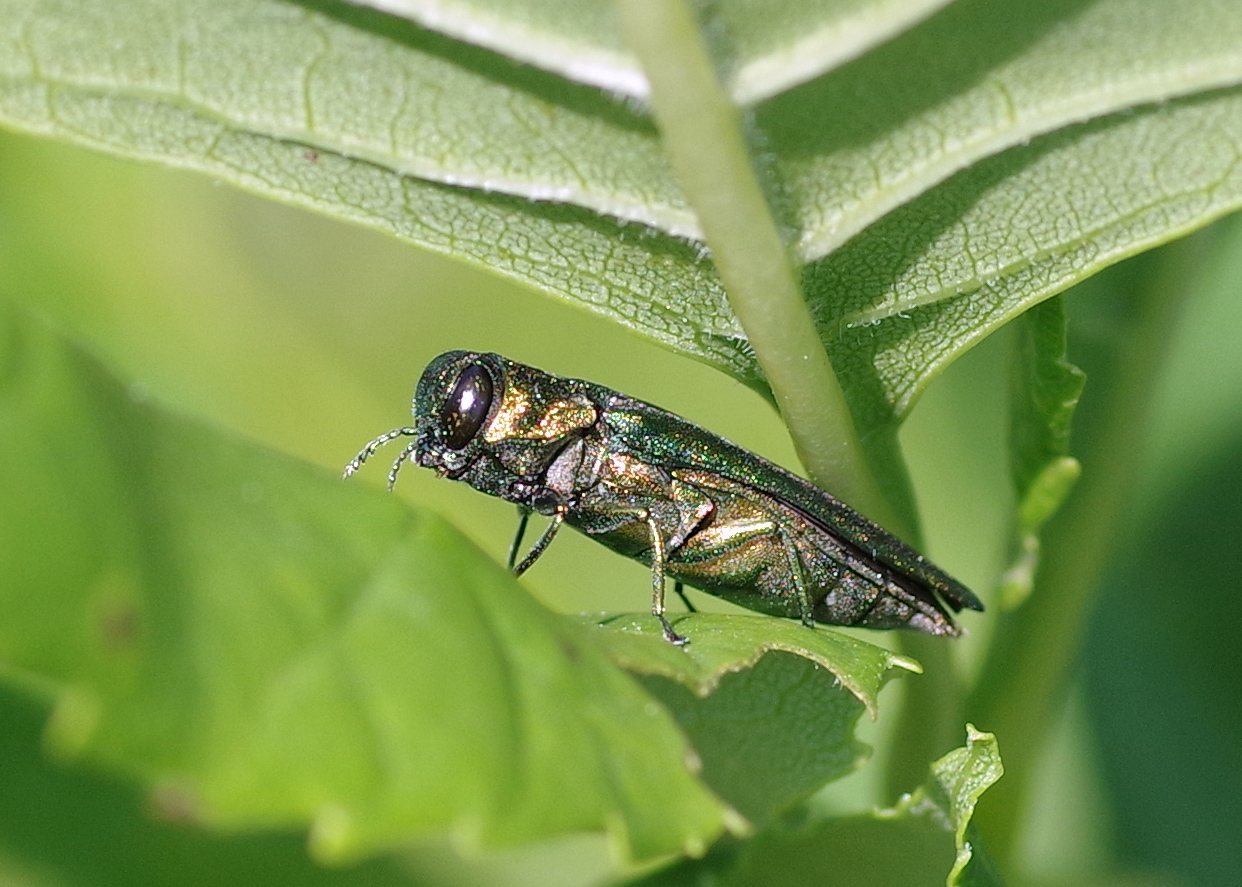
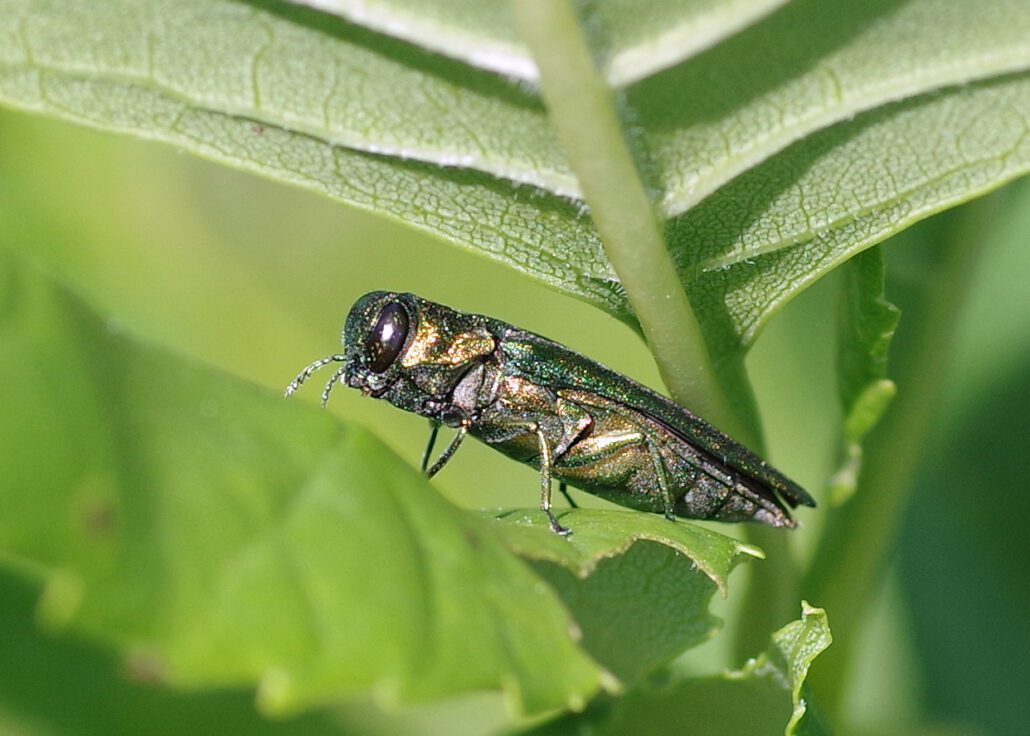
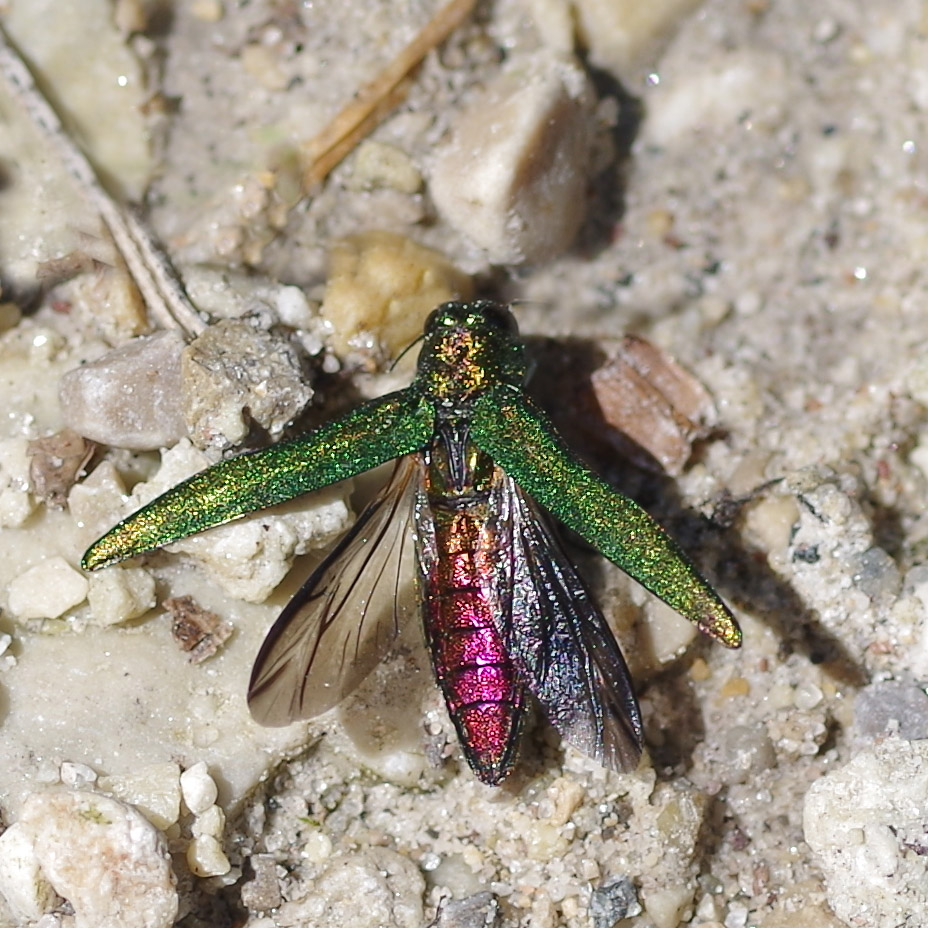
And a picture of a really beautiful little beetle that arrived in the Detroit area from China about 20 years ago and that has changed the landscape here in Wisconsin and in much of North America east of the Great Plains – the Emerald ash borer (EAB) https://uwm.edu/field-station/bug-of-the-week/emerald-ash-borer-redux-family-buprestidae/. When it first appeared, the DNR predicted that it would demolish 99.9% of Wisconsin’s ash trees. Their flight period is about to start.
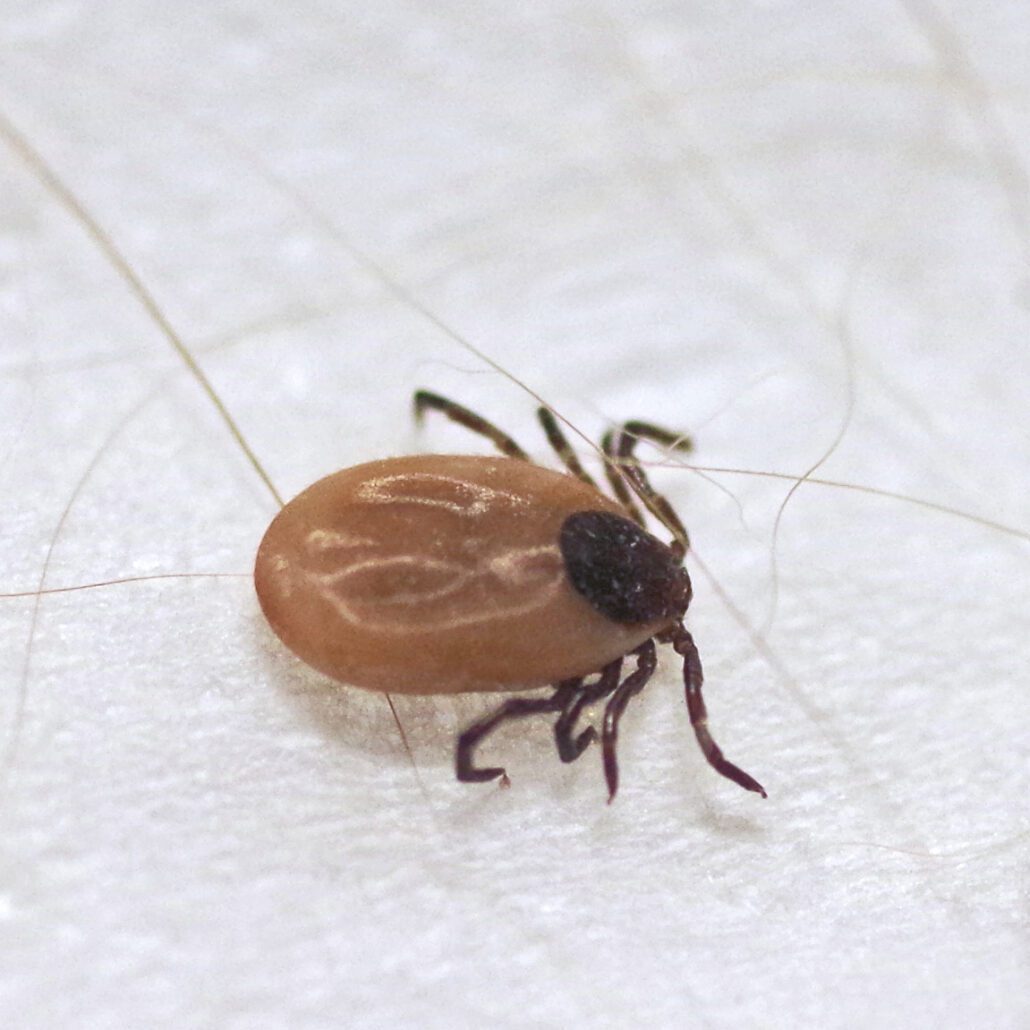
And a Deer tick.
Not all invasive species are insects – see the Southeast Wisconsin Invasive Species Consortium (SEWISC) for information about invasives near you www.sewisc.org (they’d love a donation, too).