What’s Blooming at Riveredge? An Updated Phenology Report

One of the fantastic Riveredge volunteers, who has been exploring Riveredge trails for years to both take photographs and record observations, is letting us know what she sees blooming at Riveredge. In scientific terms, this is called “Phenology.” What is phenology? It’s very similar to another word, phenomenon. Phenology means what happens, and when, in nature. Some of the most common examples are: when flowers are blooming, when buds are present, when specific migratory bird species return, when birds are nesting.

Chances are, you already notice phenology you just might not call it that. If you notice when your garden is blooming, when the trees are budding, or when butterflies return to the skies – you’re observing phenology! Read below to learn what you can find along the trails when you visit Riveredge Nature Center right now.

Spiderwort can be seen throughout Riveredge prairies.

In Bloom

Stoneseed
Bullhead Lily
Blue Flag Iris
Bladderwort
Canada Anemone
Angelica
Tall Meadow Rue
Fragrant White Water Lily
Spiderwort
Lance Leaved Coreopsis
Hairy Beardtongue
Blue Wild Indigo
White Wild Indigo
Hoary Alyssum
Yarrow
Prairie Golden Aster
Bluets
Alumroot
Common Cinquefoil
Cow Parsnip
Large Flowered Beardtongue
Wild Garlic
Spreading Dogbane
Northern Bedstraw
Pale Purple Coneflower
Tall Beardtongue
White Avens
Poke Milkweed
Harebell
Heal All
Pale Spike Lobelia
Black Eyed Susan
Wild Quinine
Wild Four O’Clock

Pale Purple Coneflower

Flower in Bud

Wild Leek

Diversity Outdoors

Dear Riveredge Family,

On June 5, we shared our reflections and solidarity on the movement to end systemic racism in our society  on our social media channels and website

“As a historically and predominantly white-led environmental organization, we realize there is much ground to cover in diversifying the outdoors, and many reasons why Black Americans and People of Color haven’t always felt welcome in wilderness spaces. We support the Black Lives Matter movement and the need for systemic change in our society. Riveredge Nature Center is a sanctuary where each person can embrace, celebrate, and revel in experiencing the wonders nature has to offer. We pledge to continue to improve the way we make these opportunities available to better serve our communities.

Black Lives Matter. Black Birders Matter. Black Experiences Matter.

Education is an ongoing process, and in-step with the Riveredge inquiry-based philosophy, we’re always trying to improve our understanding of our place in the world and how we can better serve the outdoor adventure community.”

Since that time, we have all continued to reflect on our beliefs, personal biases, privileges, and the realities of experiences that are unfamiliar to us. To be part of a community of change, we must first change ourselves. 

The environmental and outdoor fields have struggled, and continue to struggle, to engage and serve Black people and People of Color. The way our society arrived at the outdoors and nature being inherently NOT a privilege for all extends back to the very moment these remarkable tracks of wilderness and wild spaces were created as such, and for whom they were intended to serve at that time. We encourage you to visit Diversify Outdoors to hear for yourself stories from those who have been distanced and separated from the natural world. 

James Edward Mills, climber, journalist, author, and Madison, Wisconsin resident briefly outlines some of the reasons behind this legacy in his book The Adventure Gap:

“Historical reasons may also account for why some African-Americans don’t take pleasure in outdoor experiences. After four hundred years of slavery and forced outdoor labor, African-Americans migrated en masse to major US cities after the Civil War and the end of slavery. Even more left the rural communities of the South during the Great Depression. Jim Crow laws and other forms of discrimination restricted movement and segregated minorities to urban enclaves until the Civil Rights Act of 1964. White supremacist groups typically perpetrated their acts of violence against minorities in wooded areas beyond city limits. Given this legacy, it’s no wonder that African-Americans have often preferred to remain close to home.” 

Mills elaborates on how these factors influence current day demographics: 

“A 2010 Outdoor Recreation Participation survey conducted by the Outdoor Foundation reported that of 137.8 million US citizens engaged in outdoor activities, 80 percent were Caucasiona, a trend that is also reflected in the demographics of those who chose wilderness protection as a career. The National Park Service reported in 2010 that white men occupied 51 percent of positions at that agency and white women, 29 percent. These numbers are similar to those of other land and resource management agencies, such as the Bureau of Land Management and the US Forest Service. 

These statistics become significant when compared against the demographic profile of the nation as a whole. According to Dr. Nina Roberts, an assistant professor and social scientist from San Francisco State University, though African-Americans represent 12.6 percent of the US population, they typically make up a lower proportion of national park visitors (around 5-6 percent, depending on the region). Even with a sharp increase since 2006, “minorities still remain well below the number of visits of their white counterparts in proportion to their population across the United States,” says Roberts.”

At Riveredge, we work every day to connect our communities with the outdoor world, and we know that we must do our part to help bridge this gap. 

We do not yet have a complete list of specific action steps that we will take to correct our own struggles in serving communities of color. But we do want you: our neighbors, members, and friends, to know that we have begun this work. Over the past year, the Riveredge staff team has engaged in diversity, equity, and inclusion (DEI) training with the intent to create lasting organizational change in the coming months and years. Within our staff and Board, we are working on plans to further accelerate and prioritize this overdue work. Our goal is to create change within our organization and contribute to change within the culture of outdoor access and environmental education  in the coming year and years to come. 

We know we can do better. We will do better. It will take all of us. And the time is now. 

We will continue to keep you apprised of our progress, invitations for involvement, and action to further our growth as an organization and continue our work to serve our communities more effectively each and every day. 

With Great Gratitude,

Jessica Jens, Executive Director

Elizabeth Larsen,  President, Board of Directors

What’s Blooming at Riveredge? An Updated Phenology Report

One of the fantastic Riveredge volunteers, who has been exploring Riveredge trails for years to both take photographs and record observations, is letting us know what she sees blooming at Riveredge. In scientific terms, this is called “Phenology.” What is phenology? It’s very similar to another word, phenomenon. Phenology means what happens, and when, in nature. Some of the most common examples are: when flowers are blooming, when buds are present, when specific migratory bird species return, when birds are nesting.

Chances are, you already notice phenology you just might not call it that. If you notice when your garden is blooming, when the trees are budding, or when butterflies return to the skies – you’re observing phenology! Read below to learn what you can find along the trails when you visit Riveredge Nature Center right now. A notation of -P means that the flower has moved past peak bloom stage.

Jack in the Pulpit

Blooming

False Rue Anemone
Blue Violet
Wild Ginger
Prairie Smoke
Swamp Buttercup
Jack in the Pulpit
Kidney Leaved Buttercup
Wood Betony
Hoary Puccoon
Wild Blue Phlox
Miterwort
Early Meadow Rue
Heart Leaved Golden Alexander
Wild Geranium
Gooseberry
Cleaver’s Bedstraw
Lyre leaved Rock Cress
Wild Columbine
Kitten Tails
Golden Alexander
Thyme leaved Speedwell
Mayapple
Bastard Toadflax
Red Baneberry
Grove Sandwort
Stoneseed
Cursed Crowfoot
Robin’s Plantain
Wild Lily of the Valley
Tower Mustard
Solomon’s Seal
Small Yellow Lady’s Slipper
Wild Strawberry
Shooting Stars
Blue Eyed Grass
Cream Wild Indigo
False Solomon’s Seal
Dwarf Ginseng
Fringed Puccoon
White Baneberry
Virginia Waterleaf
Yellow Pimpernel
Bullhead Lily
Blue Flag Iris
Bladderwort
Sweet Cicely
Swamp Saxifrage
Golden Ragwort
Prairie Phlox

Prairie Smoke at Riveredge Nature Center
Prairie Smoke

Flower Buds Present

Giant Solomon’s Seal
Tall Meadow Rue
Lance Leaved Coreopsis
Feverwort

Lance-leaved Coreopsis

Sprouting/Leaves Present

Lead Plant
Purple Joe Pye Weed
Hog Peanut
Poke Milkweed
White Sage

What’s Blooming at Riveredge? An Updated Phenology Report

One of the fantastic Riveredge volunteers, who has been exploring Riveredge trails for years to both take photographs and record observations, is letting us know what she sees blooming at Riveredge. In scientific terms, this is called “Phenology.” What is phenology? It’s very similar to another word, phenomenon. Phenology means what happens, and when, in nature. Some of the most common examples are: when flowers are blooming, when buds are present, when specific migratory bird species return, when birds are nesting.

Chances are, you already notice phenology you just might not call it that. If you notice when your garden is blooming, when the trees are budding, or when butterflies return to the skies – you’re observing phenology! Read below to learn what you can find along the trails when you visit Riveredge Nature Center right now. A notation of -P means that the flower has moved past peak bloom stage.

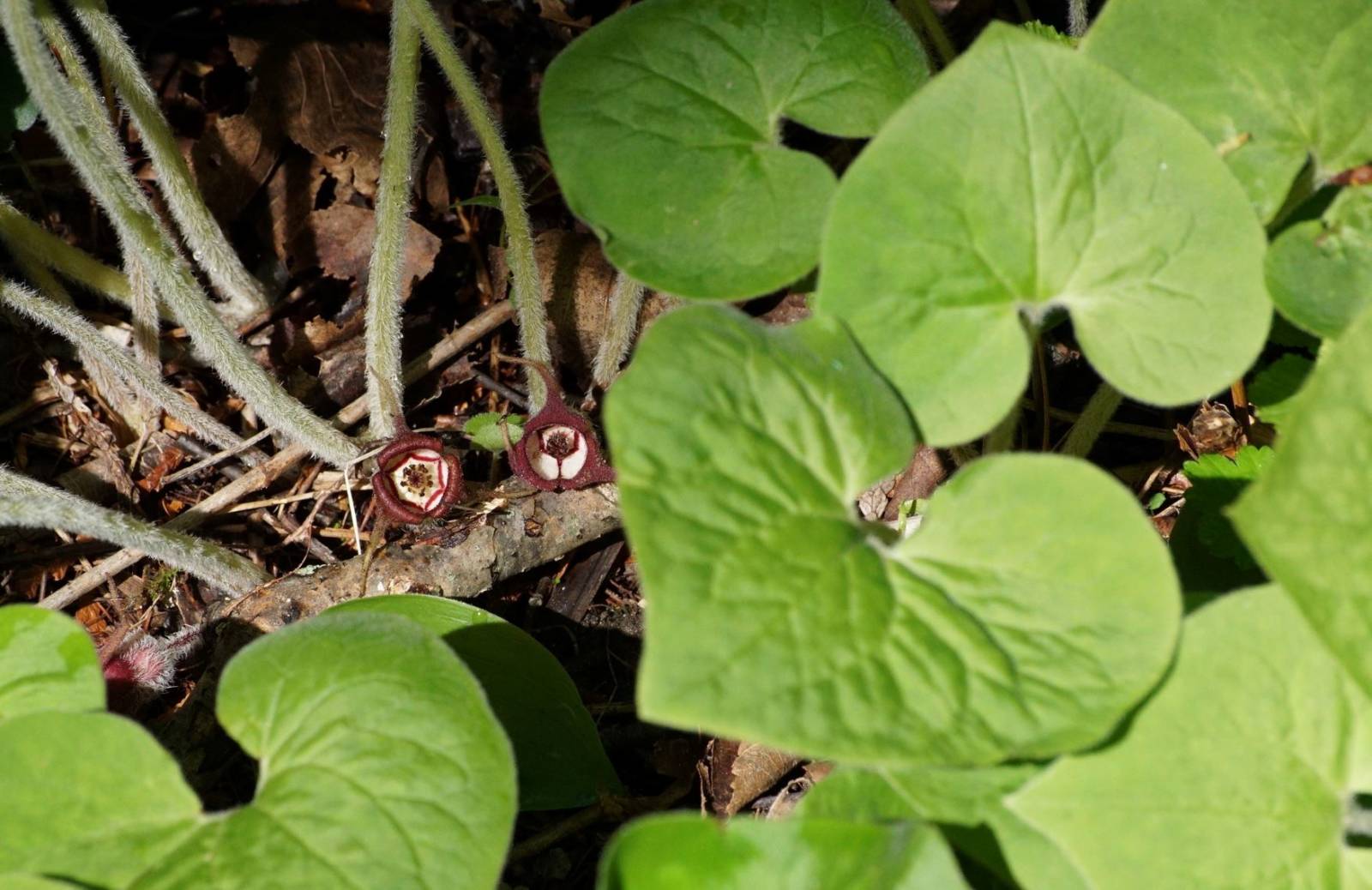
Wild Ginger flowers can be a challenge to find, generally hidden beneath large, heart-shaped leaves.

Blooming

False Rue Anemone
Dutchman’s Breeches
Marsh Marigold
Blue Violet
Spring Cress
Wild Ginger
Wood Anemone
Prairie Smoke
Swamp Buttercup
Large Flowered Trillium
Jack in the Pulpit-P
Blue Cohosh
Downy Yellow Violet
Kidney Leaved Buttercup
Wood Betony
Hoary Puccoon
Wild Blue Phlox -P
Miterwort
Bellwort
Pussy Toes
Nodding Trillium
Early Meadow Rue
Heart leaved Golden Alexander
Wild Geranium – P
Gooseberry
Common Valerian
Cleaver’s Bedstraw
Goldenseal
Lyre leaved Rock Cress – P
Wild Columbine
Kitten Tails
Golden Alexander
Jacob’s Ladder-P
Red Trillium
Starry False Solomon’s Seal
Thyme leaved Speedwell
Mayapple -P
Bastard Toadflax -P
Red Baneberry
Grove Sandwort
Stoneseed
Cursed Crowfoot
Robin’s Plantain
Wild Lily of the Valley
Tower Mustard
Solomon’s Seal
Small Yellow Lady’s Slipper -P
Wild Strawberry
Shooting Star -P
Blue Eyed Grass
Cream Wild Indigo
False Solomon’s Seal
Dwarf Ginseng-P
Star Flower
Fringed Puccoon -P

Mayapple flowers are hidden beneath those great big leaves.

In Bud

Wild Garlic
Yellow Pimpernel
Yarrow
Prairie Phlox
Blue Wild Indigo

The aptly named Pussy Toes, look akin to a soft, fuzzy feline foot atop a stem.

Sprouting/Leaves Present

Common Milkweed
Large leaved Aster
Stiff Goldenrod
Carrion Flower
Zig Zag Goldenrod
Jewelweed
Wild Quinine
Poison Ivy

What’s Blooming at Riveredge? An Updated Phenology Report

One of the fantastic Riveredge volunteers, who has been exploring Riveredge trails for years to both take photographs and record observations, is letting us know what she sees blooming at Riveredge. In scientific terms, this is called “Phenology.” What is phenology? It’s very similar to another word, phenomenon. Phenology means what happens, and when, in nature. Some of the most common examples are: when flowers are blooming, when buds are present, when specific migratory bird species return, when birds are nesting.

Chances are, you already notice phenology you just might not call it that. If you notice when your garden is blooming, when the trees are budding, or when butterflies return to the skies – you’re observing phenology! Read below to learn what you can find along the trails when you visit Riveredge Nature Center right now.

False Rue Anemone
False Rue Anemone

Blooming

Penn Sedge
Spring Beauty
False Rue Anemone
Dutchman’s Breeches
Marsh Marigold
Blue Violet
Spring Beauty
Wild Ginger
Wood Anemone
Prairie Smoke
Swamp Buttercup
Prairie Buttercup
Large Flowered Trillium
Jack in the Pulpit -P
Blue Cohosh – P
Downy Yellow Violet
Kidney Leaved Buttercup
Wood Betony
Hoary Puccoon
Wild Blue Phlox
Miterwort
Bellwort
Pussy Toes
Nodding Trillium
Early Meadow Rue
Heart Leaved Golden Alexander
Wild Geranium
Gooseberry
Common Valerian
Cleaver’s Bedstraw
Goldenseal
Lyre Leaved Rock Cress
Wild Columbine
Kitten Tails
Golden Alexander
Jacob’s Ladder
Red Trillium
Starry False Solomon’s Seal

Virginia Waterleaf at Riveredge Nature Center
Virginia Waterleaf

Flower Buds Present

Virginia Waterleaf

Pale Purple Coneflower

Sprouting/leaves Present

Stoneseed
Swamp Lousewort
Prairie Dock
Pale Purple Coneflower

What’s Blooming at Riveredge? An Updated Phenology Report

One of the fantastic Riveredge volunteers, who has been exploring Riveredge trails for years to both take photographs and record observations, is letting us know what she sees blooming at Riveredge. In scientific terms, this is called “Phenology.” What is phenology? It’s very similar to another word, phenomenon. Phenology means what happens, and when, in nature. Some of the most common examples are: when flowers are blooming, when buds are present, when specific migratory bird species return, when birds are nesting.

Chances are, you already notice phenology you just might not call it that. If you notice when your garden is blooming, when the trees are budding, or when butterflies return to the skies – you’re observing phenology! Read below to learn what you can find along the trails when you visit Riveredge Nature Center right now.

Prairie Smoke
Prairie Smoke

Blooming

Penn Sedge
Bloodroot
Hepatica
Spring Beauty
False Rue Anemone
Cut Leaved Toothwort
Dutchman’s Breeches
Marsh Marigold
White Trout Lily
Blue Violet
Spring Cress
Wild Ginger
Wood Anemone
Prairie Smoke
Swamp Buttercup
Prairie Buttercup
Large Flowered Trillium
Jack in the Pulpit
Blue Cohosh
Downy Yellow Violet
Kidney Leaved Buttercup
Wood Betony
Hoary Puccoon
Wild Blue Phlox
Miterwort
Bellwort

Wild Columbine
Wild Columbine

In Bud

Nodding Trillium
Wild Lily of the Valley
Golden Alexander
Wild Columbine
False Solomon’s Seal

Golden Alexander

Sprouting/Leaves Present

Cow Parsnip
Bedstraws
Goldenseal
Blue Giant Hyssop

What’s Blooming at Riveredge? An Updated Phenology Report

One of the fantastic Riveredge volunteers, who has been exploring Riveredge trails for years to both take photographs and record observations, is letting us know what she sees blooming at Riveredge. In scientific terms, this is called “Phenology.” What is phenology? It’s very similar to another word, phenomenon. Phenology means what happens, and when, in nature. Some of the most common examples are: when flowers are blooming, when buds are present, when specific migratory bird species return, when birds are nesting.

Chances are, you already notice phenology you just might not call it that. If you notice when your garden is blooming, when the trees are budding, or when butterflies return to the skies – you’re observing phenology! Read below to learn what you can find along the trails when you visit Riveredge Nature Center right now.

In Bloom

Trout Lily
Trout Lily is easily identified by the speckled leaves.

Pasque Flower
Penn Sedge
Bloodroot
Hepatica
Spring Beauty
False Rue Anemone
Cut Leaved  Toothwort
Dutchman’s Breeches
Marsh Marigold
Leatherwood
White Trout Lily
Blue Violet
Spring Cress
Wild Ginger
Wood Anemone
Prairie Smoke
Swamp Buttercup
Prairie Buttercup
Large Flowered Trillium

In Bud

Prairie Shooting Star

Bastard  Toadflax
Blue Cohosh
Wood Betony
Draba
Kidney Leaved Buttercup
Wild Blue Phlox
Dwarf Ginseng
Jacob’s Ladder
Heart Leaved  Golden Alexander
Shooting Star

Sprouting/Leaves Present

Early Meadow Rue
Bellwort
False Solomon’s Seal

What’s Blooming at Riveredge? An Updated Phenology Report

One of the fantastic Riveredge volunteers, who has been exploring Riveredge trails for years to both take photographs and record observations, is letting us know what she sees blooming at Riveredge. In scientific terms, this is called “Phenology.” What is phenology? It’s very similar to another word, phenomenon. Phenology means what happens, and when, in nature. Some of the most common examples are: when flowers are blooming, when buds are present, when specific migratory bird species return, when birds are nesting.

Chances are, you already notice phenology you just might not call it that. If you notice when your garden is blooming, when the trees are budding, or when butterflies return to the skies – you’re observing phenology! Read below to learn what you can find along the trails when you visit Riveredge Nature Center right now.

Flowers Blooming

False Rue Anemone
False Rue Anemone is an early spring bloom.

Pasque Flower
Bloodroot
Hepatica
Spring Beauty
False Rue Anemone
Cut Leaved Toothwort
Dutchman’s Breeches
Marsh Marigold

Flower Buds Present

Prairie Smoke

White Trout Lilly
Prairie Smoke

Golden Alexander at Riveredge Nature Center
Golden Alexander (not yet this far long).

Sprouting/Leaves Present

Rattlesnake Master
Golden Alexander

What’s Blooming at Riveredge? An Updated Phenology Report

One of the fantastic Riveredge volunteers, who has been exploring Riveredge trails for years to both take photographs and record observations, is letting us know what she sees blooming at Riveredge. In scientific terms, this is called “Phenology.” What is phenology? It’s very similar to another word, phenomenon. Phenology means what happens, and when, in nature. Some of the most common examples are: when flowers are blooming, when buds are present, when specific migratory bird species return, when birds are nesting.

Chances are, you already notice phenology you just might not call it that. If you notice when your garden is blooming, when the trees are budding, or when butterflies return to the skies – you’re observing phenology! Read below to learn what you can find along the trails when you visit Riveredge Nature Center right now.

Flowers Blooming

Pasqueflower
Pasqueflower blooming on the prairie. Interestingly, the plant is named for the Passover, as it generally blooms at about the same time as the celebration.

Skunk Cabbage
Pasque Flower
Penn Sedge
Bloodroot (1 plant)
Hepatica (1 plant – pictured first in this post)

Flower Buds Present

Marsh Marigold when flowering…not quite there yet!

Spring Beauty
False Rue Anemone
Dutchman’s Breeches
Spring Cress
Marsh Marigold

Sprouting/Leaves Present

The Blue Flag Iris aren’t this showy at this point, but keep an eye out for them near water sources.

Wild Geranium
Cut-leaved Toothwort
Angelica
Stinging Nettle
Shooting Star
Blue Flag Iris

Bug o’the Week – Tree Crab Spider

Howdy, BugFans,

The BugLady was checking around the edge of a gravel parking lot near the Ozaukee Washington Land Trust’s Lake Twelve property (because there are bugs there, too) when she found this beauty (it took two trips and two different cameras to get a few almost-in-focus shots – sometimes it’s like that).

She had two immediate reactions: 1) what is it? And 2) it looks like an octopus clinging to a reef!

It’s a crab spider in the tree crab spider genus Tmarus, probably Tmarus angulatus (thanks, as always, to BugFan Mike).  Mike says that there are a few documented records of this species in Wisconsin, but they are probably more common, it’s just that we don’t typically hunt for spiders in trees.  And, of course, they seem to have the “camouflage” thing figured out.

Crab spiders (family Thomisidae), best known for the species that ambush insects on flower tops, are long-time favorites of the BugLady https://uwm.edu/field-station/an-album-of-crab-spiders/.  They get their name from their tendency to hold those four, extra-long front legs in a crab-like pose and for their tendency to move sideways.  Crab spiders don’t spin trap webs to catch their prey, they ambush it on the hoof.  They paralyze their prey and then introduce (bugguide.net says “vomit”) digestive enzymes into it, wait for its innards to soften, suck out the tenderized tissue, and throw away the empty.

They do spin silk, protecting themselves from a fall by playing out a drop line as they hunt, and this Tmarus spider was guarding her eggs in a chamber she created by bending and webbing together a slender day lily leaf.  She will stay nearby for about a month to protect her eggs from predators.

About the genus Tmarus the BugLady could find very little.  The spiders appear regularly on state biodiversity lists, and there are a bunch of scholarly articles about new species being discovered in different countries around the world (one article from Sri Lanka was titled “Twigs that are not Twigs”).  The BugLady was gratified to find that the spectacular Tmarus marmoreus spider in Australia is, indeed, nicknamed the Octopus spider https://www.brisbaneinsects.com/brisbane_spiders/OctopusCrabSpider.htm.  It hunts by dangling from a line of silk with its front legs poised and ready.

Their knobby bodies are usually well-camouflaged on bark and other vegetation, where they look like buds or broken twigs.  The Field Guide to the Spiders of California and the Pacific Coast States tells us that with “forelegs along either side of a stem, they wait for an insect to wander between them.”  According to the Kansas School Emporium’s Checklist of Kansas Crab SpidersTmarus spiders have been observed eating ants, which most spiders avoid.

Tmarus angulatus, sometimes called the Tuberculated crab spider, is small spider with a body about a half-inch long (females are larger than males) that is found across the US and southern Canada.  Some are pale and some were dark, and the BugLady saw a picture of a gravid female with a dark cephalothorax (front end) and a pale abdomen, with a caption that said that she looked like a spittlebug nest.  Well, maybe.  Here’s a little gallery of shots of Tmarus angulatus looking like the flower head of a rush https://bugguide.net/node/view/646754,

pale-colored https://bugguide.net/node/view/1168821,

in the open https://bugguide.net/node/view/1516412/bgimage,

a male https://bugguide.net/node/view/1516412/bgimage,

oriented with its legs up https://bugguide.net/node/view/1238420/bgimage,

very well camouflaged https://bugguide.net/node/view/1043877/bgimage,

and https://bugguide.net/node/view/1223511/bgimage,

and a nice egg-to-spiderling series https://bugguide.net/node/view/298740/bgimage.

Tmarus angulatus was described and named in 1837 by Baron Charles Athanase Walckenaer (1771 – 1852), who is described as a French civil servant and scientist.  In fact, he squeezed the pursuits of several lifetimes into his 80 years.  He was a geographer who was named Conservator for the Department of Maps at the Royal Library in Paris, was Secretary for life of the Academie des Inscriptions et Belles Lettres (where he introduced the French to the English genre of the biography), was a co-founder of the Societe entomologique de France, member of a group of early anthropologists called the Societe des observateurs de l’homme, was mayor of a section of Paris, found a map of the Americas drawn by Columbus contemporary Juan de la Cosa (the earliest known map of the new World), and was an arachnologist and entomologist (author of Histoire naturelle des insects).

Kate Redmond, The BugLady

Bug of the Week archives:
http://uwm.edu/field-station/category/bug-of-the-week/

Become a Member

Take advantage of all the benefits of a Riveredge membership year round!

Learn More